
C-TIP gives ISPs near-realtime access to MARS data Microsoft is plugging its security intelligence systems into Azure so that service providers and local authorities can get near-realtime information on botnets and malware detected by Redmond.…
Category Archives: DDoS Criminals
Iranian Hackers Launching Cyber-Attacks on U.S. Energy Firms: Report
Iranian hackers launched attacks as part of a campaign against the country’s oil and gas industry, according to current and former U.S. government officials. Iranian hackers have amped up a campaign of cyber-attacks against America’s energy industry, according to a report from The Wall Street Journal . Citing current and former U.S. officials speaking under the blanket of anonymity, the Journal reported that Iranian hackers accessed control system software that could have allowed them to manipulate oil or gas pipelines. The attacks raise the stakes in cyber-space between the U.S. and Iran, which has been accused by U.S. officials of being behind a spate of distributed denial-of-service attacks (DDoS) against U.S. banks stretching back to 2012. “This is representative of stepped-up cyber activity by the Iranian regime. The more they do this, the more our concerns grow,” a source told the Journal . “What they have done so far has certainly been noticed, and they should be cautious.” Alireza Miryousefi, Iran’s spokesperson at the United Nations, denied any connection between hackers and the regime in an interview with the Journal . The officials who spoke to The Wall Street Journal did not name any of the energy companies targeted in the attacks. But two former officials said oil and gas companies located along the Canadian border were among those hit. Word of the attacks comes a week after Charles Edwards, deputy inspector general at the U.S. Department of Homeland Security, told members of a Senate subcommittee that industrial control systems were increasingly coming under attack in cyber-space in ways that could potentially cause “large-scale power outages or man-made environmental disasters.” Securing these systems is complicated, as many are more interconnected with the Internet than people realize, explained Tom Cross, director of security research at network security vendor Lancope. “It is also difficult to fix security flaws with these systems because they aren’t designed to be patched and restarted frequently,” he said. “It is extremely important,” he continued, “that operators of industrial control networks monitor those networks with systems that can identify anomalous activity that might be associated with an attack. Because of the relatively homogenous nature of network activity on many control systems networks, anomaly detection can be can be a powerful tool in an environment where other kinds of security approaches fall flat.” Much of the talk about improving the security of critical infrastructure companies has focused on information sharing between the government and private sector. Improving communication between government and business figured prominently in the executive order on cyber-security that President Barack Obama issued in February. However, many officials and security experts have said that the order does not undo the need for legislation. “The increases in cyber-assaults on our energy systems from Iranian-backed hackers are another signal to the government and the industry that measures must be taken to fortify the security of our critical infrastructure,” said Lila Kee, chief product and marketing officer at GlobalSign and a North American Energy Standards Board (NAESB) board member. “However, there is a fine line between cyber-security regulation and voluntary standards,” she said. “Regulations cannot be so rigid so as to prevent protection from today’s evolving advanced persistent threats, and voluntary standards cannot be so loose so as to provide no purpose. In today’s modern world of malware, solutions must be fluid and scalable to battle aggressive cyber-attacks.” Source: http://www.eweek.com/security/iranian-hackers-launching-cyber-attacks-on-us-energy-firms-report/
Read More:
Iranian Hackers Launching Cyber-Attacks on U.S. Energy Firms: Report
DDoS Attacks – Understanding the Dangers
If you’re a small business owner, or if you own Web space for any reason, one of the new threats that have no doubt begun to appear on your horizon is the potential of being attacked online. Fortunately for the hackers, not a lot of people understand what online attacks really are, how they pull them off, or how to effectively protect from it. Most computer repair experts agree it is hard to guarantee 100 percent security, but you can take the necessary precautions to minimize damages if your security is ever compromised. Taking precautions starts by understanding the dangers: One of the most common types of attack that takes place these days is a DDOS, or Distributed Denial of Service attack. This type of attack is particularly effective because it doesn’t require an intimate knowledge of your security to be deployed. It just takes brute force. Prior to the scheduled attack, the hacker will create a swarm of “zombie” computers — computers infected by the hacker’s software. This software allows the hacker to use the processing power of thousands of computers belonging to other people to bring down your server. When the attack commences, the hacker tells the zombie computers to simultaneously and continually load information from your Web server. If the attack is powerful enough, your server will stop serving. It will become unreachable so even legitimate visitors can’t access the site. While this intense strain is taking over your server, the hacker can try to slip into the back door unnoticed. This is where a lot of the actual financial loss associated with DDOS attacks come from. Scared yet? Don’t be…too scared. Most DDOS attacks happen to high-profile sites that make a lot of money online and that have a lot to lose from even a temporary outage. But there’s still a chance it could happen to you for reasons beyond your control. So how do you protect against such a large-scale attack? The easiest way is to talk to your in-house IT Department and have them work through the nine steps that help defend against a DDOS attack. No IT onsite? Then call your trusted IT or computer repair professionals and tell them you want to prepare for a DDOS attack. They can best help you and recommend plans to upgrade your servers or to install special software that can determine legitimate traffic from DDOS attacks. They might also want to talk with you about the current security software you’re using. An off-the-shelf program probably won’t defend very well against this new type of attack, so talk with your IT professional about the options available to you. As always, the best defense is vigilance. As you’re managing your website, be sure to note any suspicious traffic, educate your staff on safe practices and call your computer repair professionals as soon as you note suspicious activity. Most likely it won’t be anything, but it never hurts to ask. For protection against your eCommerce site click here . Source: http://www.sitepronews.com/2013/05/22/ddos-attacks-understanding-the-dangers/
Read more here:
DDoS Attacks – Understanding the Dangers
Legitimate online services enable DDoS-attacks-for-hire sites
A recent expose shines a light onto the strange world of “booter” or “stressor” web sites which offer DDoS-attacks-for-hire Is an online payment giant Paypal unwittingly enabling DDoS attacks? That’s the question posed by security researchers who have studied a small, weird corner of the market for distributed denial of service (DDoS) services: so-called “booter” or “stressor” web sites. Speaking at The Security B-Sides Boston security conference on Saturday, independent researchers Allison Nixon and Brandon Levene said that their investigation of booter sites found that many rely on legitimate online services, including Paypal to accept payment on behalf of customers interested in attacking web sites they do not own, and Cloudflare, a DDoS prevention service. The presentation was just the latest to peek into the strange world of “booter” or “stressor” web sites, which offer DDoS attacks for hire, often targeted at online gaming services popular with teenagers. In the past week, the web site krebsonsecurity.com published exposes on two such sites: assylumstressor.net and Ragebooter.net, both booter services for hire. In the process, Krebs revealed the identities of the purported owners of the sites and details of conversations he had with them about their services. In their presentation Saturday, Levene and Nixon, who assisted Krebs in his research, said that the booter sites were common online, but wholly different from the massive, 300Gbps attacks directed at Spamhaus, or the site-crippling DDoS attacks on leading banks and financial services firms like Citi, Chase, Wells Fargo and others in recent months. Rather, the services use mostly simple, reflected DNS and UDP flood attacks to knock small sites and residential home routers offline, the two researchers said. Many of the features of sites like Ragebooter.net are poorly designed or don’t work at all, said Nixon. Most victims are very often small websites hosting online gaming servers. In fact, the most reliable customers of booter sites are often other booter sites, said Nixon. The sites are not hugely profitable, but do generate some income. An analysis of data on the site Asylumstressor.com by Nixon and Levene suggest that site operators made, at most, $23,000 in 2012 – though probably much less. The sites operate more or less in the open. Speaking with Brian Krebs last week, a Tennessee man named Justin Poland, the operator of ragebooter.net, argued that the services were legal. “Since it is a public service on a public connection to other public servers this is not illegal,” Poland told Krebs in a Facebook chat. Poland even claimed to be working on behalf of the local FBI, turning over information gleaned from his service to law enforcement as needed. The Memphis FBI would not confirm or deny that Poland’s claims were true. Legal or not, most booter sites operate more or less in the open and with impunity, Nixon told an audience at B-Sides Boston, which was held at Microsoft’s New England Research and Development Center (NERD) in Cambridge. Site operators – many teenagers and 20-somethings with little technical sophistication – make little effort to conceal their identities. Paypal payments are often sent to e-mail accounts that are also associated with public Facebook profiles, making it easy to link booter sites to real world identities like Poland’s, she said. Law enforcement seems unconcerned with small scale attack sites like Ragebooter.net, or those who operate them, meaning that booter site operators continue to operate despite ample evidence about who they are and the illegal nature of their business, Nixon said. Similarly, services like PayPal and Cloudflare enable small-scale DDoS operations to continue, by turning a blind eye to the true nature of their businesses. Nixon said as many as 70 percent of booter sites use Cloudflare, a DDoS protection site. The service mainly protects booter sites from other booter sites, she said. Paypal isn’t the only online payment service, but it is easy and convenient to use and widely respected. Inexperienced booters who had to go through the trouble of setting up an account at a site like LibertyReserve might think twice, Nixon argued. In an e-mail statement to ITworld and other news outlets, Paypal said that it couldn’t discuss the specifics of customer accounts but that it “will review suspicious accounts for malicious activity and work with law enforcement to ensure cyber criminals are reported properly.” “We take security very seriously at PayPal,” the statement continued. “We do not condone the use of our site in the sale or dissemination of tools, which have the sole purpose to attack customers and illegally take down web sites.” Cloudflare CEO Matthew Prince said that his company protects millions of web sites – most of them legitimate private and public sector entities. However, his company doesn’t discriminate, and Prince admits that some sites protected by Cloudflare are troubling, including the booter and stressor sites. Cloudflare works closely with law enforcement and always responds promptly to requests for information from the courts or law enforcement offiicals. However, in the absence of any action by law enforcement, Prince said that it isn’t for him or his company to decide who to work with. “I do find it troubling when there are extralegal measures taken to determine what is and is not going on,” he said, in an apparent reference to the investigation by Krebs, Nixon and Levene. “How far do you go with that, if someone assumes XYZ shouldn’t be on the Internet? Should Google remove them from their search index?” he asked. “We believe in due process,” said Prince. Source: http://www.itworld.com/it-management/357306/legitimate-online-services-enabling-ddos-attacks-hire-sites
Read this article:
Legitimate online services enable DDoS-attacks-for-hire sites
Paypal turns blind eye to payments totaling $35,000 for on-demand DDoS
It seems as though just about anyone with Internet access can set up a profitable online enterprise these days — including a criminal one. And for one Illinois teen, YouTube and PayPal have been all too happy to help him make a fast (albeit illegal) buck. Brian Krebs has been sleuthing once again, and his target this time was a “stress testing” service called Asylum Stresser . Stress testing, of course, is the thin veil that skiddies (script kiddies) like to drape over a for-hire DDoS attack setup. According to Krebs and his cohorts, Asylum looks like it’s been built using fairly run-of-the-mill cybercrime kitware that’s promoted in underground forum sites. Its servers are based in Romania, and appear to be nestled safely in a data center that is nothing if not criminal-friendly. Nothing shocking so far, right? Anyone who has a few extra bucks (or BitCoins) to white label someone else’s criminal back-end can do this stuff. But here’s the twist: the kid Krebs believes is running Asylum Stesser is accepting PayPal payments and advertising on YouTube. Recently, Asylum’s user database was leaked to the web and it revealed that more than $35,000 had been sent to one chandlerdowns1995(at)gmail.com. Downs also appears to have hired an eager infomercial actor over on Fiverr. While the promo spot is good for a chuckle, it’s hard to believe that YouTube will jump all over a 30 second fan-made video for copyright infringement, but has somehow allowed an ad for an illegal DDoS service to be viewed more than 42,000 times. Downs maintains that it’s not his fault if people use the service to launch illegal attacks. Asylum Stresser was launched so that law-abiding folk can make sure their websites are resilient. Maybe that’s why PayPal and YouTube have been fine with ignoring what’s gone on to this point. Former U.S. Justice Department attorney Mark Rasch, however, feels differently. He told Krebs that if Downs triggers an attack after being paid to do so, he is “criminally and civilly liable.” Downs didn’t exactly made it difficult for Krebs to connect the dots here. Let’s see if PayPal and YouTube get their heads out of the sand now and do something before an Illinois court orders them to. For protection against your eCommerce site click here . Source: http://www.geek.com/news/paypal-turns-blind-eye-to-payments-totaling-35000-for-on-demand-ddos-1554902/
See the original post:
Paypal turns blind eye to payments totaling $35,000 for on-demand DDoS
Porn-downloading ransomware targets German users
The German Anti-Botnet Advisory Centre is warning (in German) users about a new ransomware / BKA Trojan variant that accuses users of being involved in the reproduction of pornographic material involv…
Porn-downloading ransomware targets German users
The German Anti-Botnet Advisory Centre is warning (in German) users about a new ransomware / BKA Trojan variant that accuses users of being involved in the reproduction of pornographic material involv…
Anonymous OpUSA: Massive Cyber Attack Planned For Wednesday May 8 Against Government and Banks
The hacktivist collective Anonymous, along with other hacker groups based in the Middle East and North Africa, began an operation, dubbed “OpUSA,” targeting the websites of nine major U.S. government agencies and over 130 banks earlier this morning in a protest against American foreign policy. Targets include the Pentagon, the National Security Agency, the FBI and the White House, along with the websites of banks such as Bank of America, Capital One and TD Bank. Calling themselves the “N4m3le55 Cr3w,” the collective of hacker groups said in a statement that it aims to make sure “this May 7th will be a day to remember.” The relatively amorphous Anonymous, a decentralized and loosely associated collective of hackers, grew out of the internet imageboard 4Chan back in the early 2000s. As the very interesting and informative 2012 documentary on the group, “We Are Legion: The Story of the Hacktivists,” highlights, there is no one group called Anonymous with one set of goals or ideals. Rather there are a collection of groups and individuals that operate under the name Anonymous, often with varying agendas ranging from principle social activism to just messing with people because they can. Because of this, their actions can range from the awesome (such as their support for protesters during the Arab uprisings) to the simply mean and unnecessary (such as posting flashing animations on the website of an epilepsy support group). Anonymous is joined by groups including the Izz al-Din Qassam Cyber Fighters, whose sole aim is apparently to get the “Innocence of Muslims” video removed from YouTube. Other groups involved in OpUSA include Mauritania hackers, Muslim liberation army, antisec, and lulzsec. Over the past six months, the Qassam Cyber Fighters have successfully carried out distributed denial of service (DDoS) attacks against large American banks. The groups have been publicizing their planned operation for weeks now, and in their statement posted on the website Pastebin on April 21 they said that America will pay for the war crimes it has committed: “America you have committed multiple war crimes in Iraq, Afghanistan, Pakistan, and recently you have committed war crimes in your own country. You have killed hundreds of innocent children and families with drones, guns, and now bombs. America you have hit thousands of people where it hurts them, now it is our time for our Lulz. For this you shall pay.” For protection against your eCommerce site click here . Source: http://current.com/technology/94112350_anonymous-opusa-massive-cyber-attack-planned-for-wednesday-against-government-and-banks.htm
Read More:
Anonymous OpUSA: Massive Cyber Attack Planned For Wednesday May 8 Against Government and Banks
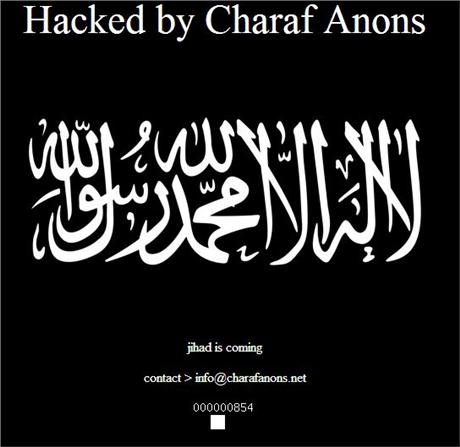
May 7 2013 – OpUSA hacking spree kicks off early
 Islamist element in attacks. A pro-Islamic, anti-American hacking campaign appears to have jumped the gun and started early with hundreds of sites being compromised today. Set to take place on May 7 this month – thought to be US time – and targeting government sites in the US, Israel and India, the campaign is called #OpUSA. It is coordinated mainly through Twitter and postings on sites like Pastebin, with an unknown amount of participants. However, lists of compromised sites are already apppearing, with a group called “X-Blackerz Inc” claiming to have hacked “100 US websites”, posting anti-American messages. iTnews loaded some of the sites listed which have India-related domain names, and found them defaced. Elswhere, a group calling itself Charaf Anons posted a list of 73 defaced sites on Pastebin. The website of the Honolulu, Hawaii Police Department was also claimed to be hacked, but as of writing, it is not defaced and operates normally. However, the hackers say they have captured databases that include the Honolulu Police Department staff logins and passwords. Another one was also posted with names and phone numbers that iTnews was able to verify as belonging to police officers in Honolulu. There is more to come: on May 7, the hackers are threatening to release a trove of “all governments emails of USA” [sic] captured by them. From the Anonghost Twitter account Security researcher Analysis Intelligence believes OpUSA features “self-proclaimed online freedom fighters” such as the Pakistani ZCompany Hacking Crew and Palestinians Izz ad-Din al-Qassam Cyber Fighters. These and other groups have hacked thousands of websites in the past, leaked credit card information for American and Israeli individuals and launched denial of service attacks against US banks, according to Analysis Intelligence. The motive for the OpUSA attacks are political, seeking revenge against drone attacks and military action in Iraq, Afghanistan, Gaza and Pakistan, the analysts believe. For DDoS protection click here . Source: http://www.itnews.com.au/News/342192,opusa-hacking-spree-kicks-off-early.aspx
See more here:
May 7 2013 – OpUSA hacking spree kicks off early
Government Takes Precautions Over Expected ‘OpUSA’ Cyber Attack
RHONDA SCHWARTZ, PIERRE THOMAS and LEE FERRAN report: The Department of Homeland Security and the FBI are cautioning American government and financial institutions that they could be targets of a wave of cyber attacks Tuesday from Anonymous-linked hacktivists in the Middle East and North Africa. “The attacks will likely result in limited disruptions and mostly consistent of nuisance-level attacks against publicly accessible web pages and possibly data exploitation,” says an unclassified memo from the Department of Homeland Security, first obtained by the cyber security blog KrebsOnSecurity.com. In another memo, this one from the FBI’s Cyber Division and obtained by ABC News, 140 banks are listed as potential targets for the potential cyber attack campaign known as “OpUSA.” Threats against the targets were originally made weeks ago and posted publicly online in a rambling missive that also denounced American “war crimes” in Iraq, Afghanistan and Pakistan. Both U.S. government and industry analyses of the OpUSA threats have connected them to OpIsrael, a widespread but reportedly largely ineffective cyber attack targeting Israeli government and private websites last November. As in that attack, OpUSA hackers are expected to use distributed denial of service (DDoS) attacks to flood target websites with illegitimate traffic, potentially knocking them offline, a Department of Homeland Security official said. One industry analysis says that due to the “hive mindset” of groups like Anonymous, the attack’s effectiveness could be contingent on its popularity and perceived success. “Similarly, if the central actors appear to be largely failing in their efforts, other Anonymous actors may decide not to join in this operation,” the analysis says. Cyber security expert Mikko Hypponen of F-Secure told ABC News he expects that “something’s going to happen,” but likely not more than some websites being defaced or briefly knocked offline by the DDoS attacks. If it proves correct, Hypponen’s prediction would be a far cry from OpUSA’s original promise to wipe the U.S. “off the cyber map.” For protection against your eCommerce site click here . Source: http://abcnews.go.com/blogs/headlines/2013/05/government-takes-precautions-over-expected-opusa-cyber-attack/
Continued here:
Government Takes Precautions Over Expected ‘OpUSA’ Cyber Attack