

Category Archives: DDoS Criminals

Author of MegalodonHTTP DDoS Malware Arrested in Norway

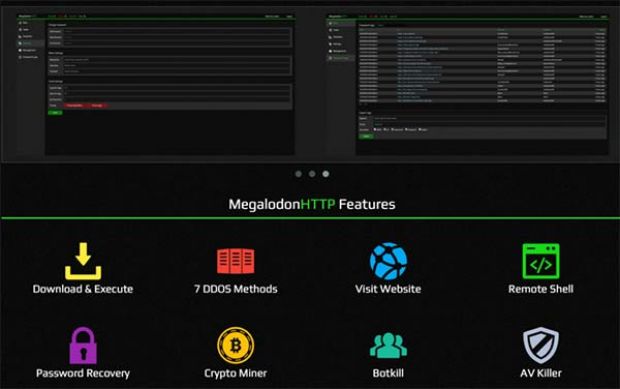
Hacker was arrested one month ago in Europol operation Norway’s law enforcement authorities have identified a previously arrested suspect as the author of the MegalodonHTTP malware, used for infecting computers and adding them to a botnet used for DDoS attacks. The yet unnamed suspect, known only by his online moniker of Bin4ry, was arrested in December 2015 , during the second stage of Operation Falling sTAR, launched in October 2015 against users of RATs (Remote Access Trojans). During this second phase of the operation, Europol authorities coordinated the arrests of 12 individuals in France, Norway and Romania. Five of the suspects were arrested in Norway. Damballa helped authorities track down MegalodonHTTP’s author A big part in arrest played US cyber-security vendor Damballa, who helped Europol break down the botnet’s activities, and then worked with Norwegian authorities to track down the malware’s author. “We are not at liberty to divulge the MegalodonHTTP author’s real identity, but we can confirm that the person behind the handle Bin4ry is no longer active or doing business,” said Loucif Kharouni, Senior Threat Researcher for Damaballa. Damballa’s team analyzed the MegalodonHTTP malware in late November 2015, as the malware was starting to become more prevalent on the Dark Web, being sold in two separate packages, one that cost $35, and the second that cost $100. Damballa: MegalodonHTTP is not an advanced malware The malware was sold both from Dark Web hacking forums, but also from the now defunct bina4ry.com domain, and came equipped with an automated installer and administration panel, so even skids (script kiddies) could use it, without possessing advanced technical in advance. According to Bin4ry’s description of MegalodonHTTP, the malware was capable of launching seven types of DDoS attacks, remote shells on infected machines, included Bitcoin mining features, but also had the option to kill antivirus processes. At the time of their analysis, Damaballa researchers said that despite being quite potent in terms of features, the malware was not the work of a skilled coder, worked only on Windows machines, and needed the .NET Framework installed, which narrowed the number of machines it could work from. MegalodonHTTP DDoS botnet administration panel Source: http://news.softpedia.com/news/author-of-megalodonhttp-ddos-malware-arrested-in-norway-498981.shtml

Link:
Author of MegalodonHTTP DDoS Malware Arrested in Norway

DDoS Defense: Better Traction in Tandem?

DDoS attacks are nothing new, but they remain the nemesis of many IT departments in organizations big and small. Why? Because attacks can come from any source, use multiple protocols, leverage massive botnets and often aren’t detected until it’s too late. According to SecurityWeek, the U.S. Department of Homeland Security (DHS) is now developing a new kind of DDoS defense, one based on collaboration rather than isolation. But can companies really get better security traction in tandem rather than acting alone? Big Numbers, Big Problems As noted by Dark Reading, DDoS attacks “are growing in frequency, size, severity, sophistication and even persistence each year.” Since there’s no single vector for these attacks — coupled with the fact that many look like server or network failures at first glance — it’s no wonder both small companies and large enterprises are getting hit, and hit often. Consider Rutgers University: In 2015, the institution faced six separate DDoS events. Financial institutions and government organizations faced many more, both attempted and successful, because the mechanism for attacks remains simple: Malicious actors need only reliable botnets and solid connections to launch a full-scale effort. The speed and simplicity of DDoS attacks is also encouraging malicious actors to ramp up their efforts. According to BetaNews, for example, the BBC was hit with a massive attack on New Year’s Eve that — if the attackers themselves are telling the truth — reached a maximum of 602 Gbps. That’s almost double the size of the current DDoS record holder at 334 Gbps. The group responsible, called New World Hacking, also targeted Donald Trump’s website and said it had plans to go after ISIS-related sites, although it claimed the BBC attack was merely a test and not intended to bring the site down for hours. Some security pros said the group may be targeting high-profile sites in an effort to promote its in-house DDoS tool, BangStresser. Stopping Traffic With DDoS Defense With DDoS tools and hacking-as-a-service now available for purchase at virtually any Dark Web marketplace and effectively being advertised through public attacks, companies are understandably concerned. Even when caught midstream, it’s difficult to respond before servers start failing and other, more sophisticated attacks take aim at critical corporate data. As a result, dealing with DDoS has become a top priority for organizations like the DHS, which just awarded a $1.7 million contract to tech company Galois in hopes of strengthening DDoS defense. The biggest news from the announcement is the development of a new project called DDoS Defense for a Community of Peers (3DCoP), which uses a peer-to-peer mechanism that allows organizations to work together and collectively defeat DDoS attacks. The thinking here is that since many companies and institutions are often targeted by similar attacks, a coordinated response increases the chance of early detection and swift response, in turn lowering overall damage. Historically, businesses have been reluctant to share attack data or collaborate on defense for fear of giving away trade security secrets or seeming weak in comparison to other companies. The high-volume, high-impact nature of DDoS attacks, however, make this an untenable position; users don’t care about protecting company pride if the result is reduced compute performance or total server failure. If the DHS effort works as intended, however, organizations should be able to collectively tap the power of the combined whole and get better traction on DDoS defense. In other words, a steady security climb instead of spinning wheels. Source: https://securityintelligence.com/news/ddos-defense-better-traction-in-tandem/

Original post:
DDoS Defense: Better Traction in Tandem?

A DDoS Learning Curve for Universities, Government & Enterprises

Distributed Denial of Service attacks are easy, cheap and too often, effective. But they’re not unstoppable. There’s no getting around it — DDoS attacks are growing in frequency, size, severity, sophistication, and even persistence each year. These tenacious, effective attacks can last anywhere from hours to months. They can be launched from botnets, use multiple protocols, and even disguise themselves with SSL encryption. Protecting yourself against DDoS isn’t a matter of stopping one attack but a multitude, sometimes all at once. Even worse, IT departments may not realize an attack is underway, thinking a failing server or application is responsible. Rutgers University, for example, recently fell prey to its sixth known DDoS attack in a single year — and Rutgers is not an outlier. Thousands of DDoS attacks hit universities, enterprises, government organizations, and banks every day—some successful, some not. One thing is for sure: no one is safe, and attacks will continue because DDoS attacks are easy, cheap and, too often, effective. But they’re not unstoppable. Universities and other organizations can take steps to prepare for and minimize the effect of even the most sophisticated assaults: Step 1. Have a good monitoring system in place Security teams have many ways to get insight into their network, including flow sampling, in-path detection and mirrored data packets. Here’s a brief breakdown of the pluses and minuses: Flow sampling: The router samples packets and exports datagrams on them. While scalable, this method leaves out large quantities of information because it only samples one packet out of thousands. This allows some “slow and low” attacks to fly under the detection radar, or take a long time to trigger an alert. In-path detection:  A high-performance DDoS mitigation device continuously processes all incoming traffic and possibly outgoing traffic. The device can take immediate action with sub-second mitigation times. One concern is ensuring the mitigation solution can scale with the uplink capacity during multi-vector attacks. Mirrored data packets: Full detail for analysis is provided, while not necessarily in the path of traffic. This method can be a challenge to set up, but allows for fast detection of anomalies in traffic and is a centralized place for analysis and mitigation. Step 2. Keep an eye on performance metrics and scalability When it comes to DDoS, everything happens on a large scale: the number of attacking computers, the bandwidth they consume and the connections they generate. To fight back, organizations need a combination of high-performance, purpose-built hardware that can mitigate common, yet large-scale attacks effectively, and intelligent software that can inspect traffic at the highest packet rates. For instance, an effective combination might include leveraging dedicated network traffic processors (e.g. FPGAs) to handle the common network-layer attack in combination with powerful, multi-core CPUs to mitigate more complex application-layer attacks. What’s key here is to ensure there is enough processing headroom to prepare networks for future generations of DDoS attacks. Step 3. Invest in a security awareness program Mitigation of next-generation DDoS attacks starts with training — especially to recognize normal network behavior and spot anomalies. For instance, companies that have started their migration to IPv6 must have security specialists in place that know IPv6 well enough to recognize attacks when they happen, and then to know how to use available tools to properly fight them off. Proper training allows organizations to be proactive versus reactive. Security policies take time to devise, so universities and other organizations shouldn’t wait for the IT support staff to raise a red flag before they decide to take action. Source: http://www.darkreading.com/attacks-breaches/a-ddos-learning-curve-for-universities-government-and-enterprises-/a/d-id/1323879

Continue Reading:
A DDoS Learning Curve for Universities, Government & Enterprises

Cybercops cuff two in hunt for DDoS extortion masterminds

Zombie master suspects tracked to Bosnia An international police investigation against the DD4BC DDoS extortion gang has led to one suspect being arrested and one detained, Europol said on Tuesday.…

Follow this link:
Cybercops cuff two in hunt for DDoS extortion masterminds

Linode Resets Customer Passwords After Breach, DDoS Attack

Cloud-based webhost Linode absorbed another body blow on Tuesday when it said it was resetting customer passwords after a suspected breach. The development compounded the company’s existing woes as it continues to battle a distributed denial-of-service attack that began on Christmas. A Linode representative said late Tuesday its executives were unavailable for comment and that an investigation was ongoing. The password breach was announced after the company said three accounts were accessed without permission and it discovered two Linode.com user credentials on an “external machine.” “This implies user credentials could have been read from our database, either offline or on, at some point,” Linode said in an advisory to customers. “The user table contains usernames, email addresses, securely hashed passwords and encrypted two-factor seeds. The resetting of your password will invalidate the old credentials.” Linode said it notified the customers whose credentials were found on outside machines and said there was no evidence of further intrusion into host or virtual machines. Linode markets its services toward developers and offers quick, scalable solid state driver server deployments. As of this morning, portions of the Linode website were still inaccessible, and the company said it has not been able to determine whether the DDoS attack and the password breach are related attacks. In the past, experts have warned that criminals will use easy-to-mount DDoS attacks against a target in order to distract IT and security staff away from the real target. “The entire Linode team has been working around the clock to address both this issue and the ongoing DDoS attacks. We’ve retained a well-known third-party security firm to aid in our investigation. Multiple Federal law enforcement authorities are also investigating and have cases open for both issues. When the thorough investigation is complete, we will share an update on the findings,” Linode said. “You may be wondering if the same person or group is behind these malicious acts. We are wondering the same thing. At this point we have no information about who is behind either issue. We have not been contacted by anyone taking accountability or making demands. The acts may be related and they may not be.” Linode was relatively quiet about the DDoS attack until a New Year’s Eve blogpost from network engineer Alex Forster. Forster said that a criminal gang was using a botnet to fire bad traffic at Linode’s authoritative nameservers causing DNS outages. All public-facing websites and web and application servers were also targeted, taking down Linode Manager. The attackers also sent traffic at Linode’s colocation provider’s upstream routers and its internal network infrastructure causing packet loss. In all, Forster said there were more than 30 attacks carried out in the week between Christmas and New Year’s Eve. Source: https://threatpost.com/linode-resets-customer-passwords-after-breach-ddos-attack/115790/#sthash.PPbMALPg.dpuf

View post:
Linode Resets Customer Passwords After Breach, DDoS Attack

Linode forces password reset for all users due to suspected breach

New Jersey-based virtual private server provider Linode can't seem to catch a break. After being repeatedly hit with DDoS attacks from December 24 to early January, the company announced on Tuesday th…

Continue Reading:
Linode forces password reset for all users due to suspected breach

BBC Websites, DDoS attack By Anti ISIS Hacking Group For Testing Their Capabilities

Hackers against the Islamic State or ISIS have claimed that the BBC website downtime during New Year’s Eve was their DDoS attack, but with no bad intentions. BBC websites were down for several hours during the evening before January 1, 2016. A company source inside BBC admitted that there was a distributed denial of service attack that took the websites down. Now, anti-ISIS hacker group named as New World Hacking is claiming that they were the reason why the BBC websites were unavailable for a quite long duration. However, they did not hack the website to cripple its capability to disseminate news and such. New World Hacking said that they were just testing their capabilities on BBC’s servers. They did not intend to take the site down for hours. “Let me get you proof of our records really quick, our motive was simply because we can. It was almost exactly a 600 GBps attack. We used two nodes to attack with and a few extra dedicated servers. It was only a test, we didn’t exactly plan to take it down for multiple hours. Our servers are quite strong,” the group told Rory Cellan-Jones from BBC via Twitter. DDoS Attacks In A Nutshell For the uninitiated, a DDoS attacks does not really involve a direct “hack” or penetration of a database, but it could be used as a cover. What happened was that the BBC websites experienced a massive flow of web traffic that came from the hacker group. The websites were not able to keep up with the continued barrage of web traffic, resulting it into shutting down. There are different types of DDoS attacks that can be carried out. Some of the attacks directly flood the websites with more traffic than it can handle. Some send only fragments of data packets, which usually leads to the server piecing it back together instead of catering to their legit site visitors. In order to conduct a successful DDoS attack, hackers usually use a wide network of computers known as botnets. These botnets may consist of their own computers or compromised ones across the globe using their own malware. Attack Only A Test, Not Malicious New World Hacking said that they are based in the United States and that they are determined to take down any ISIS affiliated sites and online accounts. Anonymous has previously declared a cyber-war against ISIS as they continuously help in taking down online propaganda and recruitment sites. BBC’s press office refused to comment on the hacker group’s claim. They also did not confirm nor deny if the DDoS attack was the cause of the website’s temporary downtime. “We realise sometimes what we do is not always the right choice, but without cyber hackers… who is there to fight off online terrorists? The reason we really targeted [the] BBC is because we wanted to see our actual server power,” the group told BBC. One person named Ownz from the hacker group said that they were only a team of 12 people. Eight of them were male and four of them were female. Ownz claims that New World Hacking was formed in 2012. Hacker groups are not new, but only a handful of them have actual good intentions. With ISIS trying to recruit followers and jihadists online, these hackers have stepped up to try and stop them from doing so. Some Internet users are cheering them on, while some have questioned their methods and capabilities. At the core, all the soldier deployed across the globe are considered heroes and not the hackers. New World Hacking Campaigns New World Hacking claims that they have already done their part in making the world a better and safer place. They took part in the #OpParis effort in order to help determine the identities of IS affiliated accounts after the terrible Paris attack tragedy in November 2015. Ownz also said that they took part in a campaign against the Ku Klux Klan. Ownz said that they are using a hacking tool named Bangstresser. They claim that they have already used the tool against several IS websites. Bangstresser was said to be developed by another U.S.-based hacker activist. New World Hacking tried out the tool against the BBC websites along with several of their personal computer servers and possibly botnets. Ownz told the BBC that they are planning to attack a new list of ISIS targets online. It is unclear which sites they are referring to, but they were not disclosed in order to help protect the integrity and effectiveness of their campaign. BBC Websites And Services Downtime BBC websites started to be down at around 7 PM on Thursday. Instead of the website interface, they were greeted with an error. In addition to the websites, their iPlayer Radio app and iPlayer catch-up service were also down. The iPlayer app was recently launched for the Apple TV App Store in December 2015. Twitter (NASDAQ: TWTR) users replied to the BBC Press Office’s announcement that they were aware of the “technical issue.” Some have said suggested that they should try turning their servers off and on again. Some have also taken the news in a lighter tone, saying that the HR department should be blamed for insisting the unused leaves be used before 2015 ended. Others took the chance to mock BBC, saying that they shouldn’t rush because they know BBC is telling the truth when they are silent. Other users have also asked if it was DDoS attack, but no replies were given by BBC. Some users have also reported that the BBC Bitesize and BBC Food recipes were down as well. BBC websites started to be back online at around 10:30 PM. However, some of the websites took longer than usual to load. All of the services and websites functioned normally several hours more after. New World Hacking did not say why they chose the BBC services and websites as a test target for their attacks. However, one possible reason is to demonstrate the scale and power of their attacks by attacking one of the most known broadcasting corporations in the world. Source: http://www.biztekmojo.com/001843/bbc-websites-services-taken-down-anti-isis-hacking-group-testing-their-capabilities

Continue Reading:
BBC Websites, DDoS attack By Anti ISIS Hacking Group For Testing Their Capabilities

Valve Reveals Details About Christmas Issues, Personal Info Was Shown, DDoS Attack Involved

Christmas is usually a very busy time for Valve because of the major sales that the company has a habit of running on the Steam digital distribution system, and this year the company had to deal with a set of problems linked to the service and with the way the user base perceived them as an attack that had the potential to affect their personal data. In a new official site article, the studio delivers more information about what happened on December 25, saying that between 11:50 and 13:20 Pacific Standard Time store page requests for around 34,000 users, containing personal information, were seen by others. Valve admits, “The content of these requests varied by page, but some pages included a Steam user’s billing address, the last four digits of their Steam Guard phone number, their purchase history, the last two digits of their credit card number, and/or their email address. These cached requests did not include full credit card numbers, user passwords, or enough data to allow logging in as or completing a transaction as another user.” The company also delivers an apology to all those affected by the Christmas problem . Despite the fact that some sensitive information was shared with others, the company makes it clear that users have to take no further action because the Steam system does not allow for it. This means that even if there are plans to work with a third-party company and contact those affected once they have been identified, no action on their part is required to make sure that the accounts are safe. Valve also explains that the problem was created because of a DDoS attack that combined with increased Winter Sale traffic to affect the caching of pages and forced the company to take down the store and deal with the problem. The company makes it clear that such attacks have not managed to break its security and are routinely dealt with. Steam continues to dominate PC digital distribution Valve needs to maintain its services as secure as possible to keep it in the lead on the PC and to continue offering players a wide variety of video games and some spectacular price cuts on special occasions. The Winter Sale is running at the moment, with more than 10,000 video games offered at reduced prices each day and a set of special trading cards that gamers can earn and use to tweak their profile. In late 2015 Valve also introduced the Steam machines, created in collaboration with a wide variety of partners, and the special controller, which offers plenty of new options for PC gamers who want to stay away from their monitors or share a couch with friends. In 2016, the company is planning to also enter the virtual reality space with Vive, which is created in partnership with HTC and does not yet have an official launch date or an attached price. The device was expected to arrive before the end of 2015, but Valve decided to delay it because of a major tech-related breakthrough that’s supposed to improve the user experience once the headset is commercially available. Source: http://news.softpedia.com/news/valve-reveals-details-about-christmas-issues-personal-info-was-shown-ddos-attack-involved-498289.shtml

More:
Valve Reveals Details About Christmas Issues, Personal Info Was Shown, DDoS Attack Involved

BBC reports on BBC tweet about BBC websites DDoS

The BBC’s website and iPlayer service went down on Thursday morning following a cyber attack causing widespread panic on social media A BBC Technology journalist later posted an article on their website saying a “large web attack” had “knocked” their websites offline. Sources within the BBC said the sites were down “thanks to what is knows as a ‘distributed denial of service’ attack”. A National Crime Agency spokesperson said: “DDOS is a blunt form of attack which takes volume and not skill. It’s a very basic attack tool. One analogy is too many people trying to get through a revolving door at the same time so that the door gets stuck.” Social media reaction to the trouble was swift. Many urged the BBC to get the site back up quickly and lamented how long it was taking to fix the technical trouble. Among the Twitter users to pass comment was Stephen Fry. Professor Tim Watson, Director of Cyber Security at the University of Warwick, said: “The BBC site will expect lots of traffic and they are a high profile target so you would expect them to have all kind of protection against a DDos attack. “They will be used to having lots of visitors but usually people visit the site at different times and are not repeatedly asking for lots of information. “The way a DDos attack works is by having control of thousands or millions of computers on a ‘botnet’ – so as people get their computers compromised by visiting websites or clicking on malicious links in emails, they can be remotely controlled and then coordinated to all visit a website at the same time. “So you can have millions of computers all making repeated visits to the same page over and over again and that is how you flood a website to the point where legitimate users can’t get access.” Professor Watson said there are a number of ways big corporations can protect against these kind of attacks but they are expensive. One way of protecting a site is to have something called “fat pipes” – very large data cables capable of dealing with incredibly high amounts of traffic – combined with really fast computers which can filter out anything like DDos traffic and re-route legitimate traffic back to the main website. But Professor Watson asked: “Is it a good used of licence payers’ money to have fatter pipes just on the off chance that one day someone might want to take down the BBC website with a DDos attack?” Cyver security expert Professor Alan Woodward, from the University of Surrey, said an attack like this needs a “degree of coordination”. He said: “I would have thought this could have been so-called hacktivists. The bbc has a large and sophisticated structure themselves and I know they have systems in place to mitigate it so it might have been slightly more than the usual DDoS attack. I cant see why a cyber criminal would do this, they do this for money, the only people who do this to make a point are hacktivists. “You have these groups who are doing this to make a point. Nation states often have the capability to do it. The motives tend to be where you have some group like these active hacker squad, phantom squad and lizard squad who do it.” An official BBC spokesperson said the corporation “are not discussing the causes” of the shutdown “or going into any further detail”. The BBC’s main website is the 89th biggest in the world, according to web analytics firm Alexa, and is the seventh-ranked site in the UK. Twitter goes into meltdown As BBC technicians frantically attempted to work out how to get their website back up and running, Twitter users had a lot of fun as #BBCDown began trending. The corporation apologised for the inconvenience on a number of Twitter feeds, blaming the website and its iPlayer services going down for over an hour on a “technical issue”. It later emerged the corporation had suffered a DDoS – a distributed denial of service – attack. Source: http://www.telegraph.co.uk/news/bbc/12075679/BBC-website-crashes-and-Twitter-goes-into-meltdown.html

Excerpt from:
BBC reports on BBC tweet about BBC websites DDoS