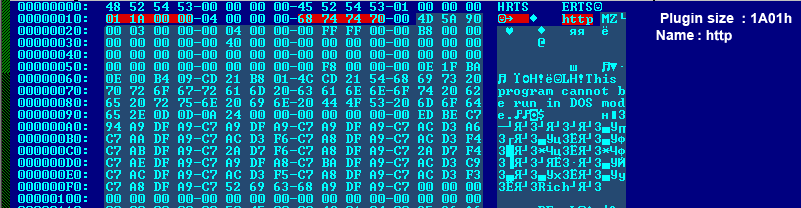
The Necurs botnet has returned to the top ten most prevalent malware during November 2017, as cybercriminals used it to distribute a new form of ransomware, according to Check Point. Researchers found that hackers were using Necurs, considered to be the largest spam botnet in the world, to distribute the relatively new Scarab ransomware that was first seen in June 2017. The Necurs botnet started mass distribution of Scarab during the Thanksgiving holiday, sending over … More ?
Category Archives: DDoS Vendors
Will IoT botnets catapult the industry toward security regulation in 2018?
Attackers demonstrated the power of an IoT-fueled botnet in 2016 when the Mirai botnet took down major websites like Reddit, Twitter and GitHub. Despite the damages, no significant changes to the IoT industry occurred. As a matter of fact, consumers continue to purchase and deploy IoT devices with little care outside the guarantee that the device works and the price tag is cheap. Manufacturers continue to pump out new IoT devices at a rapid pace, … More ?
Read more here:
Will IoT botnets catapult the industry toward security regulation in 2018?
DDoS attackers increasingly targeting cryptocurrency exchanges
The extraordinary volatility of the price of bitcoin has spurred speculators to employ a wide variety of tricks to make it swing between extremes, so that they can take advantage of it. The unregulated nature of the cryptocurrency ecosystem makes it possible for things like statements by widely esteemed financial executives to have a sizeable impact on the currency’s price. Another way to influence the price is through DDoS attacks against bitcoin exchange sites. There’s … More ?
View post:
DDoS attackers increasingly targeting cryptocurrency exchanges
Andromeda botnet dismantled in international cyber operation
On 29 November 2017, the Federal Bureau of Investigation (FBI), in close cooperation with the Luneburg Central Criminal Investigation Inspectorate in Germany, Europol’s European Cybercrime Centre (EC3), the Joint Cybercrime Action Task Force (J-CAT), Eurojust and private-sector partners, dismantled one of the longest running malware families in existence called Andromeda (also known as Gamarue). According to Microsoft, Andromeda’s main goal was to distribute other malware families. Andromeda was associated with 80 malware families and, in … More ?
View article:
Andromeda botnet dismantled in international cyber operation
DDoS Attack Pulls Down Bitcoin Gold Website
Ever since the initiation of the hard-fork resulting into a new cryptocurrency – Bitcoin Gold (BTG) – from the bitcoin blockchain, the BTG website has been constantly under DDoS attacks and has not resumed operations ever since. Earlier in the day, a new hard fork in the Bitcoin blockchain network gave rise to a new cryptocurrency Bitcoin Gold (BTG) and ever since then the official website has been constantly under DDoS attacks. This new hard-fork which resulted into a derivative cryptocurrency of the popular Bitcoin, has been aimed for establishing a fair platform different from the Bitcoin network which is alleged to have been dominated by large companies. The existing bitcoin mining process requires high-end powerful computing hardware which is quite a lot expensive and certainly not affordable to ordinary miners. As a result the mining process is said to have got centralised into the hands of large companies. With Bitcoin Gold, the miners aim to democratise the mining process by bringing Bitcoin’s inherent value proposition of having a decentralised mode of operation. The first step of the Bitcoin Gold initiation was to take a “snapshot” of the bitcoin blockchain while creating a replica with new set of rules. Moreover, the BTG technical team has decided to release the cryptocurrency absolutely free for all those who are holding bitcoins at the time of fork. Soon after the process was initiated the BTG developer team had started reporting issues pertaining to DDoS attacks on the website. And even hours after the initiation process the attacks seem to have stopped nowhere denying enthusiasts to keep any track of the newly generated BTG cryptocurrency. Adding to the woes, the additional fact is that the new blockchain hasn’t turned public yet and the explorer and tracking tools have not been released yet. Owing to the controversial and divisive nature of cryptocurrency projects such as the Bitcoin Gold, the denial-of-service attacks have been a common phenomenon in occurrence. Jack Liao, LightningAsic CEO, who is said to be the brain behind the BTG’s creation has been quite vocal and critical about the existing mining process of Bitcoins targeting several companies which are profiting from the mining process. His open criticism could possibly be a reason for such attacks. However, in addition to this, there are other reasons attributed to the cause of criticism for Bitcoin Gold. Few developer channels are quite skeptical about BTG using a process in which the BTG will be privately created before being publicly available as an open-source project. Another cause of concern with the Bitcoin Gold is that it has not solved the risk of a “replay attack” which could possibly increase transaction complications when two completely incompatible version of the bitcoin blockchain will be unable to distinguish from each other. At the press time Bitcoin Gold (BTG) is trading at $262, according to the CoinMarketCap Index. The price of Bitcoin (BTC) took a slight hit after the hard fork, losing more than $300 of its all-time max value of $6,000 per-coin. The Bitcoin Gold is still in the development process and we have yet to hear any official from its developer technical team regarding the future plans and its modus operandi. Source: https://www.coinspeaker.com/2017/10/24/ddos-attack-pulls-bitcoin-gold-website/
See the original article here:
DDoS Attack Pulls Down Bitcoin Gold Website
Czech Parliamentary Election Websites Hit by Cyberattacks
The Czech statistical office has reported DDoS (Distrubuted Denial of Service) attacks on websites related to the recent parliamentary elections during the vote count. A number of websites of the Czech statistical office (CZSO) have been subject to cyberattacks during the counting of votes in the Czech parliament’s lower house election, Petra Bacova, the CZSO spokeswoman, told Sputnik Sunday. “The websites related to the parliamentary elections — volby.cz and volbyhned.cz — have temporary failed to function due to DDoS attacks [Distributed Denial of Service] during the vote count on Saturday. These attacks have not affected the overall progress of the election,” Bacova said. The police along with the Czech National Cyber and Information Security Agency have already launched an investigation into the attacks. “Thanks to the rapid response, the attacks on the both aforementioned servers have been neutralized, while the work of the websites has been resumed,” Bacova said. The Czech Republic held an election to the lower house of the parliament on Friday-Saturday. The centrist ANO political party won the election, receiving 29.64 percent of votes. Czech President Milos Zeman stated that he was ready to appoint Andrej Babis, ANO’s leader, as Czech prime minister. Source: https://sputniknews.com/europe/201710231058456317-czech-election-hit-cyberattack/
Follow this link:
Czech Parliamentary Election Websites Hit by Cyberattacks
New Mirai-Like Malware Targets IoT Devices
Security researchers are warning about malware that’s been enslaving routers, webcams and DVRs across the world to create a giant botnet capable of disrupting the internet. The malware, called Reaper or IoTroop, isn’t the first to target poorly secured devices. But it’s doing so at an alarmingly fast rate, according to security firm Check Point, which noticed the malicious code last month. The malware has infected “hundreds of thousands” of devices, said Maya Horowitz, threat intelligence group manager at Check Point. Reaper brings up memories of malware known as Mirai, which formed its own giant botnet in 2016 and infected over 500,000 IoT devices, according to some estimates. It then began launching a massive distributed denial-of-service (DDoS) attack that disrupted internet access across the US. Reaper could be used to launch a similar attack, Check Point researchers said. The good news is the infected bots haven’t launched any DDoS campaigns. Instead, they’re still focused on enslaving new devices. Researchers at security firm Qihoo 360 also noticed the Reaper malware, and found evidence it was trying to infect at least 2 million vulnerable devices. Reaper even borrows some source code from Mirai, though it spreads itself differently, Qihoo said. Unlike Mirai, which relies on cracking the default password to gain access to the device, Reaper has been found targeting around a dozen different vulnerabilities found in products from D-Link, Netgear, Linksys, and others. All these vulnerabilities are publicly known, and at least some of the vendors have released security patches to fix them. But that hasn’t stopped the mysterious developer behind Reaper from exploiting the vulnerabilities. In many cases, IoT devices will remain unpatched because the security fixes aren’t easy to install. Who may have created the malware and what their motives are still isn’t known, but all the tools needed to make it are actually available online, Horowitz said. For instance, the source code to the Mirai malware was dumped on a hacking forum last year. In addition, data about the vulnerabilities Reaper targets can be found in security research posted online. “It’s so easy to be a threat actor when all these public exploits and malware can be just posted on GitHub,” she said. “It’s really easy to just rip the code, and combine, to create your own strong cyber weapon.” Unfortunately, little might be done to stop the Reaper malware. Security experts have all been warning that poorly secured IoT devices need to be patched, but clearly many haven’t. “This is another wakeup call” for manufacturers, Horowitz said. Source: https://www.pcmag.com/news/356926/new-mirai-like-malware-targets-iot-devices
Read the original post:
New Mirai-Like Malware Targets IoT Devices
Millions download botnet-building malware from Google Play
Researchers have discovered a new batch of malicious apps on Google Play, some of which have been downloaded and installed on some 2.6 million devices. The apps’ capabilities The apps posed as legitimate offerings that modify the look of the characters in Minecraft: Pocket Edition (PE). In the background, though, they set out to rope the devices into a botnet. Once they were installed on a target device, they would connect to a C&C server, … More ?
See the original post:
Millions download botnet-building malware from Google Play
400 attacks per day: Behind Australia’s growing DDoS attack surface
There is no denying that the number of DDoS attacks has been increasing everywhere around the world, new variants of attacking tools and techniques have been made available to the attackers much faster than we have seen in the past. Based on the statistics we have collected for Australia, the number of DDoS attacks have been increased roughly 25% each year, and we believe that number could become around 30,000 attacks per month by end of 2020. The largest DDoS attack targeting Australia in 2017 is around 228 Gbps in June, although these kinds of multi-gigabit attacks always catch our attention, they don’t really happen very often. Almost 80% of the DDoS attacks seen in Australia are under 2 Gbps, but still could possibly overwhelm the bandwidth of the internet connection for a lot of enterprises. Another interesting observation is that the number of DDoS attacks between 10 to 50 Gbps has been steadily increasing from last year. Given the fact that the attackers are getting more weapons in their arsenal – for example, IoT and mobile devices, this means the size and frequency of the DDoS attacks will keep growing. When we look at the countries where most of the DDoS attacks were being sourced, we have observed that countries such as the US, China, Korea, UK and Germany are usually at the top of the list. As DDoS attacks are typically sourced from infected computer devices (notnets), countries with a high computer population may also have a high infected rate, particularly if pirated software is being used to a large extent in that country. In recent years, with the arrival of IoT botnets, such as Mirai, some Asian countries with a high deployment rate of IoT devices have also been seen as major sources of DDoS attacks. If we turn our focus from the source country to the destination country being attacked most often, we then find the countries which are on the top of the list of the attacking sources, are also high on the list for the receiving side. A possible reason could be that the high computer population and adoption rate in the country also means a lot of business is being conducted over the network, such as the financial sector, consumer sector, government and so on, giving the attackers more targets to aim for. Source: https://securitybrief.com.au/story/400-attacks-day-behind-australias-growing-ddos-attack-surface/
Taken from:
400 attacks per day: Behind Australia’s growing DDoS attack surface
What is cyber terrorism?
How is cyber terrorism defined and how likely is an attack? Everyone is familiar with what “terrorism” means, but when we stick the word “cyber” in front of it, things get a bit more nebulous. Whereas the effects of real-world terrorism are both obvious and destructive, those of cyber terrorism are often hidden to those who aren’t directly affected. Also, those effects are more likely to be disruptive than destructive, although this isn’t always the case. Cyber terrorism incidents One of the earliest examples of cyber terrorism is a 1996 attack on an ISP in Massachusetts. Cited by Edward Maggio of the New York Institute of Technology and the authors of Internet: A Historical Encyclopedia, Volume 2 , a hacker allegedly associated with the white supremacist movement in the US broke into his Massachusetts-based ISP after it prevented him from sending out a worldwide racist message under its name. The individual deleted some records and temporarily disabled the ISP’s services, leaving the threat “you have yet to see true electronic terrorism. This is a promise” While this is a clear example of a cyber-terrorist incident carried out by a malicious, politically motivated individual that caused both disruption and damage, other frequently listed examples fit less clearly into the category of “terrorism”. For example, while attacks that have taken out emergency services call centres or air-traffic control could be considered cyber terrorism, the motivation of the individuals is often unclear. If a person caused real-life disruption to these systems, but had no particular motivation other than mischief, would they be classed as a terrorist? Perhaps not. Similarly, cyber protests such as those that occurred in 1999 during the Kosovo against NATO’s bombing campaign in the country or website defacements and DDoS attacks are arguably online versions of traditional protests, rather than terrorism. Additionally, in the case of civil war, if one side commits a cyber attack against the other then it can be said to be more of an act of war – or cyber war – than one of cyber terror. Again, where there is a cold war between nations, associated cyber attacks could be thought of as sub-conflict level skirmishes. Indeed, the FBI defines cyber terrorism as “[any] premeditated, politically motivated attack against information, computer systems or computer programs, and data which results in violence against non-combatant targets by sub-national groups or clandestine agents”. Under this definition, very few of the tens-of-thousands of cyber attacks carried out every year would count as cyber terrorism. The future of cyber terrorism As the number of connected devices increases, the likelihood of a more destructive cyber terrorist incident – something on a par with an attack in the physical world – becomes increasingly possible. The security industry is full of stories and proofs of concept about hacking medical devices, with two particularly famous demonstrations being given by New Zealander Barnaby Jack. This opens up the possibility for targeted assassinations or mass-scale killings carried out remotely and potentially across borders. Similarly, there are concerns self-driving vehicles could be turned into remote-controlled missiles and used in an attack, although the counter argument is that such vehicles will make the roads safer in the face of terrorists driving conventional vehicles into crowds. Another possible style of cyber terrorism is disruption of infrastructure in a way that could potentially endanger life. For example, in 2016 an unknown actor caused a disruption that saw two apartment buildings in Finland lost hot water and heating for a week in the dead of winter. In locations as cold as Finland, actions like this could cause illness and death if widespread and sustained. Nevertheless, the likelihood is most serious cyber attacks will be acts of cyber warfare, rather than cyber terrorism, as nation states have larger and more sophisticated resources at hand. Source: http://www.itpro.co.uk/security/29726/what-is-cyber-terrorism
See the original post:
What is cyber terrorism?