China’s Ministry of Justice has threatened legal action against those blaming Chinese firms for botnets.
More here:
Beijing threatens legal action over webcam claims
China’s Ministry of Justice has threatened legal action against those blaming Chinese firms for botnets.
More here:
Beijing threatens legal action over webcam claims
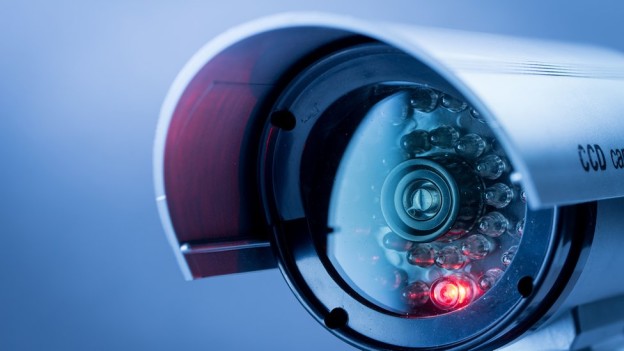
Hangzhou Xiongmai Technology is recalling earlier models of four kinds of cameras due to a security vulnerability A Chinese electronics component maker is recalling 4.3 million internet-connected camera products from the U.S. market amid claims they may have played a role in Friday’s massive internet disruption. On Monday, Hangzhou Xiongmai Technology said it was recalling earlier models of four kinds of cameras due to a security vulnerability that can make them easy to hack. “The main security problem is that users aren’t changing the device’s default passwords,” Xiongmai said in a Chinese-language statement posted online. According to security firm Flashpoint, malware known as Mirai has been exploiting the products from Xiongmai to launch massive distributed denial-of-service attacks, including Friday’s, which slowed access to many popular sites, including Netflix, PayPal, and Twitter. Companies observing Friday’s disruption said botnets powered by the Mirai malware were at least partly responsible for the attack. Xiongmai, a maker of camera modules and DVR boards, has acknowledged that its products have been a target for hackers, but it said it patched the problem with the default passwords back in April 2015. For older products, the company has come up with a firmware update to fix the flaw. To prevent the security risks, the company has still decided to recall earlier models. However, Xiongmai has also dismissed news reports that its products were largely behind Friday’s DDOS attack as untrue and is threatening legal action against those who damage its reputation. “Security vulnerabilities are a common problem for mankind,” the company said. “All industry leaders will experience them.” Experts have said the Mirai malware is probably targeting products from several vendors, in addition to Xiongmai. The malicious coding is built to try a list of more than 60 combinations of user names and passwords when infecting devices . So far, the Mirai malware has gone on to infect at least 500,000 devices, according to internet backbone provider Level 3 Communications. Source: http://www.pcworld.com/article/3133962/chinese-firm-recalls-camera-products-linked-to-massive-ddos-attack.html
Read More:
Chinese firm recalls camera products linked to massive DDOS attack
The Anonymous-affiliated hacker who admitted to cyberattacks on two hospitals in the #opJustinaoperation and fled the country while being investigated was indicted last week. Martin Gottesfeld, 32, a biotechnology information technology professional from Somerville, Massachusetts, is being charged with conspiracy to launch cyberattacks against two local hospitals: Boston Children’s Hospital (BCH) and the Wayside Youth and Family Support Network, a mental health facility. Those two hospitals were at the center of a case that attracted masses of media attention: that of Justina Pelletier, the then-15-year-old who was caught in a 16-month custody battle as her parents tried to have her treated for mitochondrial disease at one hospital, while Boston Children’s Hospital treated her in a psychiatric unit as a ward of the state. Gottesfeld’s indictment, handed down on Wednesday, also charges him with intentional damage to a protected computer. Both are felony hacking charges. Gottesfeld admitted to the attacks last month, explaining how he did it and why in an editorial published by the Huffington Post. I had heard many, too many, such horror stories of institutionalized children who were killed or took their own lives in the so-called “troubled teen industry”. I never imagined a renowned hospital would be capable of such brutality and no amount of other good work could justify torturing Justina. The distributed denial of service (DDoS) attack against BCH was planned for maximum financial damage, Gottesfeld said: he knew that the hospital was planning a big fundraising drive and that most donors gave online. In his editorial, he went on to scoff at BCH for making it easy for him to attack it, since the hospital kept its donation page on the same public network as the rest of its systems: Rookie mistake. To take it down, I’d have to knock the whole hospital off the internet. He also claimed that no patients would be harmed: There’s no such thing as an outage-proof network, so hospitals have to be able to function without the internet. It’s required by federal law, and for accreditation. The only effects would be financial and on BCH’s reputation. That’s not how the hospital, or the prosecution, sees it. The indictment states that BCH had to shut down its access to the internet and email servers to protect patient medical records. That meant that physicians outside the hospital couldn’t get at patients’ records. Nor could patients communicate with their doctors. BCH claims that responding to, and mitigating, the damage of the attack cost $300,000, while the disruption in fundraising meant another $300,000 hit, for a total loss of $600,000. Gottesfeld claims that the attack against BCH was a justifiable reaction to the actions of the hospital, which was described as a “parentectomy”. Gottesfeld’s defence, to blame the hospital for the attack, is all too commonly heard. The blame-the-victim reasoning is often voiced by other cyberattackers, be it from people who guess at weak passwords and use them to waltz into accounts without authorization, or those who launch crippling attacks such as those that Gottesfeld admits to. But just because it’s easy to do doesn’t make those or other cybercrimes OK. They’re illegal, and they can result in jail time, fines or both. Each of the charges Gottesfeld’s facing carry a maximum sentence of five years in jail, along with fines. Gottesfeld has been detained in Rhode Island since he and his wife were plucked off their boat near the coast of Cuba and arrested in Florida. When the indictment was handed down last Wednesday, Gottesfeld was reportedly on day 16 of a hunger strike over the appointment of the office of Carmen Ortiz as his prosecutor. Ortiz was the prosecutor in the cases against both Aaron Swartz and Jonathan James, who both later took their own lives. She has faced sharp criticism over her approach to those cases. In spite of his admission to the DDoS attacks, Gottesfeld is likely to plead not guilty at his arraignment this week before US Magistrate Judge Marianne B. Bowler, his wife told the Washington Times. Source: https://nakedsecurity.sophos.com/2016/10/24/anonymous-hacker-charged-with-opjustina-ddos-attacks-on-hospitals/
Taken from:
Anonymous hacker charged with #opJustina DDoS attacks on hospital
US-based DNS provider Dyn has suffered a massive DDoS attack earlier today, and it resulted in many websites being completely or intermittently inaccessible for a few hours. According to status reports published by the company, the target of the attack was the company’s Managed DNS infrastructure, and impacted Managed DNS customers located on the East Coast of the US. Among the websites that experienced issues as a result of the attack are Reddit, GitHub, Spotify, … More ?
Excerpt from:
Major US DNS provider hit with DDoS, part of the Internet becomes unreachable
Reddit, Github, Airbnb and pals affected A denial of service attack against managed DNS provider Dyn restricted access to many US-based websites on Friday.…
Read More:
Dyn dinged by DDoS: US DNS firm gives web a bad hair day
A hack on the AP and its results tally could have chaos-inducing consequences. Despite spending hundreds of millions of dollars on security upgrades, U.S. media organizations have failed to properly protect their newsrooms from cyberattacks on their websites, communications systems and even editing platforms — opening themselves up to the possibility of a chaos-creating hack around Election Day. In just the past month, BuzzFeed has been vandalized, and both Newsweek and a leading cybersecurity blog were knocked offline after publishing articles that hackers apparently didn’t appreciate. Federal law enforcement is investigating multiple attacks on news organizations, and journalists moderating the presidential debates say they’ve even gotten briefings from the FBI on proper cyber hygiene, prompting them to go back to paper and pens for prep work. “We do a lot of printing out,” said Michele Remillard, an executive producer at C-SPAN, the network home to the backup moderator for all the debates. Journalists are seen as especially vulnerable soft targets for hackers. Their computers contain the kinds of notes, story ideas and high-powered contact lists coveted by foreign intelligence services. They also work in an environment that makes them ripe for attack, thanks to professional demands like the need for a constant online presence and inboxes that pop with emails from sources whom they don’t always know and which frequently contain the kinds of suspicious links and attachments that can expose their wider newsroom networks. Senior U.S. officials, current and former lawmakers and cybersecurity pros told POLITICO the threat against the media is real — and they fret the consequences. Specifically, the security community is worried The Associated Press’ army of reporters could get hacked and the wire service — the newsroom that produces the results data on which the entire media world relies — inadvertently starts releasing manipulated election tallies or that cybercriminals penetrate CNN’s internal networks and change Wolf Blitzer’s teleprompter. “It’s the art of possible is what really scares me,” said Tony Cole, chief technology officer of FireEye, a Silicon Valley-based cybersecurity firm that works with some of the country’s major television and newspaper companies. “Everything is hackable.” “No site is safe,” added Tucker Carlson, editor-in-chief of The Daily Caller. “If the federal government can be hacked, and the intelligence agencies have been hacked, as they’ve been then, can any news site say we have better cybersecurity than the FBI or Google?” The media have long been a spy’s best friend. Intelligence community sources say that foreign and U.S. agents use local newspapers to look for clues about their targets, and that strategy has only grown more sophisticated in an all-online era in which foreign intelligence is reportedly known to hover over a media company’s servers searching for any kind of heads-up on relevant stories inching closer to publication. Reporters on the campaign trail and back in their home bureaus said in interviews that they’ve become increasingly aware of their status as potential hacking victims. The spate of recent attacks — involving their sites and their competitors’ — are more than ample warning of what’s possible. Several journalists said they now use email and other communication with the expectation they’re being watched, and under the assumption that their messages can and will be hacked and shared publicly with the wider world. “We’re a bigger target than the 7-Eleven down the street,” said Mark Leibovich, chief national correspondent for The New York Times Magazine. “Presumably, we have really good, smart IT people who know what they’re doing, who are taking all kinds of precautions, who are acutely in tune with what the risks are and what the threats are.” There is perhaps no greater target in election journalism than the AP, the venerable wire service that will have more than 5,000 reporters, editors and researchers working across the country, tabulating results, calling races and feeding a much wider network of subscribers. Often other news outlets refer to the AP before making calls on races, and AP projections on the East Coast can have effects on West Coast voting, which closes hours later thanks to the time differences. Multiple sources in media, government and the security industry fretted about the effect if the AP were to get hit, and what that would do to their ability to get the news out. The AP will deploy reporters across the country to send up vote tallies, usually by phone, the wire service explained to The Washington Post in May. It also has multiple checks and balances in place to monitor for errors. But as with many other news organizations contacted by POLITICO, AP spokesman Paul Colford said the wire service’s policy is to refrain from making public comments about its security measures. “Given the extraordinary interest in the presidential election and thousands of other state and local contests, we would add that AP has been working diligently to ensure that vote counts will be gathered, vetted and delivered to our many customers on Nov. 8,” he said. Federal and state officials stress that even a successful hack on a major news outlet around Election Day would not affect the final results, which typically take weeks to certify. The vote tallies, after all, will be available on official sites and in many instances on special social media feeds. And if a news site did get defaced with incorrect information, the results would be more like a modern-day version of the famous ‘Dewey Defeats Truman’ headline that President Harry Truman triumphantly held aloft the day after his 1948 reelection. Still, there is a widespread recognition — from the White House down to the local precinct level — that a hack on the media could be damaging given the role it plays in getting election news out to satisfy the country’s insatiable information appetite. Misinformation circulated in the early hours of Nov. 8 about the race’s trajectory, for example, could factor into a voter’s decision to even show up during the election’s final hours, especially in Western states. There’s also concern that false media reports spread via a hacked news account could be a potential spark for violence in an already exceptionally charged atmosphere. On the flip side, there’s a recognition that the media can help build public confidence in the final results, especially following a campaign that’s been engulfed in its closing weeks by Russian-sponsored hacking of the Democratic National Committee, the hacking of Hillary Clinton’s campaign chairman’s personal emails, and Donald Trump’s unfounded charges of vote rigging. “To the degree that foreign hackers could prevent the dissemination of good information around the election, that can be a problem,” said Rep. Adam Schiff, the top Democrat on the House Intelligence Committee. The California congressman said he frets that media outlets, like many other industries, face “massive costs” in protecting themselves against cyberattacks with “no end in sight” to the potential risks. Schiff added that he is especially concerned about smaller news organizations without major IT budgets or the backing of larger parent companies. “They’re much more vulnerable,” he said. Cybersecurity experts say media spending to protect news organizations against cyberattack has grown substantially in the past three years, especially in the wake of North Korea’s attack on Sony Pictures in late 2014. The price tag for vulnerability audits and other techniques varies by the size of the newsroom and the surface area for potential attacks, but multiple sources said quarterly audits can easily cost $50,000 or more. Cyber experts and media officials from newsrooms across the country said they’re prepped to deal with a range of threats to their sites, including the kinds of malware that can infect a computer network and give hackers an entry point to manipulate a home site. They’re also building backup capacity in the event of a DDoS attack, or distributed denial of service, that tries to overwhelm a website or server with fake traffic. News sites, they note, are already prepping for monster traffic around the election, which can surge as much as 30 times compared with other big events this cycle, such as a debate or primary. At the staffing level, newsrooms have also been pushing for better cyber habits by hosting training seminars, requiring employees to take must-pass exams and requiring double-authentication before granting access to a newsroom’s internal filing system and social media accounts. But cyber experts warn that all the preparatory work in the world can matter little for a news organization if it’s facing an attack from a more sophisticated actor. “If all of a sudden your adversary becomes a nation-state, like Sony or the DNC with Russia, you see those kind of procedures aren’t worth a darn,” said Robert Anderson, a former senior FBI cyber official and a managing director at the Navigant consulting firm. The press has indeed been a familiar target for hackers. In 2013, hackers hit the AP’s Twitter account and posted a false report about a bombing at the White House, sending the stock market into a five-minute spiral. In more recent incidents, a USA Today columnist wrote an article in February admitting he was hacked midair while using his commercial flight’s WiFi, and the New York Times reported in August that its Moscow bureau was targeted by what were believed to be Russian hackers. Newsweek blamed hackers for a DDoS attack that took down its site last month soon after it published an article about Trump’s company allegedly violating the U.S. embargo against Cuba through secret business dealings in the 1990s. And BuzzFeed had several articles on its site altered earlier this month after it ran a story identifying a person allegedly involved in the hacking of tech CEOs and celebrities. “I’m sure that lots of newsrooms are having this conversation right now, particularly as we get closer to the election and people have a lot more to lose when things don’t go their way,” said Brian Krebs, the cybersecurity blogger and former Washington Post reporter whose site went down last month after a major DDoS attack that he says was spawned by his reporting about the arrest of two Israeli hackers. With the threat of hackings against the media reaching such a heightened pace, many election observers urged both reporters and the reading public to take a deep breath as the results start coming in. “If Twitter is reporting that Jill Stein wins South Carolina, that should probably give you pause,” said David Becker, executive director of the Center for Election Innovation and Research. Source: http://www.politico.com/story/2016/10/media-vulnerable-to-election-night-cyber-attack-229956
Since early this morning gamers have reported server issues when playing Ubisoft games across all platforms. Ubisoft Support has confirmed the problem, sharing that it is affecting all its services, including its digital shop and official website. Ubisoft has provided the following updates regarding the issue: [12:44PM EDT] We are still looking into this issue. We appreciate your understanding in the meantime.? [1:12PM EDT] Our shop and websites are also affected by this issue. We are still investigating further. Thank you for your patience thus far. Although for some of Ubisoft’s games this is a mere inconvenience, multiplayer-oriented games are currently unplayable. This has resulted in thousands of posts on Twitter directed at Ubisoft, requesting when the problem will be fixed. There is currently no ETA. It is unclear what the root cause of the issue is, although this type of problem usually happens due to DDoS. Source: http://www.gamerevolution.com/news/ubisofts-servers-have-been-down-for-several-hours-could-be-ddos-37913
Read the original post:
Ubisoft’s Servers Have Been Down For Several Hours, Could Be DDoS
The service providers have also alleged that their complaints about the DDoS attacks have gone ignored. Internet service providers (ISPs), mainly from Mumbai and Pune, claimed they are being targeted in a distributed denial of service (DDoS) attack for the second time in the last three months, and said they will raise the issue of cyber terrorism with IGP (Cyber) Brijesh Singh. They also claimed that their complaint was not taken seriously by the Pune Police. “We have been facing DDoS attacks since September 15 and have been running from pillar to post to lodge a complaint, but no officer from the Pune Police has taken a serious stand on our complaint. We are now going to lodge our complaint with IGP (Cyber) Brijesh Singh,” Kishore Desarda, director, Gazon Communication, said. A DDoS attack typically bombards websites with requests, overloading the portal until its server crashes, thus denying access to legitimate users. “Such attacks, which reduce (Internet) speed to almost zero, have posed a serious threat to businesses of all ISPs, not only in Mumbai and Pune but across Maharashtra, and they need to be curbed immediately,” Mr. Desarda said. In July, ISPs had filed an FIR with the IG’s office about DDoS attacks. The case is being investigated by the Mumbai Police’s cyber cell. Another leading ISP said, “DDoS attackers are back in business and it has hit services adversely in cities like Mumbai, Thane, Navi Mumbai and Pune. This unprecedented attack on ISPs is akin to cyber terrorism and has assumed extreme significance against the backdrop of the hacking of more than 35 Central and State government websites in the last few days.” In July, ISP representatives had met IGP Singh and had apprised him of the gravity of this sort of ‘cyber terrorism’. Following their request, the cyber cell had registered an FIR and launched a probe. “Some unknown people are involved in crashing the networks of ISPs by making lakhs of requests at a particular terminal at a particular time at an unprecedented level, thus slowing down the whole internet experience, which we call DDOS. The Cyber Crime department is taking all possible measures to nab the perpetrators,” Mr. Singh had said earlier Source: http://www.bgr.in/news/internet-service-providers-face-ddos-attack-second-time-in-the-last-three-months/
View article:
Internet service providers face DDoS attack second time in the last three months
Since the source code to the Mirai Internet of Things botnet was publicly leaked on Sept. 30, researchers at Imperva have uncovered evidence of several low-level distributed denial of serviceattacks likely perpetrated by new users testing out this suddenly accessible DDoS tool. With its unusual ability to bombard targets with traffic in the form of generic routing encapsulation (GRE) data packets, Mirai was leveraged last month to launch a massive DDoS attack against Internet security researcher Brian Krebs’ blog site KrebsonSecurity. Soon after, a Hackforums user with the nickname Anna-senpai publicly posted the botnet’s source code – quite possibly a move by the malware’s original author to impede investigators from closing in on him. In a blog post this week, Imperva reported several low-level DDoS attacks taking place in the days following the leak. Consisting of low-volume application layer HTTP floods leveraging small numbers of source IPs, these attacks “looked like the experimental first steps of new Mirai users who were testing the water after the malware became widely available,” the blog post read. But Imperva also found evidence of much stronger Mirai attacks on its network prior to the leak. On Aug. 17, Imperva mitigated numerous GRE traffic surges that peaked at 280 Gbps and 130 million packets per second. Traffic from this attack originated from nearly 50,000 unique IPs in 164 countries, many of which were linked to Internet-enabled CCTV cameras, DVRs and routers – all infected by Mirai, which continuously scans the web for vulnerable devices that use default or hard-coded usernames and passwords. An Imperva analysis of the source code revealed several unique traits, including a hardcoded blacklist of IPs that the adversary did not want to attack, perhaps in order to keep a low profile. Some of these IPs belonged to the Department of Defense, the U.S. Postal Service and General Electric. Ben Herzberg, security group research manager with Imperva Incapsula, told SCMagazine.com in a phone interview that the Marai’s author may have truncated the complete blacklist before publishing it – possibly because such information could offer a clue as to the attacker’s identity. Imperva also found Mirai to be territorial in nature, using killer scripts to eliminate other worms, trojans and botnet programs that may have infiltrated the same IoT devices. Moreover, the company noted traces of Russian-language strings, which could offer a clue to the malware’s origin. Herzberg said it’s only a matter of time before Mirai’s newest users make their own modifications. “People will start playing with the code and say, ‘Hey, let’s modify this, change this,” said Herzberg. “They have a nice base to start with.” Web performance and security company Cloudflare also strongly suspects it has encountered multiple Mirai DDoS attacks, including one HTTP-based attack that peaked at 1.75 million requests per second. According to a company blog post, the assault leveraged a botnet composed of over 52,000 unique IP addresses, which bombarded the Cloudflare network – primarily its Hong Kong and Prague data centers – with a flurry of short HTTP requests designed to use up server resources and take down web applications. A second HTTP-based attack launched from close to 129,000 unique IP addresses generated fewer requests per second, but consumed up to 360Gbps of inbound HTTP traffic – an unusually high number for this brand of attack. In this instance, much of the malicious traffic was concentrated in Frankfurt. Cloudflare concluded that the attacks were launched from compromised IoT devices, including a high concentration of connected CCTV cameras running on Vietnamese networks and multiple unidentified devices operating in Ukraine. “Although the most recent attacks have mostly involved Internet-connected cameras, there’s no reason to think that they are likely the only source of future DDoS attacks,” the Imperva report warns. “As more and more devices (fridges, fitness trackers, sleep monitors…) are added to the Internet they’ll likely be unwilling participants in future attacks.” Of course, compromised IoT devices can be used for more than just DDoS attacks. Today, Akamai Technologies released a white paper warning of a new in-the-wild exploit called SSHowDowN that capitalizes on a 12-year-old IoT vulnerability. According to Akamai, cybercriminals are remotely converting millions of IoT devices into proxies that route malicious traffic to targeted websites in order to check stolen log-in credentials against them and determine where they can be used. Bad actors can also use the same exploit to check websites for SQL injection vulnerabilities, and can even launch attacks against the internal network hosting the Internet-connected device. The vulnerability, officially designated as CVE-2004-1653, affects poorly configured devices that use default passwords, including video surveillance equipment, satellite antenna equipment, networking devices and Network Attached Storage devices. It allows a remote user to create an authorized Socket Shell (SSH) tunnel and use it as a SOCKS proxy, even if the device is supposedly hardened against SSH connections. “What we’re trying to do is raise awareness,” especially among IoT vendors said Ryan Barnett, principal security research at Akamai, in an interview with SCMagazine.com. Barnett noted that when the CVE first came out, an exploit on it was “more theoretical,” but now “we want to show it is actively being used in a massive attack campaign.” Source: http://www.scmagazine.com/leaked-mirai-source-code-already-being-tested-in-wild-analysis-suggests/article/547313/
More:
Leaked Mirai source code already being tested in wild, analysis suggests
SOHOpeless CCTVs and video recorders It shouldn’t surprise anyone that closed circuit television (CCTV) rigs are becoming the world’s favourite botnet hosts: pretty much any time a security researcher looks at a camera, it turns out to be a buggy mess.…
Taken from:
Hungarian bug-hunters spot 130,000 vulnerable Avtech vid systems on Shodan