Semalt botnet hijacked nearly 300k computers

The “Semalt” botnet is quickly spreading across the Internet, Incapsula researchers warn. The botnet is named after a Ukrainian startup that poses as a legitimate online SEO service, and it current…

See the original post:
Semalt botnet hijacked nearly 300k computers

Linux systems infiltrated and controlled in a DDoS botnet

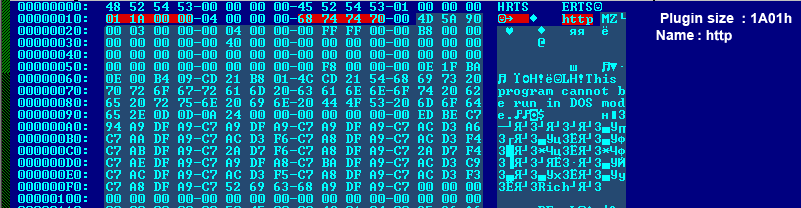
Akamai Technologies is alerting enterprises to a high-risk threat of IptabLes and IptabLex infections on Linux systems. Malicious actors may use infected Linux systems to launch DDoS attacks against t…

Read More:
Linux systems infiltrated and controlled in a DDoS botnet

DDoS Attacks: Increasingly the Weapon of Choice

Distributed denial of service (DDoS) attacks are a method attackers favor for disrupting an organization’s operations by flooding the network with traffic, overwhelming available bandwidth, and making network resources unavailable. According to research from the Ponemon Institute, DDoS attacks accounted for 18 percent of data center outages in 2013, up from 2 percent in 2010. They found that such attacks are the most costly data-center attacks to mitigate, costing an average of $822,000 per outage, leading to problems such as business disruption, loss of revenues, and reduced productivity. However, the costs can be even higher for organizations that rely on their websites as their main sales vehicle, since the unavailability of those websites can lead to those organizations losing multiple millions of dollars in sales. According to Forrester Research, the average organization loses $27 million for a 24-hour outage, with business services and financial services institutions faring the worst. Despite the damage that DDoS attacks can do in and of themselves, they are often used as a smoke screen to divert resources into clearing up the disruption, leaving organizations unaware of other attacks happening simultaneously. Often, the real motivations are financial manipulation or a competitive takeout. In other cases, the motivations are ideological, looking to hurt or embarrass organizations. For example, in late 2012 to early 2013, 46 financial institutions in the United States were hit with over 200 coordinated and timed DDoS attacks. It is believed that the motivation for this campaign of attacks was to cause consumers to lose their trust in the retail banking system. However, organizations in any walk of life can be impacted, both in the private and public sector, and such attacks should be considered a top concern by any organization, especially as DDoS attacks are increasingly becoming a weapon of choice. Not only are DDoS attacks growing in number and affecting a wider range of organizations, but more tools are becoming available that make them easier to pull off. Whereas previously an attacker would have had to possess a fair degree of skill and recruit an army of computers into a botnet in order to create enough computing power to launch an attack, new attack methods require considerably fewer resources and less skill. DDoS attack kits are now readily available on the Internet for low prices, making the job of a relatively unskilled hacktivist much easier, and DDoS-as-a-service attacks are an increasingly common phenomenon, whereby attackers hire themselves and their botnets out to those wishing to launch attacks. Another recent development is the use of network time protocol amplification attacks, which use publicly available network time protocol servers, the real purpose of which is to provide clock-synchronization services over public networks. Using this method means that attackers no longer need to go through the effort of putting together a botnet to launch their attacks. Recently, there has also been a dramatic rise in mobile applications used in DDoS attacks, driven by the ease with which mobile apps can be downloaded. These apps allow any mobile user to join a DDoS attack if he or she wishes—for example, for an ideological cause with which he or she sympathizes. It is predicted that such attacks will increase dramatically. The tremendous growth in DDoS attacks in 2013 that continued, if not accelerated, in 2014 means that all organizations should beware of the consequences. Where they do not have the resources in-house to defend themselves, organizations should investigate the use of services that can divert traffic away from their networks while remediation measures are taken. While, on the one hand, there is a trend toward increasing complexity and sophistication of attacks, on the other hand, attacks are becoming easier to pull off by an ever-wider range of criminal actors. The DDoS attack landscape is set to become much more complicated, and many more organizations will become victims. All organizations should beware. Source: https://blogs.rsa.com/ddos-attacks-increasingly-weapon-choice/

More here:
DDoS Attacks: Increasingly the Weapon of Choice
Gang behind ‘1.2 billion’ megahack ransack is pwning our customers – hosting firm

CyberVor, huh, yeah. What is it good for? Anecdotal evidence is emerging that the Russian botnet raiders behind the “biggest-ever” password theft have begun attacks against web services using stolen login credentials.…

More here:
Gang behind ‘1.2 billion’ megahack ransack is pwning our customers – hosting firm

Russia’s Zvezda television channel website comes under DDoS attack

The channel’s technical experts managed to partially restore the website’s operation, but it is still not working properly Russia’s Zvezda television channel website came under a DDoS attack on Friday. “The Zvezda channel’s website came under a massive DDoS attack. Its first round occurred at 14:00 Moscow time, making the website inaccessible to users,” the channel said in a statement. The channel’s technical experts managed to partially restore the website’s operation, but it is still not working properly. Source: http://en.itar-tass.com/non-political/747331

Read the original post:
Russia’s Zvezda television channel website comes under DDoS attack

FBI probe into hack and DDoS attacks on banks

THE Federal Bureau of Investigation is probing a computer-hacking attack on JPMorgan Chase and as many as four other banks, in what people familiar with the probe described as a significant breach of corporate computer security. The timing and extent of the hacking attacks wasn’t immediately clear, though cybersecurity experts began probing the possible JPMorgan breach earlier this month, according to people familiar with the investigation. Source: http://www.theaustralian.com.au/business/wall-street-journal/fbi-probe-into-hack-attacks-on-banks/story-fnay3ubk-1227040501221?nk=a9c75ab55e6d5171cc79455c78c5564d#

Link:
FBI probe into hack and DDoS attacks on banks

Anonymous Hacked Ferguson Police Servers and Launched a DDOS Attack

Police officers in Ferguson, Missouri have been forced to communicate via text message after Anonymous launched a DDOS attack against the city’s servers shutting them down, following the murder of Michael Brown. On top of that, private servers of the Ferguson police department were hacked to get personal information. Both peaceful and violent protests have taken place in response to the atrocity in Ferguson. Last Thursday, anonymous performed a DDoS attack on Ferguson servers. The attack was in reaction to the murder of 18 year old, Michael Brown, an African American teenager who was killed unjustly by white policemen. Law enforcement officials said recently that the FBI has taken an immense interest in the investigation of hacking attempts directed at the personal computers and online accounts of police officers who are part of the department responsible for the murder. CNN and other mainstream media outlets, in affiliation with three policeman, who’s names are undisclosed, have reported the police as victims of a ‘cyber attack’, suggesting that anonymous is to blame for the violent demonstrations that took place in Ferguson, avoiding the clear fact that the PD of Ferguson are responsible, and a reaction like this is to be expected in result to the killing of an innocent person. This is of no surprise that corporately funded news outlets would be hesitant to speak negatively of the police. In reality, despite the propaganda that the 1% will spew forth, it is organizations like Anonymous that are fighting for freedom, unrestricted by the fascist regulations of a fear-mongering governing body, we can fight for peace using whatever means possible. Source: http://anonopsofficial.blogspot.ca/2014/08/anonymous-hacked-ferguson-police.html

Originally posted here:
Anonymous Hacked Ferguson Police Servers and Launched a DDOS Attack

Netflix releases home-grown DDoS detectors

Planning on haxing Netflix? Don’t plan it on Facebook NetFlix’s security team has given the open source treatment to three tools it uses to monitor the internet and gather evidence of planned attacks against its infrastructure.…

More:
Netflix releases home-grown DDoS detectors

DDoS attack downs Twitch on news of Amazon acquisition

Just hours after Amazon announced a $970m deal to acquire Twitch, the live video platform for gamers was taken offline temporarily by a distributed denial of service (DDoS) attack. Twitch is the latest in a string of online gaming platforms to be hit by DDoS attacks that have been linked to several groups, including Lizzard Squad, jihadist group Islamic State, and Anonymous. At the weekend, Sony’s PlayStation Network was knocked offline and several others experienced disruptions, including Microsoft’s Xbox Live and Blizzard’s Battle.net. DDoS attacks are commonly used by competitors or activists to take services offline using a variety of techniques that make services impossible to reach. The reason for the DDoS attack on Twitch is unknown, but industry pundits have speculated that it may be linked to concerns about the acquisition by Amazon. Commenting on the weekend disruptions, Dave Larson, CTO at Corero Network Security, said the drivers for launching DDoS attacks are far ranging and difficult to pinpoint in many cases. “Anyone can become a victim at any time and, as the attacks continue to become stronger, longer and more sophisticated, businesses that rely on their online web applications as a revenue source cannot become complacent,” he said. Larson said the latest DDoS attacks underscore the importance of including a DDoS first line of defence as a component of network security architecture. Lancope chief technology officer TK Keanini said that while DDoS was once a resource held by a few of the elite groups on the net, this method of attack is now available to anyone as it is offered as a service. “If you know where to look, and you have some crypto currency in hand, just point and shoot,” he said. According to Keanini, any business connected to the internet is likely to be targeted by a DDoS attack at some point. “But game networks have to work harder than most to remain secure as they are incredibly attractive targets. “Not only are they high profile, with any disruption making the news, but given all the in-game commerce, credit card and personal information is kept up to date and can be monetised by these cyber criminals,” he said. Source: http://www.computerweekly.com/news/2240227573/DDoS-attack-downs-Twitch-on-news-of-Amazon-acquisition

See the original post:
DDoS attack downs Twitch on news of Amazon acquisition

PlayStation network back online after DDoS attack

Sony’s PlayStation and Entertainment networks are back online after they were forced offline by a distributed denial-of-service (DDoS) attack, the company said late Sunday. “People can now enjoy the services on their PlayStation devices,” Sony spokesman Sid Shuman wrote in a blog post “We have seen no evidence of any intrusion to the network and no evidence of any unauthorized access to users personal information,” he said, also offering apologies for any inconvenience caused. Sony was hit by a large scale DDoS attack which struck upstream traffic routes over which Sony has no control, affecting players’ ability to log in, Sony Online Entertainment President John Smedley wrote on Twitter on Sunday. DDoS attacks attempt to crash a network by sending large amounts of data to a service provider. A group calling itself the “Lizard Squad” claimed on Twitter to be behind the attack. It said that it had “planted the ISIS flag on @Sony’s servers,” referring to the militant group that occupies parts of Syria and Iraq. Earlier on Sunday, the group tweeted directly to American Airlines writing that it had “received reports” that a flight carrying Smedley “has explosives on board.” This appeared to be a way to aggravate Sony further. Smedley had tweeted earlier that his flight had been diverted for reasons that had to do with “something about security and our cargo.” The Boeing 757, with 179 passengers and six crew which left from Dallas-Fort Worth for San Diego was diverted to Phoenix due to a “a security-related issue” and landed safely, according to American Airlines. Source: http://www.cio-asia.com/resource/networking/playstation-network-back-online-after-ddos-attack/

More:
PlayStation network back online after DDoS attack