Researchers from Arbor Networks have spotted an active Point of Sale (PoS) compromise campaign using the Dexter malware or variants of it, aimed at stealing credit and debit card data. “The exa…
Read More:
Researchers uncover Point-of-Sale botnet
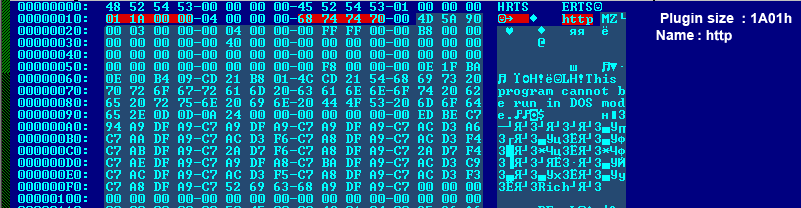
Researchers from Arbor Networks have spotted an active Point of Sale (PoS) compromise campaign using the Dexter malware or variants of it, aimed at stealing credit and debit card data. “The exa…
Read More:
Researchers uncover Point-of-Sale botnet
Attacks against bitcoin users continue, as online forum Bitcointalk.org warns users their passwords might have been stolen in distributed denial of service hack. Aficionados of the cryptographic currency known as Bitcoin might have gotten more than they bargained for recently, after a distributed denial-of-service (DDoS) attack appeared to be used as a smokescreen for launching a password-stealing attack against users of Bitcointalk.org. Michael Marquardt (a.k.a. “Theymos”), one of the administrators of the popular bitcoin discussion forum, Sunday warned its 176,584 members of the attack. He said the attack had been traced to a flaw in the systems of domain registration firm AnonymousSpeech, which specializes in anonymous email, as well as running hosting servers outside the United States and the European Union. Attackers hacked AnonymousSpeech to change the bitcoin discussion forum’s DNS settings to an attacker-controlled server. According to Marquardt, the DNS redirection attack was spotted Sunday by forum manager Malmi Martti (a.k.a. Sirius), who immediately moved the domain to a different registrar. “However, such changes take about 24 hours to propagate,” he warned, meaning that users remained at risk unless they logged on to the forum using its IP address, rather than trusting domain name servers to resolve to the non-malicious site. What was the risk to forum users? “Because the HTTPS protocol is pretty terrible, this alone could have allowed the attacker to intercept and modify encrypted forum transmissions, allowing them to see passwords sent during login, authentication cookies, [personal messages], etc.,” Marquardt said. “Your password only could have been intercepted if you actually entered it while the forum was affected. I invalidated all security codes, so you’re not at risk of having your account stolen if you logged in using the ‘remember me’ feature without actually entering your password.” In other words, anyone who logged into the forum between Sunday and Monday, and who entered a password, should assume that it was compromised by attackers. What were the bitcoin forum attackers gunning for? The most likely explanation would be participants’ usernames and passwords, which — if reused on other sites — might have allowed attackers to drain people’s online bitcoin wallets. Likewise, attackers might have been interested in gathering email addresses of people who are interested in bitcoins to target them — via phishing attacks — with malware designed to find and steal bitcoins from their PCs. The DNS hack and DDoS attack against Bitcointalk are just the latest exploits in a long string of attacks targeting bitcoin e-wallet services and payment systems. Last month, Denmark-based bitcoin payment processor Bitcoin Internet Payment System suffered a DDoS attack that allowed the attackers to hide their real target: online wallets storing 1,295 bitcoins, which they successfully stole. At the time, their haul was valued at nearly $1 million. As that haul suggests, the rise in bitcoin-related attacks can be attributed to the bitcoin bubble, which has seen the value of the cryptographic currency rise from a low of $1 per bitcoin in 2011, to $1,200 per bitcoin as of Wednesday. The rise in bitcoin’s value has lead to a number of malicious attacks, as well as a rise in efforts of a different nature. Last week, for example, Malwarebytes researcher Adam Kujawa warned in a blog post that a number of free toolbars and search agents have begun including bitcoin-mining software, which can consume massive amounts of system resources, slowing PCs to a crawl. Bitcoin mining isn’t inherently suspect. In fact, it’s crucial to the success of bitcoins, because it’s what records the chain of bitcoin transactions. Furthermore, the bitcoin system is set up to reward — with bitcoins — anyone who successfully solves related cryptographic puzzles that help maintain the public bitcoin ledger known as the “block chain.” But some people have begun turning PCs into nodes in their personal bitcoin-mining empire, such as online gaming company E-Sports, which was recently hit with a related $325,000 fine by the New Jersey state attorney general’s office. In the case of toolbars and search agents with built-in mining software, however, users who agree to the accompanying end-user license agreement (EULA) might be authorizing a third party to turn their PC into a bitcoin-mining platform. “So take note if your system is running especially slow or if a process is taking up massive amounts of your processing power; it might be malware or even a [potentially unwanted program] running a miner on your system,” said Kujawa at Malwarebytes. “Looks like the bad guys are adapting all of their various technical attacks and business models to the bitcoin world,” CounterHack co-founder and SANS Institute hacking instructor Ed Skoudis said in a recent SANS email newsletter, responding to the Malwarebytes report. “Given the stakes for rapid money-making here, we’ll surely see even more creative bitcoin-related attacks in the near future.” Source: http://www.informationweek.com/security/attacks-and-breaches/bitcoin-password-grab-disguised-as-ddos-attack—-/d/d-id/1112919
Continue Reading:
Bitcoin Password Grab Disguised As DDoS Attack
Low Orbit Ion Cannon claims another victim A Wisconsin man has been sentenced to two years of probation and a fine of $183,000 after pleading guilty to taking part in an Anonymous DDoS attack against the servers of Koch Industries for one minute.…
Continue Reading:
One-minute Koch-blocking attack earns attacker two years, massive fine
Low Orbit Ion Cannon claims another victim A Wisconsin man has been sentenced to two years of probation and a fine of $183,000 after pleading guilty to taking part in an Anonymous DDoS attack against the servers of Koch Industries for one minute.…
Read this article:
One-minute Koch-blocking earns attacker two years, massive fine
Botnet decap should be a team effort – ex-detective infosec bod Botnet takedowns need to be improved if the industry is to avoid the risk of creating more problems than it solves every time its decapitates a zombie network, according to a former Scotland Yard detective turned security researcher.…
See the article here:
Must try HARDER, infosec lads: We’re RUBBISH at killing ZOMBIES
If there is any one fact that remains consistent when it comes to distributed denial of service (DDoS) attacks, it is this: whatever mitigation solution your security engineers implement today, hackers will find a way to defeat it within the next two years. The pain of re-engineering a security program every 24 months is dwarfed by the potential pain of DDoS-provoked outages. In 2011, these attacks cost businesses more than a billion dollars, according to the Yankee Group. So how can companies defend themselves against attacks that are growing larger in scale, more complex in nature and more damaging to corporate reputations? Start with these five strategies: 1. Get educated, and be prepared Attackers are highly educated and highly motivated. Whether they shut sites down for financial gain or idealistic causes, the hackers who may target you today will do so with complex attacks at the application layer, Layer 7, where they can deplete your server resources by imitating legitimate users. They are likely to attack websites that rely on SSL by exploiting a Web server’s limited ability to handle large amounts of HTTPS sessions. These are not the straightforward DNS reflection attacks or TCP SYN floods of yesterday 2. Learn which attacks can be defeated with which solutions In order to combat increasingly sophisticated DDoS attacks, your company needs to learn what methods attackers are embracing today and continually research the most effective tools and services for addressing them. For example, you can defeat the OSI model, and Layer 3 and 4 attacks at the network and service layers with access control lists (ACLs), policies and commercially available DDoS mitigation solutions. On the other hand, you’ll need inspection by proxy to identify and fight Layer 7 attacks. 3. Ignore attacker inquiries It’s not unusual for a hacker to contact a company as he is assaulting its websites. You might receive demands if the motive behind the attack is pure financial extortion. If the attacker views himself as more of an activist, he might contact you simply to taunt the company during the outage. The best reaction to these communications is no reaction. Ignore them. Doing so generally lowers the probability that the attack will occur, if it hasn’t already, or that it will continue, if it’s already in progress. 4. Build secure networks Let start with the basics: avoid firewalls. This old security standby maintains the connection state which can be quickly filled by an attacker, rending the system useless and making it easier to take the server offline. This makes even the largest firewalls vulnerable to even the smallest attacks. Look for a hosting provider that can manage and secure your servers or build proxies using load balancers. Load balancers such as nginx or haproxy enable your host to dampen the effect of low-and-slow Layer 7 attacks, which is particularly critical if you are on a Windows Server. Finally, it’s worth it to upgrade your networks to modern equipment. Make sure your service contracts are up to date and purchase products that have a reputation for withstanding prolonged attacks. 5. Have a contingency plan Because hackers are constantly learning and DDoS attacks are constantly changing, you could make all the right decisions and still find your company under fire. That’s why a holistic approach is important. Your business should have secure network and system architecture, onsite packet filters, additional mitigation capacity with a third-party service, and skilled security staff. If you don’t have an in-house security expert, it is all the more essential that you have a DDoS mitigation service on call. Such a partner should be available on short notice and dedicated to helping you during a worst-case-scenario attack. Effective DDoS mitigation doesn’t come down to one solution, one partner or one vendor. Defending your company against attacks requires that you stay educated, stay prepared and stay vigilant. A hosting service with the right DDoS partner can be a valuable asset in your company’s business continuity plan (BCP). Whether you decide to manage your security on-site or outsource it, make sure that you build a DDoS mitigation strategy that accounts for your company’s specific needs, as well as the ever-evolving nature of attack scenarios. Source: http://www.itproportal.com/2013/12/03/5-ddos-defence-strategies-every-company-should-know/
Read More:
5 DDoS defence strategies every company should know
A Wisconsin man has been sentenced to two years federal probation and ordered to pay restitution for taking part in a 2011 DDoS attack mounted against the official website of Koch Industries by the An…
Originally posted here:
Wisconsin man sentenced for DDoS attack against Koch Industries
Roughly 175,000 members registered on bitcointalk.org are being discouraged from logging into their accounts following attacks against the popular Bitcoin forum, according to an advisory on the top of the main page. “If you used your password to login between 06:00 Dec 1 UTC and 20:00 Dec 2 UTC, then your password may have been captured in a man-in-the-middle attack, and you should change your password here and wherever else you used it,” according to the advisory. On Monday, a bitcointalk.org administrator named ‘theymos’ wrote that what likely happened is an attacker took advantage of a vulnerability in the forum’s registrar, Anonymous Speech, to redirect the domain name system (DNS) to a different point. Bitcointalk.org was promptly transferred to a different registrar as a result, theymos explained, but the administrator added that those types of changes take time and that users should avoid logging into the website for about 20 hours. “Because the HTTPS protocol is pretty terrible [on the forum], this alone could have allowed the attacker to intercept and modify encrypted forum transmissions, allowing them to see passwords sent during login, authentication cookies, PMs, etc.,” theymos wrote. “Your password only could have been intercepted if you actually entered it while the forum was affected.” The administrator added, “I invalidated all security codes, so you’re not at risk of having your account stolen if you logged in using the “remember me” feature without actually entering your password.” Meanwhile, the Bitcoin forum is concurrently the target of a massive distributed denial-of-service (DDoS) attack, theymos wrote, adding that while the two events are probably linked, it is unclear why the attacker is doing both at once. Source: http://www.scmagazine.com/popular-bitcoin-forum-targeted-in-dns-and-ddos-attack/article/323311/
Read More:
Popular Bitcoin forum targeted in DNS and DDoS attack
Akamai and Prolexic have signed a definitive agreement for Akamai to acquire Prolexic, a provider of cloud-based security solutions for protecting data centers and enterprise IP applications from DDoS…
Read more here:
Akamai to acquire Prolexic
The website Ukraine’s Interior Ministry is currently inaccessible, having apparently fallen foul of a distributed denial-of-service (DDoS) attack by hackers, local media said Sunday. Ukraine’s IT specialists claimed that they were behind the outage, which came after police violently dispersed a pro-EU rally in downtown Kiev Saturday, and promised to take down other Ukrainian government websites, pravda.com.ua reported. “Unfortunately, not each Ukrainian can come to Mykhailivska Square in Kiev or other local squares… That’s why I suggest an efficient way that everyone can show their protest in the Internet… I mean DDoS attack on the sites of our enemies in the government,” IT specialists said in a statement. The report said the Ukrainian government portal, www.kmu.gov.ua, also went out of service Sunday after suspected hacking. Some 35 people were injured after riot police cracked down on protesters camping out in the Independence Square in the capital Kiev Saturday, doctors said. Seven people still remain in hospital. A total of 35 people were briefly detained by police. Protesters regrouped Saturday near a monastery at Mykhailivska Square in downtown Kiev, which became the new place for continuing pro-EU rallies. Activists spent a night there and said they would form a national resistance task force to prepare a nationwide strike. Source: http://en.ria.ru/world/20131201/185186195/Ukrainian-Interior-Ministry-Website-Reportedly-Hit-By-Hackers.html
See the original post:
Ukrainian Interior Ministry Website Reportedly Hit By DDoS Attack