Avoiding Website Outages During the Holiday Season

The holiday shopping season is practically upon us, and online retailers don’t want to endure any IT downtime between Thanksgiving and Christmas when many ring up a third of their annual receipts. That’s a lot of green. Online shopping carts should register nearly $100 billion this holiday season in online sales – up 12% from a year ago, estimates Shop.org. What can online retailers do to avoid outages and other disruptions? It’s an important issue because an estimated one-in-five retailers suffered outages last year. The damage? Forty-five% estimated they could lose $500,000 to $5 million in one day due to a website crash. Gartner consultants predict a 10% growth in the financial impact that cybercrime will have on online businesses through 2016. They see distributed denial-of-service (DDoS) attackers taking advantage of new software vulnerabilities to begin an assault with multiple sources and often multiple targets. These can be introduced via employee-owned devices used in the workplace and even via the Cloud. Actions to Take Now While it’s probably too late to take major actions this holiday season, retailers can still take some steps to minimize such disruptions. However, to really combat the outage and downtime challenges, retailers should begin taking more effective steps after the New Year starts to get ready for the 2014 holiday rush. Three-of-four online retailers (77%) strengthened their online IT defenses this year to reduce downtime from last year. Downtime certainly occurs. Considering the common 99.5% system uptime, this leaves 43 hours – roughly one-and-a-half days – of downtime yearly.  A key focus area should be ensuring your site can handle rapid and unexpected increases in demand. That demand can take two forms: desired demand, which should be scaled up Cyber Monday and undesired demand, which should be mitigated, like a cyberattack. Here’s what online retailers still can do before the approaching Big Season. Determine whether you can handle the increased traffic from desired demand expected during the holiday season, especially on Cyber Monday, when online sales soar. You might still be able to turn to cloud-based services to add capacity and prevent a site crash. But if you don’t have a cloud provider, it’s probably too late to make those arrangements and transfer your data to the provider’s site. Determine if you have adequate mitigation capabilities for DDoS attacks from hackers. The last quarter of the year, primarily holiday season, is when DDoS attacks increase in size and intensity. In the 2012 fourth quarter, one DDoS protection service mitigated attacks that reached more than 50 gigabits per second directed against ecommerce clients; the average attack duration was 32.2 hours. Find out how various types of DDoS threats can impact different elements of your network and determine mitigation actions that can protect them, including employing a DDoS mitigation service. Keep tabs on blogs and social media sites because hackers enjoy bragging about their activities and sometimes disclose their next industry target. Make sure your payment data being collected remains secure because attackers often are going after customer credit card data. For retailers about to begin or who have begun what’s called the “network freeze,” in which no changes of any type can be made to their network and system components or apps operations until mid-January to avoid triggering downtime, if any severe vulnerability that has the potential to cause downtime is found, an emergency change window should be requested to remediate the problem – even during the “freeze.” This “freeze” practice actually is a Payment Card Industry (PCI) regulation. But only 21%bof businesses that store credit and debit card data comply with that regulation in between their mandatory annual audits, a Verizon study finds. What to Do for Next Holiday Season When the holiday and post-holiday sales rush slows, begin thinking about the 2014 holiday season, especially if you’re really bent on enhancing your defenses and scalability against downtime or outages and you haven’t taken major steps yet. Here are some suggested initiatives: Confer with a consulting firm or a data center or cloud provider about what you need to do, specifically, to realize your objectives. Consider actually retaining a service provider that delivers services to help you scale out and protect your IT operations. Going to the cloud doesn’t alleviate your IT responsibility where security is involved. The cloud doesn’t necessarily make your apps secure. A service provider can work with developers to develop and meet these objectives. Shift to a scale-out IT model so your applications scale out, not up, and this may require application transformation efforts to make you application resilient even when infrastructure services are disrupted in local regions. Act early in the year because this type of transformation effort will require changes across all parts of your infrastructure and application; no real shortcut exists and there won’t be time to make these types of changes once the selling season is upon you. Embrace cloud-type platforms if you’re a seasonal online retailer because they’re more dynamic and it’s easy to scale up quickly to meet demand and not incur extra costs when the demand isn’t there. Look into establishing a hybrid cloud so those apps that can’t be moved to the cloud quite yet, can continue to be handled in their traditional manner. For instance, you might use the cloud for web and application tiers and keep other operations in your normal IT setup until you are ready to take on the transformation actives required to update your database environment. Be sure to test your enhanced system before the holiday season and design it to support 100% availability because your goal must strive to always be up. This means securing secondary and tertiary facilities and resources far apart from your principal facility so if an outage occurs in one site, the load can be automatically shifted to an alternate site. Lastly, understand your key performance indicators, or KPIs – those measurements used to evaluate the success of particular activities in which you’re engaged. To do this well, you must possess a firm understanding of the KPIs across all tiers of your applications. Certainly for online retailers, the holiday selling season is critical to their financial strength and even survival. That’s why it’s imperative to keep your IT operations up and running and to recognize and repel cyber-attackers. But remember. You can’t do everything.  Simply do what you can for this year and move swiftly to prepare for the 2014 holiday season. Source: http://multichannelmerchant.com/crosschannel/avoiding-outages-holiday-season-06112013/

Read More:
Avoiding Website Outages During the Holiday Season
Jurassic DDoS?

Like something from the digital ice age, distributed denial-of-service (DDoS) attacks have thawed and are roaming the cyber planet again, according to data from Google in collaboration with Arbor Networks, which provides insight into the scale and geography of recent cyber strikes. Various other reports support the same theory. Verisign estimates that a third of downtime incidents stem from DDoS attacks. These attacks are costly for both businesses and consumers, and the costs are rising. The security firm Prolexic found that attacks became bigger and more frequent in 2013 vs. 2012. There was a 58% increase in total DDoS attacks; 101% increase in application layer (Layer 7) attacks; 48% increase in infrastructure (Layer 3 &4); and 12.4% increase in average attack duration. In addition to an increase in frequency and scale, Prolexic observed some interesting metrics that illustrate significant changes in DDoS attack methodologies. Most notably was a shift away from the bulky flat packet SYN floods to UDP-based attacks and the rapid adoption of Distributed Reflection Denial-of-Service (DrDoS) attacks. A “reflection attack” is a compromise of a server’s security caused by tricking it into giving up an authentication security code, allowing a hacker to access it. These attacks are made possible when servers use a simple protocol to authenticate visitors. It exploits a common security technique known as a challenge-response authentication, which relies on the exchange of secure information between authorized user and server. The hacker logs on and receives a challenge. The server is expecting an answer in the form of the correct response but instead, the hacker creates another connection and sends the challenge back to the server. In a weak protocol, the server will send back the answer, allowing the hacker to send the answer back along the original connection to access the server. Systems that use a challenge-response authentication approach to security can be vulnerable to reflection attacks unless they are modified to address the most common security holes. Reflection attacks use a different kind of bot and require a different type of server to spoof the target IP. Prolexic believes the adoption of DrDoS attacks is likely to continue, as fewer bots are required to generate a high volume of attack traffic due to reflection and amplification techniques. Such attacks also provide anonymity by spoofing IP addresses. Another interesting observation by Prolexic is that infrastructure-based attack protocols such as SYN floods remain in steady use and are often implemented in conjunction with the reflection attacks. The US and China are popular targets simply because these two countries have more internet users than any other country, and both countries are popular choices for ideologically based attacks. The top ten DDoS originating countries according to the Prolexic Quarterly Global DDoS Attack Report Q3 2013 are: China – 62% United States – 9.06% Republic of Korea – 7.09% Brazil – 4.46% Russia – 4.45% India – 3.45% Taiwan – 2.95% Poland – 2.23% Japan – 2.11% Italy – 1.94% So, what does the future hold for DDoS attacks? Future DDoS attacks will likely be conducted through the use of booter scripts, stressor services, and related Application Programming Interfaces (API). The increasing use of this attack method will result in much more effective attacks with fewer resources required. Since these attacks are easier to employ, DrDoS attacks will become more popular. In fact, according to Prolexic, script kiddies are graduating into digital crime and assembling DDoS-for-hire sites for as little as five dollars ($5). That $5 can buy you 600 seconds of DDoS and just $50 could put a credit union down for an afternoon. Remember, it costs far less to generate an attack than to mitigate an attack. Security professionals must promote cleanup efforts and make it difficult for hackers to send money to criminals offering DDoS for hire. The financial institutions with smaller security budgets become more lucrative targets because they cannot apply the resources to identify threats. Verizon’s Chris Novak agreed: “We are seeing where DDoS is used to distract a medium-size financial institution. While they are busy fighting off the DDoS, they don’t see that terabytes of data just walked out the door. That’s scary.” DDoS is not dead. In fact, it is alive and kicking. In addition to the foray of targets, many new government programs have become recent hacker targets using DDoS. As new software is developed, it is incumbent on IT security professionals to be cognizant of potential DDoS vulnerabilities and to initiate countermeasures as quickly as possible. Source: http://www.infosecurity-magazine.com/blog/2013/11/5/jurassic-ddos/1050.aspx

Read the original:
Jurassic DDoS?

Anonymous Philippines hack and DDoS Government sites

Critics of the Aquino administration responsible for hacking government websites will be dealt with accordingly, Malacañang warned yesterday. “There are existing laws against hacking and proper action will be taken,” Press Secretary Herminio Coloma told a news briefing when sought for comment on the latest attacks on the websites of several government agencies by activist hacker group Anonymous Philippines. “There are sufficient avenues for free expression so there is no need to resort to illegal acts such as hacking of government websites,” Coloma said. He said that sentiments against the government could be aired in street protests. According to Coloma, there is enough “democratic space” where the public can air their grievances. More gov’t sites under attack Anonymous Philippines claimed it has stopped the operation of major government websites as hackers geared up for today’s “Million Mask March” in Quezon City. In a post on its Facebook page yesterday, the group said the websites of around 100 local and national government agencies – including that of the Official Gazette, Senate, House of Representatives and the National Bureau of Investigation – were “currently down.” With the exception of the Senate website (senate.gov.ph), a random check showed that most of the national government websites in the list were accessible as of yesterday afternoon. Despite having a security feature to mitigate attacks, the Official Gazette website (gov.ph) was temporarily inaccessible yesterday. In a phone interview with The STAR, Roy Espiritu of the Information and Communications Technology Office confirmed that a number of government sites have been under distributed denial of service (DDoS) attacks since Monday. However, he said that “critical” government websites are “secure.” Espiritu said government websites are currently in the process of migrating into more secure servers as mandated by Administrative Order 39, signed by the President in July, which establishes a Government Web Hosting Service. The service seeks to “ensure the government’s Internet presence around the clock under all foreseeable conditions.” Earlier, Espiritu said they are looking into the possibility of incorporating security measures to beef up the defenses of government websites. A DDoS attack is mounted to shut down an Internet site by flooding it with access requests and overload its server handling capabilities. Websites affected by successful DDoS attacks are inaccessible to legitimate users who wish to view their content. The Official Gazette website is protected from DDoS attacks by CloudFare, which offers security by checking the integrity of browsers and looking for threat signatures from users who wish to access the site. DDoS attacks are dependent on the number of people trying to access the website at the same time. Espiritu earlier said that even the most secure websites could be affected by such attacks. In 2010, the websites of Visa and MasterCard were affected by a DDoS attack mounted by supporters of whistle-blower organization WikiLeaks. DDoS attacks are different from hacking, which requires an Internet user to access the website using the password of a legitimate administrator. Investigation According to Espiritu, an investigation will be conducted to determine the people behind the attacks on government websites. He said the people behind the attacks may be charged under the e-Commerce law as the move to shut down the websites deprived the public of the information that they need from the government. On Monday, the website of the Office of the Ombudsman was defaced by people claiming to be members of Anonymous Philippines. The latest cyber attacks on government websites came amid issues involving alleged misuse of the Priority Development Assistance Fund and the Disbursement Acceleration Program of the legislative and the executive, respectively. In August, various government sites were hacked during the Million People March attended by thousands in Luneta. Previous incidents of attacks happened during the height of discussions on various issues such as the passage of the Cybercrime Prevention Law and the territorial dispute with China. Worldwide protest The Million Mask March is an event that will be held in various locations around the globe today “to remind this world what it has forgotten. That fairness, justice, and freedom are more than just words.” According to its official Facebook page, the march will cover various topics including government, education reform, constitutional rights, freedom, unity, drug abuse, respect for all, corruption, nutrition and health and violence among children, among others. Based on the events page of the Million Mask March-Philippines, over 1,000 Facebook users have confirmed attendance in today’s march. A post by an Anonymous member said participants will meet at the Quezon Memorial Circle at 8 a.m. to discuss the activities for the day. The march will start in front of the Sandiganbayan along Commonwealth Avenue to Batasang Pambansa. In a text message to The STAR, Quezon City department of public order and safety chief Elmo San Diego said they received no application for a permit to hold a rally or a march near Batasang Pambansa today. The Anonymous member reminded participants not to bring any form of weapon, adding that the event will be held to show the public’s reaction to the mishandling of the government committed by people in power. The Department of Science and Technology (DOST) Information and Communications Technology Office yesterday underscored the need to fast track efforts to set up a more secure government website hosting facility following the latest hacking of government websites. The websites of the Insurance Commission, Southern Philippines Development Authority, Optical Media Board and that of the local government units of Bolinao, Pasig City, Pateros and the municipality of Basnud, Oriental Mindoro were defaced by members of Anonymous Philippines. Source: http://www.philstar.com/headlines/2013/11/05/1253167/palace-act-vs-hackers

Read More:
Anonymous Philippines hack and DDoS Government sites

Extra Life DDoS Attack: Children’s Charity Extra Life Website Hit By DDoS During Annual Gaming Marathon

Extra Life — a charity organization dedicated helping Children’s Miracle Network Hospitals through an annual gaming marathon — has been hit with a Distributed Denial of Service (DDoS) attack. According to Escapist Magazine, Extra Life raises money for Children’s Miracle Network Hospitals by taking pledges and then playing games — anything from video games to board games and tabletop miniatures — for 25 hours straight. Extra Life was in the middle of this year’s event, which began at 8 a.m. today and ends at 8 a.m. on November 3, when their website suddenly went down. As a result, pledges could not be taken. News of the DDoS attack was confirmed with a statement on the Extra Life Facebook page by founder Jeromy “Doc” Adams: “We’ve discovered that the Extra Life website experienced a DDoS attack against our datacenter,” the statement reads. “I am not sure what kind of person would DDoS a charitable initiative. I am so sorry that you are going through this frustration today. Our entire team is purely heartbroken that someone would do this. But it has happened. As frustrating as this is for everyone involved, it pales in comparison to what the kids we’re trying to save go through. That reality, for me personally, is about the only thing keeping me somewhat calm right now. “I am very angry and very sorry,” the statement continues. “You deserve better than this. The kids deserve better than this. Extra Life has given a lot of us some of the happiest moments in our lives. This is not one of those moments. Please hang with us through this. It is important that we spread the word. Please get on every form of social media you can and tell your friends what happened. We can overcome this together.” After a few of hours of downtime, the Extra Life website was back online.   Many took to Facebook to vent their outrage that hackers would choose to DDoS a charity organization. “I understand DDoS’ing a website of a corrupt business or government, but…Why would someone DDoS this?” one user wrote. “May whoever did this lose their shoes and have every child in their neighborhood strew Legos in their path forever,” another user commented. A DDoS attack takes place when hackers use an army of infected computers to send traffic to a server, causing a shutdown in the process. Source: http://www.ibtimes.com/extra-life-ddos-attack-childrens-charity-extra-life-website-hit-ddos-during-annual-gaming-marathon

Originally posted here:
Extra Life DDoS Attack: Children’s Charity Extra Life Website Hit By DDoS During Annual Gaming Marathon

Application-layer DDoS attacks are becoming increasingly sophisticated

The number of DDoS (distributed denial-of-service) attacks that target weak spots in Web applications in addition to network services has risen during the past year and attackers are using increasingly sophisticated methods to bypass defenses, according to DDoS mitigation experts. Researchers from Incapsula, a company that provides website security and DDoS protection services, recently mitigated a highly adaptive DDoS attack against one of its customers that went on for weeks and combined network-layer with application-layer—Layer 7—attack techniques. The target was a popular trading site that belongs to a prominent player in a highly competitive online industry and it was one of the most complex DDoS attacks Incapsula has ever had to deal with, the company’s researchers said in a blog post. The attack started soon after an ex-partner left the targeted company and the attackers appeared to have intimate knowledge of the weak spots in the target’s infrastructure, suggesting that the two events might be connected, the researchers said. The attack began with volumetric SYN floods designed to consume the target’s bandwidth. It then progressed with HTTP floods against resource intensive pages, against special AJAX objects that supported some of the site’s functions and against Incapsula’s own resources. The attackers then switched to using DDoS bots capable of storing session cookies in an attempt to bypass a mitigation technique that uses cookie tests to determine if requests come from real browsers. The ability to store cookies is usually a feature found in full-fledged browsers, not DDoS tools. As Incapsula kept blocking the different attack methods, the attackers kept adapting and eventually they started flooding the website with requests sent by real browsers running on malware-infected computers. “It looked like an abnormally high spike in human traffic,” the Incapsula researchers said. “Still, even if the volumes and behavioral patterns were all wrong, every test we performed showed that these were real human visitors.” This real-browser attack was being launched from 20,000 computers infected with a variant of the PushDo malware, Incapsula later discovered. However, when the attack first started, the company had to temporarily use a last-resort mitigation technique that involved serving CAPTCHA challenges to users who matched a particular configuration. The company learned that a PushDo variant capable of opening hidden browser instances on infected computers was behind the attack after a bug in the malware caused the rogue browser windows to be displayed on some computers. This led to users noticing Incapsula’s block pages in those browsers and reaching out to the company with questions. “This is the first time we’ve seen this technique used in a DDoS attack,” said Marc Gaffan, co-founder of Incapsula. The challenge with application-layer attacks is to distinguish human traffic from bot traffic, so DDoS mitigation providers often use browser fingerprinting techniques like cookie tests and JavaScript tests to determine if requests actually come from real browsers. Launching DDoS attacks from hidden, but real browser instances running on infected computers makes this type of detection very hard. “We’ve been seeing more and more usage of application-layer attacks during the last year,” Gaffan said, adding that evasion techniques are also adopted rapidly. “There’s an ecosystem behind cybercrime tools and we predict that this method, which is new today, will become mainstream several months down the road,” he said. DDoS experts from Arbor Networks, another DDoS mitigation vendor, agree that there has been a rise in both the number and sophistication of Layer 7 attacks. There have been some papers released this year about advanced Layer 7 attack techniques that can bypass DDoS mitigation capabilities and the bad guys are now catching on to them, said Marc Eisenbarth, manager of research for Arbor’s Security Engineering and Response Team. There’s general chatter among attackers about bypassing detection and they’re doing this by using headless browsers—browser toolkits that don’t have a user interface—or by opening hidden browser instances, Eisenbarth said. In addition, all malware that has man-in-the-browser functionality and is capable of injecting requests into existing browsing sessions can also be used for DDoS, he said. Layer 7 attacks have become more targeted in nature with attackers routinely performing reconnaissance to find the weak spots in the applications they plan to attack. These weak spots can be resource-intensive libraries or scripts that result in a lot of database queries. This behavior was observed during the attacks against U.S. banking websites a year ago when attackers decided to target the log-in services of those websites because they realized they could cause significant problems if users are prevented from logging in, Eisenbarth said. “We continued to see attackers launch those type of attacks and perform reconnaissance to find URLs that, when requested, may result in a lot of resource activity on the back end,” he said. More and more companies are putting together DDoS protection strategies, but they are more focused on network-layer attacks, Gaffan said. They look at things like redundancy or how much traffic their DDoS mitigation solution can take, but they should also consider whether they can resist application-layer attacks because these can be harder to defend against than volumetric attacks, he said. With application-layer attacks there’s an ongoing race between the bad guys coming up with evasion techniques and DDoS mitigation vendors or the targeted companies coming up with remedies until the next round, Gaffan said. Because of that, both companies and DDoS mitigation providers need to have a very dynamic strategy in place, he said. “I think we will continue to see an evolution in the sophistication of application-layer attacks and we will see more and more of them,” Gaffan said. They won’t replace network-layer attacks, but will be used in combination with them, he said. Having Layer 7 visibility is very important and companies should consider technologies that can provide that, Eisenbarth said. In addition to that, they should perform security audits and performance tests for their Web applications to see what kind of damage an attacker could do to them, he said. Source: http://www.pcworld.com/article/2056805/applicationlayer-ddos-attacks-are-becoming-increasingly-sophisticated.html

Link:
Application-layer DDoS attacks are becoming increasingly sophisticated

OpThrowback: Anonymous to Launch DDOS Attacks Against FBI, NSA.

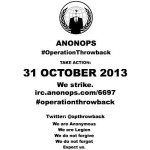
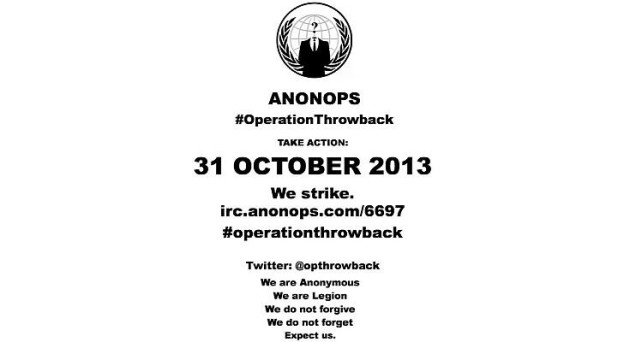
  Anonymous hackers, more precisely the ones who hacked a couple of Syrian government websites last week, have announced the start of a new campaign called Operation Throwback. ~ SoftPedia The goal of the operation is “to strike back against the oppressors of our freedom.” The hackers say they will launch distributed denial-of-service (DDOS) attacks against several high-profile websites. Today, on October 28, they plan on launching a cyberattack against the main website of T-Mobile. On October 31, they plan on attacking the website of the FBI, the NSA, Verizon, Microsoft and AT&T. The hacktivists urge their supporters to download DDOS tools and VPNs. The initiators of the operation are providing download links and instructions on how to use them. Earlier today, the hackers tested their “firepower” against the official website of the American Nazi Party. At the time of publishing NCB Interpol web site was down, apparantly from Ddos attack. Source: http://revolution-news.com/opthrowback-anonymous-to-launch-ddos-attacks-against-fbi-nsa/
View original post here:
OpThrowback: Anonymous to Launch DDOS Attacks Against FBI, NSA.

Visual investigations of botnet command and control behavior

One of the classic debates in computer science concerns whether artificial intelligence or virtual reality is the more worthwhile pursuit. The advocates of artificial intelligence argue that computers…

See the original post:
Visual investigations of botnet command and control behavior

NSA.gov goes down after ‘error during scheduled update’

Spook agency denies DDOS, blames sysadmins The USA’s National Security Agency (NSA), lately the source of near-endless controversy for spying on just about the entire internet, has itself hit trouble online after its website went down.…

More:
NSA.gov goes down after ‘error during scheduled update’

12 year old Quebec boy Anonymous Hacker Pleads Guilty to DDOS Attack on Government Websites

A 12-year-old Quebec boy is responsible for hacking several government and police websites during the student uprising in spring 2012, creating computer havoc and causing $60,000 damage, court heard Thursday. Some sites were out of service for up to two days and the boy did it in the name of the activist/hacktivist group Anonymous. The Grade 5 student from the Montreal suburb of Notre-Dame- de-Grâce, whose actions were not politically motivated, traded pirated information to Anonymous for video games, court was told. The boy appeared in youth court Thursday dressed in his school uniform and accompanied by his father. He pleaded guilty to three charges related to the hacking of the websites, including those of Montreal police, the Quebec Institute of Public Health, Chilean government and some non-public sites. Police estimate damage to the sites at $60,000 but a more detailed report will be produced in court when the boy is sentenced next month. The little hacker, whose name can’t be published and is said to have been involved with computers since the age of nine, contributed to the crash of some sites and accessed information belonging to users and administrators. He had even issued a warning to others: “It’s easy to hack but do not go there too much, they will track you down.” Court heard the boy used three different computer attacks, one which resulted in a denial of service to those trying to access the websites and flooded servers, making them ineffective. In another method he would alter information and make it appear as the homepage. His third tactic involved exploiting security holes in order to access database servers. “And he told others how to do it,” a police expert testified in Montreal on Thursday. While others were arrested in the scheme, it was the boy who opened the door to the website attacks, court heard. “He saw it as a challenge, he was only 12 years old,” his lawyer said. “There was no political purpose.” In 2000, a 15-year-old Montreal boy, know as Mafiaboy, did an estimated $1.7 billion in damage through hacking. He was sentenced to eight months in youth detention and subsequently received several job offers in cybersecurity. Source: http://www.torontosun.com/2013/10/25/que-boy-12-pleads-guilty-to-hacking-government-websites

Read More:
12 year old Quebec boy Anonymous Hacker Pleads Guilty to DDOS Attack on Government Websites

NSA site down due to alleged DDoS attack

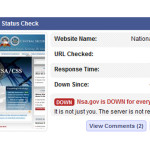
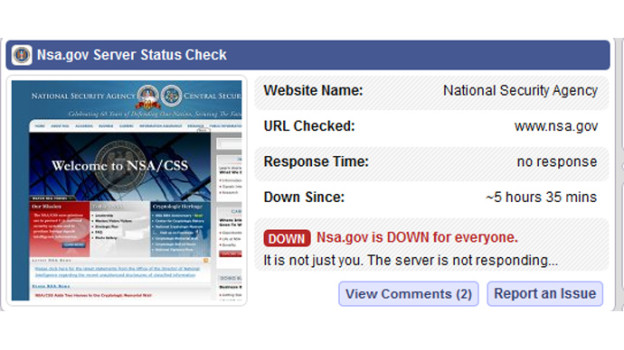
The website for the United States National Security Agency suddenly went offline Friday. NSA.gov has been unavailable globally as of late Friday afternoon, and Twitter accounts belonging to people loosely affiliated with the Anonymous hacktivism movement have suggested they are responsible. Twitter users @AnonymousOwn3r and @TruthIzSexy both were quick to comment on the matter, and implied that a distributed denial-of-service attack, or DDoS, may have been waged as an act of protest against the NSA   Allegations that those users participated in the DDoS — a method of over-loading a website with too much traffic — are currently unverified, and @AnonymousOwn3r has previously taken credit for downing websites in a similar fashion, although those claims have been largely contested. The crippling of NSA.gov comes amid a series of damning national security documents that have been disclosed without authorization by former intelligence contractor Edward Snowden. The revelations in the leaked documents have impassioned people around the globe outraged by evidence of widespread surveillance operated by the NSA, and a massive “Stop Watching Us” rally is scheduled for Saturday in Washington, DC. DDoS attacks are illegal in the United States under the Computer Fraud and Abuse Act, or CFAA, and two cases are currently underway in California and Virginia in which federal judges are weighing in on instances in which members of Anonymous allegedly used the technique to take down an array of sites during anti-copyright campaigns waged by the group in 2010 and 2011. In those cases, so-called hacktivsits are reported to have conspired together to send immense loads of traffic to targeted websites, rendering them inaccessible due to the overload.

More:
NSA site down due to alleged DDoS attack