Alleged Anon arrested for planning gov DDoS attacks

21-year-old could face five years in a Hong Kong slammer Hong Kong police have arrested a 21-year-old man after he apparently bragged on Facebook of his intent to disrupt several government web sites.…

See the article here:
Alleged Anon arrested for planning gov DDoS attacks

Family First site back online after Distributed Denial of Service ‘DDoS’ attack

Family First’s anti gay marriage website is back up and running after an “unprecedented attack” took out the website’s host servers. “Protect Marriage” was launched by Family First yesterday, but minutes later was removed from the web when it became the immediate target of a “large-scale denial of service attack” according to the site’s webhost. Family First director Bob McCroskrie said the website was dedicated to opposing Labour MP Louisa Wall’s Marriage Equality Bill, which was pulled from the ballot last week and had sparked heated debate from both sides. While the site was reinstated a couple of times yesterday, its Christchurch-based webhost had to eventually pull the site completely because hackers had overwhelmed their servers so much it affected every other website hosted by the company. Family First’s own website was also hosted by the company and has also been pulled. A message is now reading the domain for familyfirst.org.nz has been suspended. Family First has reinstated the site with an international hosting company that had larger servers and tighter security measures. “It is disappointing that some opponents in the marriage debate are unwilling to have robust debate and are resorting to desperate – but failed – attempts to shut us down,” McCroskrie said. “We are also disappointed that our web host company was targeted with offensive emails simply because they were a Christchurch business that we wanted to support and who were willing to host some of our websites.” Meanwhile, US band Train have tweeted they are working on getting their music video “Marry Me” removed from the site, but it still featured on the site’s homepage today. Train caught wind their song was being used by Family First after a Twitter user alerted the band their song was being used on an “anti gay marriage website”. A user named @Mikey_J_S6 tweeted the band last night saying: “Why does your music video appear on a homophobic lobby group’s website?”. Train responded saying “Didn’t know. Getting it off asap. Tnx 4 tip”. McCroskrie said they had not yet heard from Train, but if they were asked to take the song down they would. “We’re not going to go by some post on Twitter, but if the band contact us then we will certainly take it down.” Latest tweets would suggest it is now in the hands of Sony, who were working to get the video off the website. At a Victoria University debate on the issue at the weekend, Wall said she expected a significant amount of vitriol directed her way and had already received nasty emails from those who opposed it. “But you know what, I just send them back some love because that is what this is all about.” Wall, who is the bill’s leader, said the point of it was to put human rights at the forefront of discussion. “It’s not about friction or conflict, it’s about having rational conversations and engagements with people and bringing back at the end of the day to a very personal level.” Both Wall and fellow Labour MP Charles Chauvel, who got married to his partner in Canada where the laws would allow, were expecting “dirty tactics” to arise from minority sectors. “While I’m confident and hopeful about us having the numbers to get this legislation through, there will be bitter opposition to it from a minority, but a vocal and sometimes nasty minority,” Chauvel said. For DDoS protection, contact DOSarrest a result of five years of research, experimentation and mitigation of malicious traffic. In the last four years, we have formed a dedicated team of network security specialists, network engineers and developers focused on mitigating DoS/DDoS attacks. Solving the DDoS problem is like a never ending cat and mouse game with attackers. Click Here to Contact Us! Source: http://www.stuff.co.nz/national/7385038/Family-First-site-back-online-after-attack

View original post here:
Family First site back online after Distributed Denial of Service ‘DDoS’ attack

Demonoid Faces Prolonged Downtime After Distributed Denial of Service ‘DDoS’ attack

A severe DDoS attack has brought down one of the most famous BitTorrent trackers. Demonoid has been inaccessible to its millions of users for more than a day and is expected to remain offline for quite some time. The tech admin of the troubled BitTorrent tracker told TorrentFreak that the issues at hand are not easy to fix, and suggests that aside from the DDoS there might have been an attack from another angle. Demonoid is one of the biggest torrent sites around, and has been for more than half a decade. Over the years the site has had its fair share of downtime, sometimes disappearing for months on end. Yesterday, a million plus Demonoid users noticed that they could no longer access the site. Instead of the usual welcome screen users were confronted with a “server busy” message, suggesting that the BitTorrent tracker is facing technical difficulties. TorrentFreak got in touch with the tech admin of the site who informed us that they are in serious trouble. Demonoid was overloaded by a DDoS attack which hit the server hard, resulting in a series of problems that may take a while to address. “It started as a DDoS but then it caused a series of problems. These problems need to be fixed before the site can go back up, and it’s a complicated fix this time,” the Demonoid admin told TorrentFreak. Aside from the DDoS assault, Demonoid’s server may also have been compromised by another attack. “There might have been an attack from another angle, an exploit of sorts, but it’s hard to tell right now without a full check of everything,” the admin says. While Demonoid is determined to return to its full glory, it might take a while before the site is up and running again. After an exodus of staff earlier this year there is only one person available to work on server issues, so progress is slow. “Our human resources became limited in the last few months. All tech issues are handled just by me now and there is no one else to take the job,” the admin told us, adding that his time is also limited by real life issues that take priority. “I’ll fix the site as soon as possible, but it might be a while this time,” the admin says. In recent years Demonoid has been in the cross-hairs of several anti-piracy outfits. It was pressured to move out of Canada by the CRIA and most recently the MPAA and RIAA reported Demonoid as a “rogue site” to the U.S. Government. However, there is no indication that the current attacks at Demonoid are anti-piracy related. For the millions of Demonoid users there’s no other option than to wait, once again. For fast DDoS protection click here . Source: http://torrentfreak.com/demonoid-to-suffer-prolonged-downtime-after-ddos-attack-120727/

Read More:
Demonoid Faces Prolonged Downtime After Distributed Denial of Service ‘DDoS’ attack

Super-Charged Distributed Denial of Service ‘DDoS’ attack Spike In 2012

This year has seen distributed denial of service (DDoS) attackers increase the power of DDsS attacks massively, according to figures exclusively shown to TechWeekEurope. DDoS attacks see servers overwhelmed with traffic, causing a target’s website to go down. All kinds of organisations use DDoS attacks, from hacktivists like Anonymous to private companies wanting to stymie competition, and figures have shown they are upping their efforts. The average size of an attack went up 27 percent in 2012, hitting 1.56Gbps in June, compared to 1.23Gbps in 2011, second quarter data from anti-DDoS vendor Arbor Networks showed. June’s average attack speed was 82 percent up on the same month in 2011. There was also a return to growth in super-powered hits, with a 105 percent rise in the proportion of DDoS attacks measuring in at over 10Gbps. Between 2011 and 2010 that proportion was down 34 percent. Multi-vector DDoS attacks Arbor told TechWeekEurope that attackers were increasingly combining big volumetric attacks with stealthy application-level attacks, which are harder to identify due to a lower level of traffic. “We are still seeing a lot of the more stealthy application layer attacks going on out there, although now they are quite often accompanied by a volumetric attack.  Attackers have learned that by generating application and volumetric attacks (multi-vector ) at the same time they can take sites and services down, and keep them down, for longer periods,” said Darren Anstee, solutions architect at Arbor. “Using multiple vectors makes it more difficult for operational security teams to figure out exactly what is going on, as different parts of the attack can impact different areas of infrastructure. Application layer attacks target the application servers, state-exhaustion attacks target firewalls, load balancers etc.” Despite the rise in DDoS power, the highest powered attacks have hit something of a plateau. The biggest monitored attack so far this year came in at 100.84Gbps, lasting 20 minutes, where 2011’s record of 101.394Gbps has not yet been surpassed in 2012. “It does appear that on the Gigabit per second side of things, right at the top end, attacks sizes may have plateaued.  Why?  It could be that 100Gbps of attack traffic  is ‘all’ that is required to take down anything that has been targeted thus far, or, we could have reached some kind of limitation in some of the tools,” Anstee said. For the first time, the port used for Xbox Live connections (port 3074) showed up on Arbor’s findings, taking up 0.76 percent of attacks. Port 80, used by the HTTP protocol, is the prime target for DDoSers, with 29 percent of strikes hitting it in Q2. “There are unfortunately quite a lot of attacks between on-line gamers (this is multiplayer online gaming, rather than gambling).  These attacks are used either to give one player an advantage over another, or avenge a defeat,” Anstee added. Botnets are a major part of the problem, as TechWeekEurope’s recent investigation into the underground DDoS market found. Law enforcement and industry firms continue to work with one another on knocking down botnets, as seen in last week’s effort to kill off super-spammer Grum. But most believe arrests are needed to truly counter the rise of malicious networks. For fast DDoS protection click here . Source: http://www.techweekeurope.co.uk/news/ddos-attacks-power2012-86926

Visit link:
Super-Charged Distributed Denial of Service ‘DDoS’ attack Spike In 2012

DDoS crooks: Do you want us to blitz those phone lines too?

Miscreants offer to down mobe and fixed line services for $20 a day Cybercrooks are now offering to launch cyberattacks against telecom services, with prices starting at just $20 a day.…

Read More:
DDoS crooks: Do you want us to blitz those phone lines too?

DDoS attacks aimed at telecom systems are on the rise

DDoS attacks are usually seen as the domain of hacktivists and hackers looking to block – then blackmail – companies that are heavily dependent on their Internet presence. But, with the rise of bot…

Read More:
DDoS attacks aimed at telecom systems are on the rise

Five Ways to Protect Against Distributed Denial of Service ‘DDoS’ attacks

Distributed denial of service (DDoS) attacks are able to take out an entire site in a matter of minutes. Firewalls and traditional tools like intrusion detection and prevention systems cannot always mitigate the security risks associated with these threats. New techniques and technologies in DDoS attacks can be more aggressive than their DoS predecessors and require a different kind of approach to network security. This slideshow features some of the tricks and tools, identified by Jim MacLeod, product manager at WildPackets, that can be employed to hinder the flow of a DDoS attack. 1. Understanding a DDoS attack The goal of any DDoS attack is to overwhelm a service to the point where it no longer works. While DDoS has historically been just an annoyance, there is usually a financial impact, such as lost sales or a spike in bandwidth costs. Cloud-hosted services, which charge by usage, are especially financially vulnerable to an onslaught of traffic. DDoS attacks use large numbers of computers simultaneously targeting a single service. The attack often comes from botnets, which are composed of PCs infected by a virus. Recently, DDoS has been used by political protesters, who crowdsource attackers through downloadable software. Older DoS attacks like SYN floods used limited numbers of attackers, so it was possible to use automatic per-client rate-limiting, or to block the IPs. Modern DDoS techniques try to avoid large amounts of traffic per attacker, and rely purely on large numbers. 2. Prepare in advance Many sites may think they’re too small to attract attention. However, DDoS isn’t a hard attack to perform. Ironically, DDoS is even available as a service. If your site is big enough to attract any business, it’s big enough to attract a potential attacker. Reducing the cost of an attack starts with early detection. There are simple techniques you can use to alert yourself to an attack. Run a script on your server that sends a message periodically with the recent traffic count: You’ll get a warning either if the count jumps significantly, or the message doesn’t arrive. Additionally, use a remote monitoring program that periodically checks the service’s availability. A large DDoS attack may block your management access if the site is remote. Try to make sure there’s a cost-effective out-of-band management solution. 3. Identify the attack fingerprint Once you detect a DDoS attack, the first step is to identify its unique characteristics. Despite the availability of cleverer techniques, DDoS usually relies on brute force – which means that the traffic from all of the attackers will have unique similarities. Because large numbers of attackers will be involved, scattered across the Internet, blocking the IP addresses will be nearly impossible. Instead, do a quick packet capture of the attack. Finding examples will be relatively easy, since most of the traffic will be DDoS traffic. Commonalities can often be found in the URI, user agent, or referrer. What you’re looking for is a pattern that you can block with your firewall, router ACL, IDS, etc. It will often be an ASCII or hex pattern at an offset. Become familiar with the capabilities of your equipment, and try some tests in preparation. 4. Block the rogue packets Once you have identified the attack fingerprint, it is time to set up a block within your firewall or router to drop the majority of packets. However, a high-bandwidth attack may simply exhaust your WAN link: You’ll have a clean LAN, but your service will still be unreachable. Contact your carrier now to figure out how to work with them during a DDoS attack, in case they need to do the blocking for you. Some service providers offer “clean pipe” hosting with automatic DDoS squelching. There are also companies who offer products and services to detect and prevent DDoS. Depending on the specifics of your service, it may make financial sense to pay for one of these solutions. Don’t forget the option of simply hosting the service somewhere large enough to absorb the attack – but remember that DDoS against sites that charge by bandwidth can result in unexpectedly high bills. 5. Surviving and cleaning up During and after a DDoS attack, ask for help. Your regional CSIRT (Computer Security Incident Response Team) should be alerted, as they have expertise and contacts that can not only help you during the attack, but also start the process of figuring out who did it and how. A global list is available here: http://www.cert.org/csirts/national/contact.html As cyber crimes get more sophisticated, businesses must be able to constantly adapt to these new security threats. While there are no methods or tools that can completely prevent DDoS attacks from happening, having a security “insurance policy” in place is the first step in ensuring that you are completely prepared. The ability to quickly suspend this new level of attack is tantamount to protecting company data as well as your business as a whole. Click here for DDoS protection. Source: http://www.itbusinessedge.com/slideshows/show.aspx?c=96534

Read More:
Five Ways to Protect Against Distributed Denial of Service ‘DDoS’ attacks
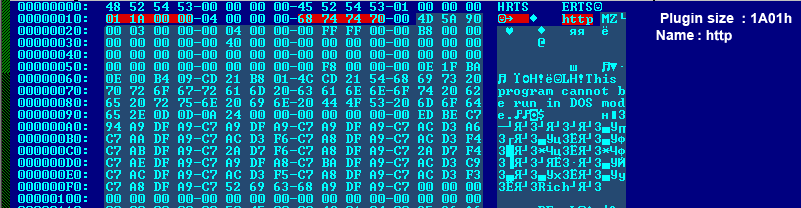
Bot herders try to resurrect Grum, fail

As you have probably already heard, the Grum botnet – formerly the third largest in the world – has been effectively shut down last week after several security researchers managed to coordinate the ta…

See more here:
Bot herders try to resurrect Grum, fail

Week in review: Grum botnet shutdown, Android malware, and Madi Trojan targeting the Middle East

Here's an overview of some of last week's most interesting news, articles and reviews: How to make smart grids To prepare for a successful roll-out of smart grids, a new ENISA study proposes 10 …

Read more here:
Week in review: Grum botnet shutdown, Android malware, and Madi Trojan targeting the Middle East