New research released by Neustar suggests that the majority of UK businesses are unprepared to cope with the threat of DDoS attacks. Distributed Denial of Service (DDoS) attacks are a common method for cyberattacks to disrupt an online businesses. A DDoS attack uses compromised computer systems to attack a single target, sending traffic from multiple points of origin in a flow, which often overwhelms a system, causing it to deny authentic traffic access to services. According to research released by Neustar, a third of UK businesses estimate losses of £240,000 per day when hit with DDoS attacks. After surveying 331 companies in the United Kingdom across numerous industries including financial services, technology, and the public sector, the analytics provider says larger DDoS attacks are becoming more frequent with a 200 percent increase in attacks affecting bandwidth between 1-20Gbps, in addition to a significant increase in attacks on bandwidth with a magnitude of 100Gbps or more. Neustar’s report, “ United Kingdom DDoS Attacks & Impact Report. 2014: The Danger Deepens ,” also states that DDoS attacks are a “growing threat to organisations with potentially calamitous consequences for companies” without proper protection. Not only can DDoS attacks have an immediate impact on sales and business revenue, they can have long-lasting detrimental effects on brand value, customer trust, and public reputation. Key findings from the survey include: DDoS attacks often disrupt multiple business units, with public-facing areas like call centres, customer service, and marketing absorbing over 40 percent of DDoS-attack related costs. Over 35 percent more UK companies were hit by DDoS attacks in 2013 compared with 2012. In 2013, there was an increased number of longer attacks, with 28 percent lasting up to two days or more. Once attacked, there is an estimated 69 percent chance of a repeat attack. While 31 percent of these companies were DDoS-attacked once, over 48 percent were targeted two to 10 times. In 2013, attacks requiring over six people to mitigate rose to 39 percent compared to 25 percent in 2012, a 56 percent increase. In addition, Neustar’s research highlights an increase in a trend dubbed “smokescreening.” These types of DDoS attacks are used by cybercriminals in order to divert IT department attention while malware and viruses are inserted within a business network, with the overall aim of stealing valuable data or funds. Rodney Joffe, Senior Vice President and Technology Fellow at Neustar commented: Organisations must remain constantly vigilant and abreast of the latest threats. As an example, Neustar’s UltraDNS network suffered an attack just last week peaking at over 250Gbps — a massive attack by industry standards. Even with proper mitigations in place, the attack caused an upstream ripple. It is a constantly changing threat landscape. In February, Web performance company CloudFlare reported the mitigation of a DDoS attack on a French website which reached a record-setting attack of at least 325Gbps, and a potential reach of 400Gbps. Source: http://www.zdnet.com/majority-of-uk-firms-unprepared-for-ddos-attacks-study-finds-7000029178/
More:
Majority of UK firms unprepared for DDoS attacks, study finds

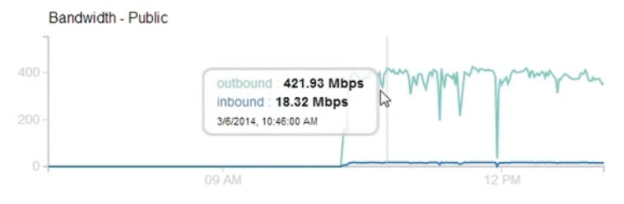
 A researcher discovered a flaw in the section “notes” of the social network Facebook that could be exploited by anyone to conduct a powerful DDoS attack. The Security researcher Chaman Thapa, also known as chr13, discovered a vulnerability in the section ‘Notes’ of the popular social network Facebook that could be exploited by anyone to launch the distributed denial-of-service (DDoS) attack of more than 800 Mbps Bandwidth on any website. Chaman Thapa demonstrated that simply reading a ‘Note’ created by anyone on the Facebook platform an attacker could automatically generate malicious traffic against a target. The researcher published a blog post to describe the vulnerability, he exploited the possibility to include tags inside the post to allow the creation of notes that have images from any source. The attack scenario is very simple, Facebook downloads external images from the original source for the first time only, to improve the performance it stores them in the cache for successive uses. If the image url has dynamic parameters, Facebook is not able to store the image in cache and practically it download all the images included in a note each time whenever anybody view the note. “Facebook Notes allows users to include tags. Whenever a tag is used, Facebook crawls the image from the external server and caches it. Facebook will only cache the image once however using random get parameters the cache can be by-passed and the feature can be abused to cause a huge HTTP GET flood.” Let’s see the DDoS attack scenario described by Chaman Thapa, let’s chose the target website “ target.com” which include a large image on its server (e.g. 1Mb). The researcher creates a Facebook Note which includes the above image multiple times with dynamic parameters, and some text. Facebook servers are forced to download 1 MB of file 1000 times in one page view (It has been estimated that each note is now responsible for 1000+ http requests). If 100 Facebook users are reading the same note at the same time, then Facebook servers will be forced to download 1 x 1000 x 100 = 100,000 Mb or 97.65Gb bandwidth within few seconds from the targeted servers. In the image below is reported the graph for the 400 Mbps traffic generated from 127 Facebook servers in the proof-of-concept made by Thapa by attacking on his own web server. Following the description provided in the post by the Chaman Thapa. Steps to re-create the bug as reported to Facebook Bug Bounty on March 03, 2014. Step 1. Create a list of unique img tags as one tag is crawled only once .. Step 2. Use m.facebook.com to create the notes. It silently truncates the notes to a fixed length. Step 3. Create several notes from the same user or different user. Each note is now responsible for 1000+ http request. Step 4. View all the notes at the same time. The target server is observed to have massive http get flood. Thousands of get request are sent to a single server in a couple of seconds. Total number of facebook servers accessing in parallel is 100+. The researcher explained that the amplification factor of the DDoS attack depends on the dimension of the image downloaded, it could be even higher if the attacker includes in the note a pdf or a video. “A scenario of traffic amplification: when the image is replaced by a pdf or video of larger size, Facebook would crawl a huge file but the user gets nothing.” “Each Note supports 1000+ links and Facebook blocks a user after creating around 100 Notes in a short span. Since there is no captcha for note creation, all of this can be automated and an attacker could easily prepare hundreds of notes using multiple users until the time of attack when all of them is viewed at once.” noted Chaman Thapa. There is the concrete risk that a bad actor creates hundreds of notes with specially crafted script using multiple users at the same time, resulting a powerful DDoS attack. The alarming news is that the flaw is still unpached and Facebook has no plans to fix it. “ In the end, the conclusion is that there’s no real way to us fix this that would stop attacks against small consumer grade sites without also significantly degrading the overall functionality, ” replied Facebook to the researcher. Click here to read the entire article. Source: http://www.arie.co.za/how-to-abuse-facebook-feature-to-conduct-powerful-ddos-attack/