
Dave Larson offers advice for organisations wishing to protect themselves from the latest types of cyber-extortion Ransom demands and DDoS attacks are now, more than ever, being used together in inventive new techniques to extract money from victims. This ranges from hackers threatening to launch a DDoS attack unless a ransom is paid, to the recent reports of a multi-layered cyber-attack combining ransomware and DDoS attacks in one. But what is often less understood is the way that sub-saturating DDoS attacks are regularly being used as a precursor to ransomware incursion. Because these attacks are so short – typically less than five minutes in duration – these low-bandwidth DDoS attacks allow hackers to test for vulnerabilities within a network, which can later be exploited through ransomware. Here we outline some of the typical methods of cyber-extortion involving DDoS attacks, and explain why automatic DDoS mitigation is such a key defence in the ongoing battle against ransomware. Extortion is one of the oldest tricks in the criminal’s book, and one of the easiest ways for today’s cyber-criminals to turn a profit. As a result, there are a significant number of techniques that hackers will utilise to try and extract money from victims. One of the most common is DDoS ransom attacks, where attackers threaten to launch a DDoS attack against a victim unless a ransom is paid. These attacks can affect any internet-facing organisation and are often indiscriminate in nature. In May, the City of London Police warned of a new wave of ransom-driven DDoS attacks orchestrated by Lizard Squad, in which UK businesses were told that they would be targeted by a DDoS attack if they refused to pay five bitcoins, equivalent to just over £1,500. According to the results of a recent survey, 80 percent of IT security professionals believe that their organisation will be threatened with a DDoS attack in the next 12 months – and almost half (43 percent) believe their organisation might pay such a demand. But despite the prevalence of DDoS ransom attacks, and its longevity as a technique, nothing elicits the same degree of alarm among security teams as the current threat of ransomware. This type of malware is estimated to have cost US businesses as much as US$ 18 million (£13.7 million) in a single year, and has already claimed a string of high-profile victims including hospitals and public bodies. Earlier this month, European police agency Europol launched a new ransomware advice service aimed at slowing down its exponential rise. But when it comes to protecting your organisation’s data from being encrypted and lost, most advice focuses on recovery, rather than prevention. This includes having a good backup policy, which ideally involves serialising data so that multiple versions of the files are available, in case newer versions have been encrypted. But what about taking a more proactive stance? We know that ransomware is usually delivered via email, inviting respondents to click on a link to download malware. Typically the themes of these emails include shipping notices from delivery companies or an invitation to open other documents that the recipient supposedly needs to review. It’s true that many of these emails are sent opportunistically and on a blanket basis to a wide number of potential victims. But we are also seeing an increase in more targeted attacks, designed to gain access to a specific organisation’s networks. After all, attacking a larger, more high-profile organisation would normally command a higher potential ransom reward, so hackers are investing an increasing amount of time researching specific victims and locating their vulnerabilities – usually through a variety of automated scanning or penetration techniques, many of which are increasingly incorporating the use of sub-saturating, low-bandwidth DDoS vectors. Most people associate the term ‘DDoS’ with system downtime, because the acronym stands for “Distributed Denial of Service”. But DDoS threats are constantly evolving, and many hackers now use them as a sophisticated means of targeting, profiling, and infiltrating networks. Short, sub-saturating DDoS attacks are typically less than five minutes in duration, meaning that they can easily slip under the radar without being detected by some DDoS mitigation systems. Five minutes may seem like an insignificant amount of time – but an appropriately crafted attack may only need a few seconds to take critical security infrastructure, like firewalls and intrusion prevention systems (IPS) offline. While IT teams are distracted by investigating what might be causing these momentary outages on the network, hackers can map the floor plan of their target’s environment, and determine any weak points and vulnerabilities that can later be exploited through other methods, such as ransomware. It is only by deploying an in-line DDoS mitigation system that is always-on, and can detect and mitigate all DDoS attacks as they occur, that security teams can protect themselves from hackers fully understanding all possible vulnerabilities in their networks. While these short DDoS attacks might sound harmless – in that they don’t cause extended periods of downtime – IT teams who choose to ignore them are effectively leaving their doors wide open for ransomware attacks or other more serious intrusions. To keep up with the growing sophistication and organisation of well-equipped and well-funded threat actors, it’s essential that organisations maintain a comprehensive visibility across their networks to spot and resolve any potential incursions as they arise. Source: http://www.scmagazineuk.com/the-hidden-role-of-ddos-in-ransomware-attacks/article/514229/
Read more here:
The Hidden Role of DDoS in Ransomware Attacks
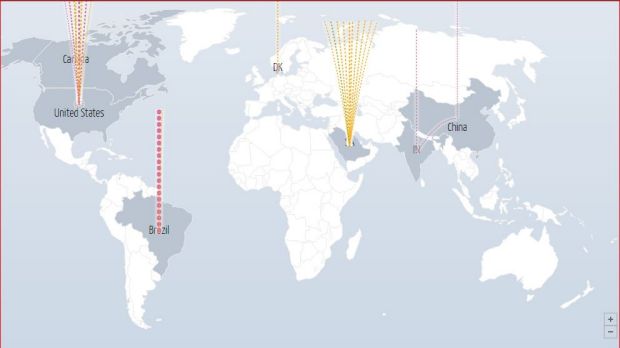
 Experts believe that the electronic assault on the census site was a DDoS attack – a kind of electronic army that attacks an enemy’s website on every flank using millions of computers as soldiers. About 2000 of these attacks occur every day across the world, said DigitalAttackMap, a website that monitors such attacks. Only days ago, this type of attack shut down US Olympic swimming Michael Phelps’ commercial website, SCMagazine , which specialises in IT security, said. It said the attack happened fresh after Phelps’ gold medal-winning performance in the men’s 4×100 metre freestyle relay at the Rio Games. One hacking expert told Time magazine that any celebrity or high-profile site should expect these attacks. “Each celebrity on our target list will be either hacked or DDoSed,” a representative of hacking group New World Hackers said. Xbox, US Republican presidential candidate Donald Trump and the BBC have been among New World Hackers’ recent targets. DigitalAttackMap, a joint venture between Google Ideas and network security firm Arbor Networks, said these attacks had hit online gaming sites, newspapers and banks; Greek banks were crippled this year. Yet its site doesn’t show a DDoS attack on the ABS census site on Tuesday, bolstering claims by some that the attack didn’t take place. The DigitalAttackMap tracks DDoS attacks on a daily basis. The red flare over Brazil shows a serious DDoS attack. Photo: DigitalAttackMap.com The Australian Bureau of Statistics said its census site was hit four times by denial of service (DoS) attacks. A DoS is a broad term for attacks that attempt to crash an online system so that users cannot access it. Some IT and cybersecurity professionals speculated that a DDoS (Distributed Denial of Service) attack was to blame. A DDoS is a type of DoS attack in which hackers attempt to crash a system by flooding it with bots – or Trojan – accounts. DigitalAttackMap said attackers cripple websites, such as the ABS’ census site, by building networks of infected computers, known as botnets, by spreading malicious software through emails, websites and social media. Once infected, these machines can be controlled remotely, without their owners’ knowledge, and used like an army to launch an attack against any target. Some botnets are millions of machines strong. DigitalAttackMap says these botnets can generate huge floods of traffic to overwhelm a target. “These floods can be generated in multiple ways, such as sending more connection requests than a server can handle, or having computers send the victim huge amounts of random data to use up the target’s bandwidth. Some attacks are so big they can max out a country’s international cable capacity.” Adding to many people’s fears about the security of the census website before the attack, the information gained from these sites during an attack is sold on online marketplaces that specialise in information gained from these DDoS attacks, DigitalAttackMap said. “Using these underground markets, anyone can pay a nominal fee to silence websites they disagree with or disrupt an organisation’s online operations. A week-long DDoS attack, capable of taking a small organisation offline, can cost as little as $150,” the website said. Source: http://www.smh.com.au/technology/technology-news/what-are-the-dos-and-ddos-attacks-that-brought-down-the-census-20160809-gqowwp.html