Category Archives: DDoS Criminals

Anonymous pledges more attacks in Canada

The Anonymous hacker group that carried out Friday’s cyber attack on Ottawa’s City Hall has pledged attacks on eight more targets, including Ottawa Police and the Supreme Court. The group has taken responsibility for hacking Ottawa.ca, hijacking the site with a taunting image of a dancing banana, and naming an Ottawa police officer with the ominous message “You know what we want…” Anonymous launched the hacking campaign Operation Soaring Eagle two weeks ago, and claims they have already penetrated the Ottawa police server. The group taunted police to find a “digital footprint” left behind as proof of their capabilities, and threatened to deface the Ottawa police website, as well as publishing e-mail exchanges between officers and the home addresses of investigators. “For every one technical (expert) you think you have, we have 20.. 50.. 100.. Do you believe us now?” the group posted following Friday’s hack. “Are we serious enough? This is just the start, Operation Soaring Eagle will continue, until we see fit that it is completed. We will be taking over all ottawa police networks, shutdown communications on the internet, hijack domains, servers, and soo much more (sic). It all starts today (Friday).” Both Chief Charles Bordeleau and Supt. Tyrus Cameron were dismissive of Anonymous’ threats. “We’re investigating,” Cameron said Saturday, adding he doubts the hackers have infiltrated the Ottawa Police e-mail server and are prepared to post names and addresses of officers. “Police operations and systems continue to function normally.” Later, Anonymous carried through by posting the phone number and home address of the Ottawa police officer named during Friday’s cyber attack. The officer is one of the investigators in a massive joint investigation with the FBI that netted 60 charges against a Barrhaven teen in May. The teen is accused of “swatting,” which is a trend of making prank calls reporting fake bomb threats, hostage situations and active shootings, while impersonating another person, commonly an online gaming rival. Emergency personnel will then respond to the call in vast numbers ? often in SWAT teams ? only to discover the ruse on arrival. “(The officer) knows exactly why he forced this to happen,” Anonymous said Saturday. It is believed the group carried out the attack when new evidence that supposedly exonerates the Barrhaven teen ? and alleges another man in New Jersey is actually behind the swatting frame-up ? was ignored by investigators, as Anonymous alleges. Bordeleau would not comment on Anonymous’ claims. The family’s lawyer, Joshua Clarke, said his client has maintained his innocence “from the very beginning.” “While we don’t condone the actions and are in no way affiliated with Anonymous, we understand that this group exists and have chosen to assist my client,” Clarke said. A Twitter user under the handle Aerith, speaking on behalf of Anonymous, said the group offered information to Ottawa police that would prove the innocence of the teen. “Enough is enough. We offered to give (police) information on (the) real swatter… in exchange let (the Barrhaven suspect) go, they laughed… They questioned our skills… That young lad is innocent, this is just pure bull—-.” QMI Agency could not reach the New Jersey man named by Anonymous. Aerith said he was “happily going through every single (police) e-mail, and operation discussed in their e-mails, and preparing a press release.” The group also said it was planning on replacing the police home page with “a dancing hitler banana with ISIS logo just to piss off (Stephen) Harper.” In a lengthy anti-police and anti-establishment rant on Nov. 12, Anonymous warned that the hacker collective would be carrying out “DDoS attacks” targeting the servers of nine websites, notably Ottawa.ca, Ottawa Police and the Supreme Court. The group lists several other targets, including Guelph Hydro, the City of Waterloo, Telus, WindMobile, Koodo Mobile and Fido, though it is not immediately clear why those companies and institutions are targeted. On Saturday, after that first cyber-attack was verified, the group posted another message warning, “This is just the start… We will not rest.” The group signed off by warning of another attack coming on Monday, pledging, “We have a shocker planned.” Source: http://www.torontosun.com/2014/11/22/anonymous-pledges-more-attacks-in-canada

Continued here:
Anonymous pledges more attacks in Canada
#OpKKK: Anonymous launches DDoS attacks on KKK websites

Anonymous claims it has taken down several Ku Klux Klan websites and Twitter accounts as part of what internet hacktivists describe as a “cyber war”, inspired by KKK threats of using “lethal force” against Ferguson protesters. Anonymous listed the KKK websites it put offline Sunday night on its Twitter feed, with reports on the attacks coming with the hashtag #OpKKK. The group has acknowledged, though, that its anti-KKK action was not running smoothly enough. “ A lot of the sites being DDOS’d in #OpKKK seem to be going down, coming up, going back down, coming back up, etc ,” Anonymous explained. The hacktivists have also announced having taken over two KKK Twitter accounts @KuKluxKlanUSA and @YourKKKCentral. “ Based on the direct messages sent from and to this account, we can confirm that this account was run by an official Klan member ,” the group posted at one of the hacked accounts, promising more details in a statement coming in a few hours. The group is targeting the Ku Klux Klan over fliers it distributed among residents of the St. Louis area. The leaflets described protesters in Ferguson as “terrorists” and warned the KKK was ready to use lethal force against them. READ MORE: Missouri KKK: We will use ‘lethal force’ against Ferguson protesters The hacktivists reacted to the threats by releasing a video, announcing the launch of a “cyber war” on the KKK. “ DDos attacks have already been sent and have infiltrated your servers over the past 2 days… d0x’s have also been launched on leaders of the KKK. All information retrieved will be given to the public ,” the video says. The online attacks by the Anonymous come as tensions rise in St Louis, where a decision by a grand jury is expected any day now, though the date of the verdict has not been announced. The ruling will determine whether criminal charges will be brought against white police officer Darren Wilson, who shot unarmed black teenager Michael Brown, killing him. On Sunday, a crowd of demonstrators staged a peaceful protest in St. Louis, marking 100 days since the fatal shooting. Protesters lay down on chalk-marked areas, pretending to have been shot. Source: http://rt.com/usa/206067-anonymous-hacks-kkk-accounts/

See the original article here:
#OpKKK: Anonymous launches DDoS attacks on KKK websites

Don’t blame Obama, but DDoS attacks are now using his press releases

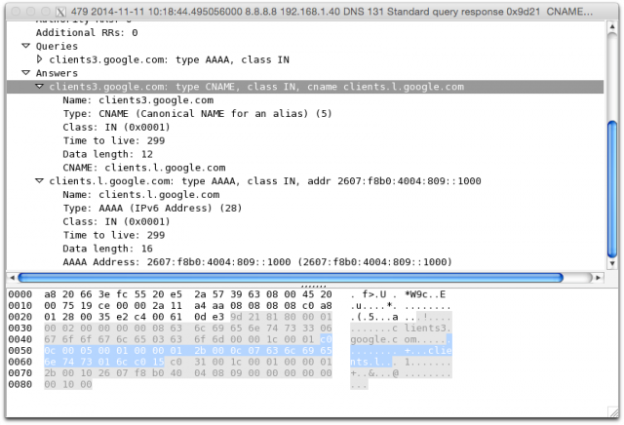
A new form of Domain Name Service-based distributed denial of service (DDoS) attacks that emerged in October, attacks that can significantly boost the volume of data flung at a targeted server. The method builds upon the well-worn DNS reflection attack method used frequently in past DDoS attacks, exploiting part of the DNS record returned by domain queries to increase the amount of data sent to the target—by stuffing it full of information from President Barack Obama’s press office. DNS reflection attacks (also known as DNS amplification attacks) use forged requests to a DNS server for the Internet Protocol address and other information about a specific host and domain name. For example, a response from Google’s DNS server typically returns something like this—a simple response with the canonical name (CNAME) of the DNS address sent in the request and an IPv4 or IPv6 address for that name: DNS requests are usually sent using the User Datagram Protocol (UDP), which is “connectionless.” It doesn’t require that a connection be negotiated between the requester and the server before data is sent to make sure it’s going to the right place. By forging the return address on the DNS request sent to make it look like it came from the target, an attacker can get a significant boost in the size of a DDoS attack because the amount of data sent in response to the DNS request is significantly larger. But this new attack pumps up the size of the attack further by exploiting the TXT record for a domain—a free-form text entry for a domain name. TXT records are used to provide “time to live” (TTL) information for caching of webpages, configuring anti-spam policies for e-mail service, and verifying ownership of domains being configured for Google Apps and other enterprise services. It can also be used to provide information about other services associated with a domain name. A TXT record for a domain can be up to 255 characters—a significant boost over the relatively small size of the request sent for it. In October, Akamai’s security team noticed a trend in DNS reflection attacks using TXT record requests to the domain “guessinfosys.com” and other malicious domains. The contents for those were not exactly what you’d expect in such a record—they contained text pulled from news releases on WhiteHouse.gov: These attacks lasted for over five hours during each episode, resulting in malicious traffic of up to four gigabits per second hitting their targets. The contents of the TXT records were apparently being updated automatically, possibly scraping data from the WhiteHouse.gov site. DDoS attacks, like many “reflection” attacks, are preventable by DNS server operators by blocking external DNS requests. The attacks can sometimes be stopped at the edge of the network, but that usually requires having more bandwidth available than the size of the attack—something smaller sites without DDoS protection from a content delivery network such as Akamai or CloudFlare may have some difficulty doing. Source: http://arstechnica.com/security/2014/11/dont-blame-obama-but-ddos-attacks-are-now-using-his-press-releases/

Read the article:
Don’t blame Obama, but DDoS attacks are now using his press releases

Defending against the dark arts of DDoS

In the magical world of Harry Potter, the boy wizard and his cohorts were enrolled in a class called Defence Against the Dark Arts as part of their curriculum. In the world of technology, defending against the “dark arts” of DDoS attackers is just as much a requirement. DDoS attacks suspend service to a website by overwhelming it with traffic from multiple sources, thus blocking access to the site and preventing users from accessing important information. Hackers can take down a website in one fell swoop using DDoS attacks, and the longer they last, the more costly they can be to a business. According to a report from TrendMicro Research, a week-long DDoS attack costs $150 on average from the Internet’s black market, while Verisign/Merrill Research reports that one-third of all downtime activity on the Internet can be attributed to DDoS attacks. Additionally, a newly-released report from Symantec indicates that DDoS attacks have increased by a staggering 183 per cent between January and August of 2014. In an exclusive interview with IT in Canada, Candid Wüeest, senior software engineer at Symantec Advanced Threat Research, discusses how businesses can defend against these attacks, and how Symantec can arm them for this battle. IT in Canada: Why are more businesses falling victim to DDoS attacks? Wüeest: I think we’re seeing more mid-sized and larger companies falling victim to DDoS attacks because they’re very easy to carry out by the attackers, and it can be very devastating on the receiving end as a result. The motivation behind it might often vary. For example, there are hacktivists who might do it to protest a company’s ideologies, but we also see others do it to make a profit. One of the most obvious profit-related (schemes) is extortion, where an attacked company might be told “Give us a certain amount of money or your online shop will be down.” The other is carried out by a company’s competition, using DDoS attacks to redirect customers to their business. With Thanksgiving coming up, if an online shop is not online during critical hours, people might go to a different shop, allowing the competition to profit from those sales. ITIC: The Symantec report notes that DDoS attacks increased by 183 per cent between January and August of 2014. What is the reason for that? CW: I think it’s a bit of a self-fulfilling prophecy. We see that they are successful, and more people in the media are talking about them. This shows hackers that it’s a proven way to attack someone, so they decide to go through with it, which also creates a bigger demand for automated tools and DDoS services. We are also seeing more advertising in the underground market for people selling these services, and this is probably the reason why you’re seeing more of them actually happening. ITIC: What can businesses do to prevent DDoS attacks? CW: When it comes to defending against DDoS attacks, there are a few strategies. The first one is to simply be prepared for them and know who to call. Have a response plan integrated into your system to accommodate DDoS attacks. In most case, when businesses fall victim to DDoS attacks, they don’t know what to do or who to call, or who is responsible at the IP level, and this results in valuable time and revenue being lost. The second one is planning for scalability and flexibility within your network. That starts with having the opportunity to filter out traffic whenever possible in multiple locations, have a load balancer in for multiple sites, or have a caching proxy in place. The third strategy involves implementing certain protection services. Nowadays, if you’re a medium- or large-sized business, you should also definitely speak with providers of specific protection services, which can help you mirror your website across multiple locations, allowing for better filtering if you are under attack. ITIC: Why are hackers now relying on mobile devices to execute attacks? CW: We’ve seen that hackers are experimenting with mobile phones. This not just because of their 4G and LTE capabilities, which means they can generate a lot of bandwidth traffic, but because they are very good at generating application level DDoS attacks. They can attempt to overload a database with queries and perhaps use up all of an application’s resources. This is done through WebRequest, which can be easily sent over any mobile network. We all know that most mobile phones are usually not protected by any kind of security software, so once they infected, they usually stay infected for a very long time because most people don’t notice it, as they don’t switch off their phones after 24 hours online. As a result, I think that mobile phones might be a better attacking platform than a laptop that you would shut down overnight. ITIC: What kinds of services does Symantec offer for defending against these attacks? CW: Symantec is very active in the intelligence and protecting people from becoming the source of an attack. We can help you defend against having your service compromised by any of the malware tools being used or a third-party amplification attack. We cooperate with different companies for the distribution of the network, but that is more of the focus of companies like Akamai and CloudFlare. With our knowledge that we have in the data centre, we can help with the flexibility of setting up networks that can be integrated into those services without having to switch too much on your existing platform. ITIC: Are DDoS issues more of a problem in Canada then they are in the U.S.? CW: As a country, Canada is doing well. It’s less of a problem there compared to the U.S., but we can’t expect there to be a country where DDoS attacks aren’t happening. One of the reasons is because they’re so easy to conduct, and many more hackers are relying on them now as a result. They are definitely happening in Canada, and people should definitely be preparing themselves if they haven’t already done so. ITIC: What can companies do to protect their cloud from attacks? CW: Cloud protection is an interesting problem. Companies should definitely read the FAQs from their cloud service providers to learn how they can protect against denial-of-service attacks. Sometimes, they might be a DDoS attack against a company’s online storage, but if it’s targeting the cloud provider, the business might not even notice that they are under attack. They might just notice that they are no longer available, or the availability of certain documents is failing. You should definitely talk to you cloud provider about how they are protected against DDoS attacks, and most of them do have a plan or have multiple locations and balancing in place to cope with these attacks. Make sure that you are aware of them, and if they don’t have them, you should consider moving to another one or plan a strategy on how you can switch to a secondary site in the event of an attack. ITIC: What does the future hold for DDoS attack prevention? CW: With DDoS attack prevention, we see that it’s moving in another way, but kind of complimenting to the whole bandwidth issue. At the moment, most of the mitigation tactics rely on providing a larger bandwidth so that the attackers cannot fill it up. This is good for basic attacks, but we see that there is a limitation to this. In the end, this is a race which will be won by the attackers most of the time because they can compromise more machines. What we see in the future is that we have to rely more on the protection of resources, such as websites and databases, and ensuring that they are protected and secure against having their resources used up. We also have to ensure we can perform proper filtering and only let genuine people in. We see more features being implemented in back service technologies or proxies that are close to the web server. Source: http://www.itincanadaonline.ca/index.php/security/1003-defending-against-the-dark-arts-of-ddos

Read the original post:
Defending against the dark arts of DDoS

Emoticons blast three security holes in Pidgin :-(

Dump docs on users’ disks using only ASCII art (°O°) Cisco researchers have reported a trio of vulnerabilities in popular instant messaging client Pidgin that allow for denial of service by way of emoticon abuse and remote arbitrary file creation.…

Read the article:
Emoticons blast three security holes in Pidgin 🙁

18 Election Websites Offline During the U.S. Midterm Elections possible DDoS attack

On the day of the U.S. midterm elections, the Contra Costa County Department of Elections website for was inaccessible starting at 7:20 a.m. local time. And it wasn’t alone, the Bay Area News Group reported that 18 election websites run by Florida-based SOE Software across the country were down for most of the election day. According to local news reports, Contra Costa County officials said the hosting of the website was contracted to SOE Software, which was also offline at the time. Election officials said SOE Software was working trying to fix the problem, and the sites were back online this week. The main function of election websites is to provide information on where voters can find polling stations, but they also provide features such as Vote by Mail ballot registration. Officials recommended that voters needing to find their polling station visit Get to the Polls, a website sponsored by the Pew Charitable Trust and others. It’s possible that the election websites were unprepared for the amount of traffic they would get on election day, but it’s also likely that a Distributed Denial of Service attack flooded SOE Software’s servers with requests, blocking legitimate traffic from reaching the websites it hosts. Source: http://www.thewhir.com/web-hosting-news/least-18-election-websites-offline-u-s-midterm-elections

Read More:
18 Election Websites Offline During the U.S. Midterm Elections possible DDoS attack

DDoS Explosion Imminent for Guy Fawkes Day

Guy Fawkes: famous for a plot to assassinate England’s King James in 1604 and for guarding copious amounts of gunpowder, is remembered every Nov. 5 in Britain with fireworks and bonfires. Researchers say that businesses should brace themselves for a different kind of plot: an influx of distributed denial of service (DDoS) attacks from hacktivist group Anonymous on Wednesday. “The forecast for the future looks dark, as we expect to see many DDoS attacks during Guy Fawkes Day on November 5, as the Anonymous collective has already announced various activities under the Operation Remember campaign,” said Candid Wueest, threat researcher at Symantec, in a blog. “However, hacktivists protesting for their ideological beliefs are not the only ones using DDoS attacks. We have also seen cases of extortion where targets have been financially blackmailed, as well as some targeted attacks using DDoS as a diversion to distract the local CERT team while the real attack was being carried out.” DDoS attacks have grown in intensity as well as in number in the last two years, although the duration of an attack is often down to just a few hours. Amplification attacks especially are very popular at the moment as they allow relatively small botnets to take out large targets with amplification factors of up to 500. For such an attack, spoofed traffic is sent to a third-party service, which will reflect the answer to the spoofed target. “Such attacks are simple to conduct for the attackers, but they can be devastating for the targeted companies,” said Wueest. From January to August 2014, Symantec has seen a 183% increase in DNS amplification attacks, making it the most popular method seen by Symantec’s Global Intelligence Network. Multiple methods are often used by attackers in order to make mitigation difficult and, to make matters worse, DDoS attack services can be hired for less than $10 on underground forums. “It is the distribution of hosts that attracts attackers — such as the group Anonymous — as it provides multiple advantages; undetectable location, multiple machines and identity anonymity,” said Alex Raistrick, director cybersecurity solutions at Palo Alto Networks. And all of that “which makes DDoS attacks an appealing instrument for destruction on Guy Fawkes Day,” he added. As far as mitigation, Raistrick noted that some attacks simply exploit vulnerabilities that subsequently crash or severely destabilize the system so that it can’t be accessed or used. “Segmentation helps to block attacks trying to spread from one area of the network to another,” he said. “Next-generation firewall will also directly contribute to a stronger overall security platform, starting with the endpoint and detecting attacks there as well as detecting when threats are attempting lateral moves within networks.” He added, “Essentially, make your estate difficult and expensive to breach — and the bad actors will go elsewhere.” Source: http://www.infosecurity-magazine.com/news/ddos-explosion-imminent-for-guy/

Follow this link:
DDoS Explosion Imminent for Guy Fawkes Day

#OpOrwahHammad – DDoS attack on Israeli Government Websites for Killing 14-Year-Old Orwah Hammad

Online hacktivist collective Anonymous has knocked 43 Israeli government websites offline in response to the killing of 14-year-old Palestinian-American boy Orwah Hammed by the Israeli Defense Forces (IDF). Conducted under the banner #OpOrwahHammad, the cyber-attacks knocked some of the main Israeli government websites offline using distributed denial of service (DDoS) attacks. Among the websites affected were those of the IDF, Office of the Prime Minister, Israel Ministry of Foreign Affairs, Israel Securities Authority , Ministry of Industry and Trade, State of Israel Mail and Israeli Immigration. Anonymous said in a statement published to coincide with the attacks: #?OpOrwahHammad has officially kicked-off now, and Israeli government websites are feeling it. Anonymous is targeting Israeli government websites in protest of the killing of young Orwah Hammad and many Palestinians alike. The world will not stand by such brutality. Israeli Government beware for you should have Expected Us. The hacktivist group also published a list of 43 websites it claims were knocked offline during the attack. At the time of writing, some of the websites on the list remain offline (such as the Ministry of Defence website) while others are back online (including the IDF website). Orwah Hammad The cyber-attacks were carried out in the name of Hammad, a 14-year-old boy who was shot in the head in the village of Silwad, north of Ramallah, on 24 October. The shooting of the Palestinian-American teenager led the US State Department to call for a “speedy and transparent investigation ” into the death. An Israeli army spokesman told Reuters Israeli forces “managed to prevent an attack when they encountered a Palestinian man hurling a molotov cocktail at them on the main road next to Silwad. They opened fire and they confirmed a hit”. The shooting happened during clashes in Arab areas in and around Jerusalem, in which several other people were injured. Source: http://www.ibtimes.co.uk/anonymous-shuts-down-israeli-government-websites-retaliation-killing-14-year-old-orwah-hammad-1471874

View article:
#OpOrwahHammad – DDoS attack on Israeli Government Websites for Killing 14-Year-Old Orwah Hammad

DDoS attack on Ukraine election commission website

Ukraine’s election commission website has been attacked by hackers on the eve of the country’s parliamentary polls. According to Ukrainian officials, the website came under cyber attack on Saturday, just one day before Ukraine is set to hold general elections. “There is a DDoS attack on the commission’s site,” said the Ukrainian government information security service. A distributed denial-of-service (DDoS) attack slows down or disables a website by flooding it with communications requests. The security service labeled the attack as “predictable” and went on to say that the website’s design insures that it could not be completely taken down and that it is currently completely functional. “If a site runs slowly, that doesn’t mean it has been destroyed by hackers,” the statement added. As for reports that the site was in control of hackers, Markiyan Lubkivskyy, an adviser to the Ukrainian Security Service said, “Any statements regarding the alleged successful unauthorized intrusions into the cyber space of the Central Election Commission or the elements of the elections systems do not correspond to the facts. Hackers are controlling nothing.” Ukraine’s snap elections were called in August as President Petro Poroshenko came under pressure to purge the parliament of lawmakers allegedly tied to the overthrown government of Viktor Yanukovych. As many as 36 million Ukrainians are eligible to take part in the parliamentary elections. The leaders of the breakaway eastern regions of Donetsk and Lugansk have refused to allow the polls to be held in territories under their control, with a population of almost three million. Ukraine’s mainly Russian-speaking regions in the east have been the scene of deadly clashes between pro-Russia protesters and the Ukrainian army since the government in Kiev launched military operations in mid-April in a bid to crush the protests.   Source: http://www.presstv.ir/detail/2014/10/25/383623/ukraines-election-website-hacked/

Read More:
DDoS attack on Ukraine election commission website