
Japanese Prime Minister Shinzo Abe may have had his official website attacked by the ‘hacktivist’ Anonymous group, local media reported Thursday. According to Japan’s public NHK broadcaster, Abe’s official website has been inaccessible since early on Thursday, with the international group of clandestine hackers knows as Anonymous allegedly posting a message on Twitter claiming responsibility for the cyber attack on the site. Abe’s top spokesperson, Chief Cabinet Secretary Yoshihide Suga, said the government had been informed about the possible breach to the prime minister’s site by Anonymous, but in a press conference earlier Thursday declined to comment specifically as to whether the attack had been carried out by Anonymous. The possible attack by Anonymous is the latest in a series of cyber attacks on Japanese websites, including most recently last month on the website of Japan’s Health, Labor and Welfare Ministry, which went down for three days after the group, according to its Twitter post, disabled the site by flooding it with enough data to crash its servers. As with the latest case, the Tokyo Metropolitan Police have been on high alert, although the government is either unaware or is remaining tight-lipped about the motive for the recent attacks, according to sources close to the matter Thursday. The group also took aim at Japan on Oct. 10 this year, when both Narita and Chubu airports in the east of the country, came under DDoS attacks with Anonymous saying on Twitter the attacks were a part of their campaign against Japan’s controversial dolphin hunting practice. The town of Taiji in southeastern Japan where the drive hunts take place saw its official website also taken down earlier in the year with police concluding that the hactivist group was responsible. The Japan National Tourism Organization and Japan’s Fishermen’s Union’s websites have also suffered DDoS attacks, for Japan’s continued dolphin hunts, it has been reported. Prior to these, in 2012, the government was also subjected to a series of cyber attacks by Anonymous following the implementation of new ant-piracy laws by the government, which outline stiff fines and jail terms for those downloading copyrighted content. The group highlight the fact that content suppliers were pressuring Internet Service Providers (ISPs) to implement surveillance technology in an unprecedented move that some felt impinged on privacy laws. As a result, the Finance Ministry, Supreme Court, the then ruling Democratic Party of Japan and Liberal Democratic Party of Japan all saw their sites attacked at the time, some with specific pages defaced. Source: http://www.ecns.cn/2015/12-10/192047.shtml
Read more here:
Abe’s official website latest to come under possible cyber attack by Anonymous
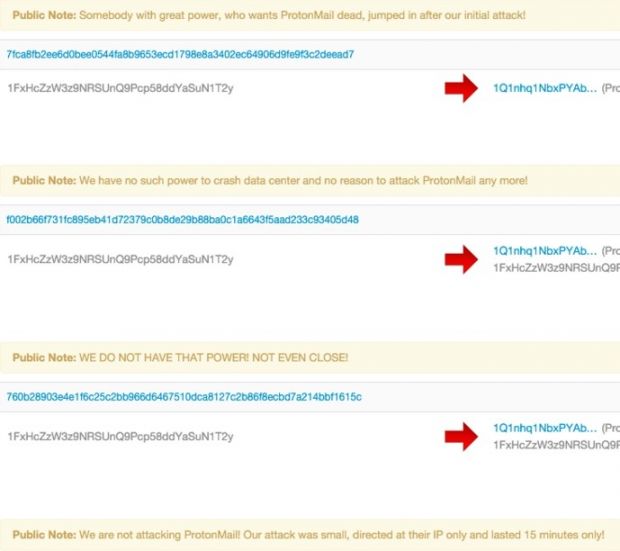
 Cyber-crime syndicates are moving in, pushing script kiddies out of the picture, expect more large-scale attacks After the success of DDoSing outfits like DD4BC and Armada Collective, an unknown copycat that’s using the Armada Collective name but asking for astronomical payments has appeared. A report from Recorded Future, a real-time threat intelligence protection company, shows that DDoS-for-Bitcoin extortion schemes are here to stay, with more and more attacks being launched solely for this reason. DD4BC have launched a new type of extortion scheme This trend can be tracked down to an Akamai report released over the summer that documented the actions of a hacking group known as DD4BC (DDoS 4 Bitcoin). This group launched DDoS attacks on companies around the world, requesting small payments in Bitcoin for each target. The group’s scheme was a simple one. They would send threatening emails to business owners, saying they would launch powerful DDoS attacks if a ransom was not paid in due time to a specific Bitcoin wallet. To prove their point, a small 15-minute DDoS was launched to showcase their capabilities. DD4BC’s scheme proved to be extremely lucrative and allowed them to rack up Bitcoin over the past year in over 140 DDoS attacks. The group was active since late 2014 and suddenly stopped its activity after the Akamai report was released, probably to avoid getting caught by law enforcement authorities alerted to their scheme. Enter Armada Collective Soon after, the first DD4BC copycat arose, in the form of the Armada Collective hackers, carrying out DDoS attacks on small businesses in Switzerland. They then expanded to email providers, and their name became known around the world in the famous ProtonMail incident. The incident is very well documented in one of our previous stories , but we’ll give you a small summary. Basically, Armada Collective followed the DD4BC regular tactics, sending an email and launching a small 10-15 Gbps DDoS attack on ProtonMail. Armada Collective returning ransom to ProtonMail As soon as the attack ended, ProtonMail revealed what happened, and more serious attacks took place, with ProtonMail paying the ransom in the end. Armada Collective denied any involvement and even went as far as to return the ProtonMail ransom, putting the blame on a state-sponsored actor with capabilities that far exceeded its own. Enter the unknown copycat But something else happened recently that made the Recorded Future team stop and ponder about the bigger picture, and that’s the DDoS-for-Bitcoin attacks on three major Greek banks . With DD4BC and Armada Collective always launching small-scale attacks and requesting modest ransoms (the equivalent of a few thousand dollars), this new group attacking Greek banks does not fit the bill. While the attacks of DD4BC and Armada Collective seem to be the work of script kiddies, the ones that brought down ProtonMail and the three major Greek banks were massive in scale. Coupled with the fact that this new group also requests ransoms in the order of millions of dollars, there are clear signs that they are a copycat that’s trying to remain hidden by passing as Armada Collective (as stated in the email sent to the Greek banks). With the number of DDoS-for-Bitcoin attacks on the rise, this type of cyber-threat is about to evolve from the work of script kiddies to the normal MO of larger cyber-criminal syndicates.