Category Archives: DDoS Criminals

FBI warning Web Users on July 9th possible Distributed Denial of Service ‘DDoS’ attack

When the U.S. Federal Bureau of Investigation (FBI) publicly announces a possible catastrophic event, people should better pay attention. There’s big news that a huge number of people around the world might suffer “Internet Blackouts”, meaning, they won’t be able to access the Web at all on their computers starting July 9, 2012. This Denial Of Service (DOS)-type scheme is related to a computer Trojan called DNS Changer Malware. This type of malware performs some illicit activity on the computer system when it is run and can allow somebody from a remote site to take control of another computer. When you’re infected by this DNS Changer, it changes your computer’s Domain Name Server (DNS) to replace your ISP’s provided good DNS servers with rougue DNS servers operated by the DNS Changer author or criminal, in order to divert traffic to fake and illegal sites on the Web and steal your personal informations such as credit card numbers, passwords and usernames, among other things. In November of 2011, in their “Operation Ghost Click”, the FBI successfully shut down the DNS Changer Botnet using a number of their own DNS servers just to maintain the DNS services of millions of unsuspected victims around the world. This would expire on July 9, 2012. The DNS Changer Malware is targeting Windows PCs to other platforms that include the Mac OS and home routers as well. Mobile devices may also be affected. Meanwhile, a technology news blog has written some helpful information on how to check if your computer is affected by this rogue malware and what steps you can do to prevent and get rid of this menacing DNS Changer Malware infection on your computers. The FBI claimed and admitted that they organized a very unusual system to combat this Trojan malware in the private and Internet domain. While this is the first time the U.S. government intervened to such a problem, the FBI said it wouldn’t be the last of it. Source: http://technorati.com/technology/article/fbi-to-web-users-many-could/

More:
FBI warning Web Users on July 9th possible Distributed Denial of Service ‘DDoS’ attack

Distributed Denial of Service ‘DDoS’ blackmailers busted in cross-border swoop

Cyber hoodlums targeted gold and silver traders Chinese and Hong Kong cops are hailing another success in their cross-border cyber policing efforts with the scalp of a high profile DDoS blackmail gang which targeted gold, silver and securities traders in the former British colony. Six cyber hoodlums were arrested on the mainland in Hunan, Hubei, Shanghai and other locations at the end of June, according to a report in local Hong Kong rag The Standard. Some 16 Hong Kong-based firms including the Chinese Gold & Silver Exchange were targeted in the scheme designed to blackmail them to the tune of 460,000 yuan (£46,200). The gang apparently threatened to cripple their victims’ web operations with distributed denial of service (DDoS) attacks if they didn’t cough up. Four of the targeted firms transferred funds totalling 290,000 yuan (£29,150) into designated bank accounts in mainland China, the report said. A source also told The Standard that some of the victims may have been involved in some shady dealings themselves, which made them more reluctant to seek police help. Roy Ko, centre manager of the Hong Kong Computer Emergency Response Team (HKCERT) told The Reg that the arrests are an indication of improving cross-border cyber policing efforts. “Working with counterparts cross border is always a challenge because of different practices, languages, different time zones and so on. Usually, HK and the mainland maintain a good working relationship, just like the HKCERT and CNCERT,” he said. “Because we are in the same time zone, the response is usually quicker than working with the US, for example, where we have to wait until the next day to get a response.” Ko also warned that the attacks show this form of cyber threat is still a popular one for avaricious criminal gangs. “Firms have to assess whether they are a probable target of such an attack – ie whether they rely heavily on the internet to do business – and then prepare countermeasures,” he added. “Subscribing to an anti-DDoS service may be part of the protection strategy in addition to anti-malware, firewall, etc.” Hong Kong businesses have been warned before that they’re fair game to hackers from neighbouring China. Source: http://www.theregister.co.uk/2012/07/04/hong_kong_china_bust_ddos_gang_blackmail/

Excerpt from:
Distributed Denial of Service ‘DDoS’ blackmailers busted in cross-border swoop

Banking Outage Prevention Tips

A series of fresh technology shutdowns this spring at banks around the world reveals the financial services industry still has a long way to go toward ensuring full up time for networks, as well as communicating with the public about why tech glitches have happened and what is being done about them. In May, Santander, Barclays and HSBC were all hit by digital banking outages. Some customers of Barclays and Santander were unable to access accounts online for a time near the end of the month, an outage blamed largely on end-of-the-month transaction volume. At HSBC, an IT hardware failure temporarily rendered ATMs unable to dispense cash or accept card payments in the U.K. Barclays and Santander both apologized for the outages though statements, while HSBC’s approach revealed both the power and peril of social media in such cases. HSBC’s PR office took to social media to communicate updates on the outage, and to also receive criticism about the outage (HSBC, Santander and Barclays did not return queries for comment). After an earlier outage in November, HSBC had set up a social monitoring team to be more proactive about communicating with the public about tech glitches, a move that seemed to have some positive impact, as not all of the Twitter and Facebook postings about the most recent outage were complaints. The basic task of making sure the rails are working, and smoothing things over with customers when systems invariably shut down, is an even more pressing matter considering the propensity for outrage to spread quickly among the public via new channels. “One thing that’s true about outages is we’re hearing more about them. The prevalence of social media use by irate customers and even employees makes these outages more publicized,” says Jacob Jegher, a senior analyst at Celent. Jegher says the use of social media for outage communication is tough – balancing the need to communicate with customers with internal tech propriety is easier said than done. “While it’s certainly not the institution’s job nor should it be their job to go into every technical detail, it’s helpful to provide some sort of consistent messaging with updates, so customers know that the bank is listening to them,” Jegher says. National Australia Bank, which suffered from a series of periodic online outages about a year ago that left millions of people unable to access paychecks, responded with new due diligence and communications programs. In an email response to BTN, National Australia Bank Chief Information Officer Adam Bennett said the bank has since reduced incident numbers by as much as 40 percent through a project that has aimed to improve testing. He said that if an incident does occur, the bank communicates via social media channels, with regular updates and individual responses to consumers where possible. The bank also issued an additional statement to BTN, saying “while the transaction and data demands on systems have grown exponentially in recent years led by online and mobile banking, the rate of incidents has steadily declined due to a culture of continuous improvement…The team tests and uses a range of business continuity plans. While we don’t disclose the specifics, whenever possible we will evoke these plans to allow the customer experience to continue uninterrupted.” While communicating information about outages is good, it’s obviously better to prevent them in the first place. Coastal Bank & Trust, a $66 million-asset community bank based in Wilmington, N.C., has outsourced its monitoring and recovery, using disaster recovery support from Safe Systems, a business continuity firm, to vet for outage threats, supply backup server support in the event of an outage, and contribute to the bank’s preparation and response to mandatory yearly penetration and vulnerability tests. “Safe Systems makes sure that the IP addresses are accessible and helps with those scans,” says Renee Rhodes, chief compliance and operations officer for Coastal Bank & Trust. The bank has also outsourced security monitoring to Gladiator, a Jack Henry enterprise security monitoring product that scours the bank’s IT network to flag activity that could indicate a potential outage or external attack. The security updates include weekly virus scans and patches. Coastal Bank & Trust’s size – it has only 13 employees – makes digital banking a must for competitive reasons, which increases both the threat of downtime and the burden of maintaining access. “We do mobile, remote deposit capture, all of the products that the largest banks have. I am a network administrator, and one of my co-workers is a security officer. With that being said, none of us has an IT background,” Rhodes says. “I don’t know if I could put a number on how important it is to have these systems up and running.” Much of the effort toward managing downtime risk is identifying and thwarting external threats that could render systems inoperable for a period of time. Troy Bradley, chief technology officer at FIS, says the tech firm has noticed an increase in external denial of service attacks recently, which is putting the entire banking and financial services technology industries on alert for outage and tech issues with online banking and other platforms. “You’ll see a lot of service providers spending time on this. It’s not the only continuity requirement to solve, but it’s one of the larger ones,” he says. To mitigate downtime risk for its hosted solutions, FIS uses virtualization to backstop the servers that run financial applications, such as web banking or mobile banking. That creates a “copy” of that server for redundancy purposes, and that copy can be moved to another data center if necessary. “We can host the URL (that runs the web enabled service on behalf of the bank) at any data center…if we need to move the service or host it across multiple data centers we can do that…we think we have enough bandwidth across these data centers to [deal with] any kind of denial of service attack that a crook can come up with,” Bradley says. FIS also uses third party software to monitor activity at its data centers in Brown Deer, WI; Little Rock and Phoenix, searching for patterns that can anticipate a denial of service attack early and allow traffic connected to its clients to be routed to one of the other two data centers. For licensed solutions, FIS sells added middleware that performs a similar function, creating a redundant copy of a financial service that can be stored and accessed in the case of an emergency. Stephanie Balaouras, a vice president and research director for security and risk at Forrester Research, says virtualization is a good way to mitigate both performance issues, such as systems being overwhelmed by the volume of customer transactions, and operational issues such as hardware failure, software failure, or human error. “If it’s [performance], the bank needs to revisit its bandwidth and performance capacity. With technologies like server virtualization, it shouldn’t be all that difficult for a large bank to bring additional capacity online in advance of peak periods or specific sales and marketing campaigns that would increase traffic to the site. The same technology would also allow the bank to load-balance performance across all of its servers – non-disruptively. The technology is never really the main challenge, it tends to be the level of maturity and sophistication of the IT processes for capacity planning, performance management, incident management, automation, etc.,” she says. In the case of operational issues, server virtualization is still a great technology, Balaouras says, adding it allows the bank to restart failed workloads within minutes to alternate physical servers in the environment or even to another other data center. “You can also configure virtual servers in high-availability or fault-tolerant pairs across physical servers so that one hardware failure cannot take down a mission-critical application or service,” Balaouras says. Balaouras says more significant operational failures, such as a storage area network (SAN) failure, pose a greater challenge to network continuity and back up efforts. “In this case, you would need to recover from a backup. But more than likely a bank should treat this as ‘disaster’ and failover operations to another data center where there is redundant IT infrastructure,” she says. Source: http://www.americanbanker.com/btn/25_7/online-banking-outage-prevention-strategies-1050405-1.html

View article:
Banking Outage Prevention Tips
Distributed Denial of Service ‘DDoS’ Attacks: The Zemra Bot

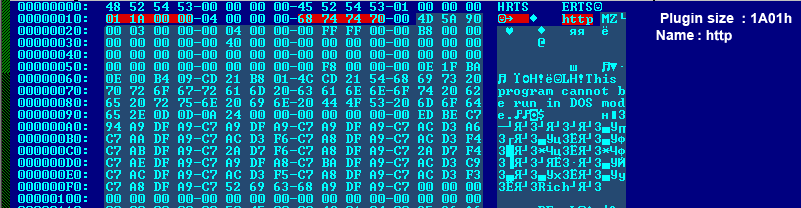
Symantec has become aware of a new Distributed Denial of Service (DDoS) crimeware bot known as “Zemra” and detected by Symantec as Backdoor.Zemra. Lately, this threat has been observed performing denial-of-service attacks against organizations with the purpose of extortion. Zemra first appeared on underground forums in May 2012 at a cost of €100. This crimeware pack is similar to other crime packs, such as Zeus and SpyEye, in that is has a command-and-control panel hosted on a remote server. This allows it to issue commands to compromised computers and act as the gateway to record the number of infections and bots at the attacker’s disposal. Similar to other crimeware kits, the functionality of Zemra is extensive: 256-bit DES encryption/decryption for communication between server and client DDoS attacks Device monitoring Download and execution of binary files Installation and persistence in checking to ensure infection Propagation through USB Self update Self uninstall System information collection However, the main functionality is the ability to perform a DDoS attack on a remote target computer of the user’s choosing. Initially, when a computer becomes infected, Backdoor.Zemra dials home through HTTP (port 80) and performs a POST request sending hardware ID, current user agent, privilege indication (administrator or not), and the version of the OS. This POST request gets parsed by gate.php, which splits out the information and stores it in an SQL database. It then keeps track of which compromised computers are online and ready to receive commands. Inspection of the leaked code allowed us to identify two types of DDoS attacks that have been implemented into this bot: HTTP flood SYN flood The first type, HTTP flood, opens a raw socket connection, but has special options to close the socket gracefully without waiting for a response (e.g. SocketOptionName.DontLinger). It then closes the socket on the client side and launches a new connection with a sleep interval. This is similar to a SYN flood, whereby a number of connection requests are made by sending multiple SYNs. No ACK is sent back upon receiving the SYN-ACK as the socket has been closed. This leaves the server-side Transmission Control Blocks (TCBs) in a SYN-RECEIVED state. The second type, SYN flood, is a simple SYN flood attack whereby multiple connects() are called, causing multiple SYN packets to be sent to the target computer. This is done in an effort to create a backlog of TCB creation requests, thereby exhausting the server and denying access to real requests. Symantec added detection for this threat under the name Backdoor.Zemra, which became active on June 25, 2012. To reduce the possibility of being infected by this Trojan, Symantec advises users to ensure that they are using the latest Symantec protection technologies with the latest antivirus definitions installed. Source: http://www.symantec.com/connect/blogs/ddos-attacks-zemra-bot

Read More:
Distributed Denial of Service ‘DDoS’ Attacks: The Zemra Bot

Legalization of Distributed Denial of Service ‘DDDoS’ attacks as a form of protest

Dutch opposition party D66 has proposed the legalization of DDoS attacks as a form of protest. Activists would have to warn of their action in advance, giving websites time to prepare for their attack. ­Kees Verhoeven, the campaign’s leader, argues that it is strange that the fundamental right to demonstrate doesn’t extend to the online realm. The coming years would bring more instances of hacktivism, and it would be reasonable to introduce legislation to regulate, not ban it, he says. Verhoeven proposes that DDoS attacks be legalized so long as the protesters say when they will start their action. That way, a website would have time to prepare for the attack, just like an office building has time to get ready for a rally next to it. The proposal also includes restrictions on transmitting information about a website’s visitors, as well as stricter rules against e-mail spying, and other measures to bolster online privacy. DDoS attacks, popular with hacktivist groups such as Anonymous, would therefore become a legal means to express dissatisfaction with a company or a government. One DDoS attack per year would cost over $10,000 for a financial services company that makes 25 per cent of its sales online, according to Internet traffic management firm NeuStar UltraDNS. If the brand reputation of the company heavily depends on the performance of the website, one DDoS attack a year could end up costing over $20,500. However, DDoS attacks are relatively innocuous compared to other forms of hacking, such as phishing and virus infections, which can cost companies and individuals millions of dollars. Nevertheless, DDoS attacks are so far equated to hacking and are illegal in the Netherlands, as well as many other countries. Source: http://www.rt.com/news/dutch-party-d66-ddos-legalized-protest-541/

Follow this link:
Legalization of Distributed Denial of Service ‘DDDoS’ attacks as a form of protest

Twitter down: Sporadic outage leads to speculation of DDoS attack

The social networking service Twitter suffered sporadic outages Thursday, leading some to speculate about a hacker attack. Access came and went, with reports that users were being affected around the world. In a brief update, the company acknowledged some people were having issues using the service. “Users may be experiencing issues accessing Twitter,” they said in a statement. “Our engineers are currently working to resolve the issue.” A micro-blogging service that allows users to send short messages, Twitter has been likened to an international party line. There are myriad running conversations, to which anyone can contribute. As of March there were 140 million active users who generated over 340 million tweets daily, Twitter says. Not long after its initial message, Twitter said that the issue had been “resolved” and that all services were operational. Users often are quick to turn to Twitter to pose questions about emerging events. But in an ironic twist, Thursday’s outage was initially so pervasive that users couldn’t take to the twitterverse to discuss what was happening. But on message boards, comment fora and other social networking services people voiced their concern. Some wondered if the site had been attacked by a distributed denial of service attack by the hacker group Anonymous. Others bemoaned the lack of access. “I’m losing my mind!” Matt Gio wrote at mashable.com. “I have so much to talk about today and I have an important blog post scheduled.” But some took the outage humourously in stride. Olivia Bovery posted at Facebook that she was “going through withdrawal” and going to step outside. “There is this bright yellow ball in the sky that must be investigated. Seems to be giving off a lot of heat. Wonder what it is.” Moments later she followed up. “Finally, its back up! Back to twitter. Yellow ball will have to wait. Source: http://www.theglobeandmail.com/technology/omg-twitter-down-sporadic-outage-leads-to-speculation-of-hacker-attack/article4360263/?cmpid=rss1

View article:
Twitter down: Sporadic outage leads to speculation of DDoS attack

Financial Gain is Main Motivation for Cyber Criminals

Announcing the findings of “The Impact of Cybercrime on Businesses” survey, carried out by Ponemon Institute, Check Point Software Technologies revealed that 65% of the organizations which experienced targeted attacks reported that an attacker’s primary objective was to make a financial gain. Disrupting business operations and stealing customer data were attributed as the next likely motivation for attackers, as stated by 45 % of the surveyed organizations. The report also stated that only around 5% of security attacks were driven by political or ideological agendas. The report, which surveyed 2,618 C-level executives and IT security administrators in the US, United Kingdom, Germany, Hong Kong and Brazil across organizations of various types and sizes, showed that companies reported an average of 66 new security attack attempts per week. Respondents in all countries stated that the most serious consequences of such attacks were disruption of business and loss of sensitive information, including intellectual property and trade secrets. Diminished reputation and impact on brand name were the least of their worries, with the exception of respondents in the UK. Successful attacks could end up costing businesses anywhere between $100,000 and $300,000: the participants estimated the average cost of such an attack at $214,000 USD. Tomer Teller, security evangelist and researcher at Check Point Software Technologies, was quoted in the press release as saying, “Cybercriminals are no longer isolated amateurs. They belong to well-structured organizations, often employing highly-skilled hackers to execute targeted attacks, many of whom receive significant amounts of money depending on the region and nature of the attack.” “For the most part, the goal of attackers is to obtain valuable information. These days, credit card data shares space on the shelves of virtual hacking stores with items such as employee records and Facebook or email log-ins, as well as zero-day exploits that can be stolen and sold on the black market ranging anywhere from $10,000 to $500,000,” he added. While Denial of Service (DoS) attacks were seen as the type of cyber crime that posed the greatest risk to organizations, SQL injections were cited, by 43% of the respondents, as the most serious types of attack organizations had experienced in the last two years, the report stated. Other threats cited in the survey included APTs (Advanced Persistent Threats), botnet Infections and DoS attacks cited by 35%, 33%, and 32% of the respondents respectively. On the threats posed by activities of their employees, organizations, across all the surveyed countries, unanimously cited the use of mobile devices such as smartphones and tablet PCs as the biggest concern, followed by the use of social networks and removable media devices such as USB sticks. Hong Kong and Brazil reported on an average the highest percentage of mobile devices infected through an act of cyber crime, at 25 percent and 23 percent, respectively. The U.S. and Germany had the lowest average of infected mobile devices and machines connected to the network at 11 percent and nine percent respectively. The report found that for protecting themselves from these threats, a majority of organizations have instituted Firewall and Intrusion Prevention solutions. However, at the same time, less than half of the surveyed organizations have implemented the necessary protections to fight botnets and APTs. “Cybercrime has become a business. With bot toolkits for hackers selling today for the mere price of $500, it gives people insight into how big the problem has become, and the importance of implementing preemptive protections to safeguard critical assets,” Teller stated. It was pointed out that only 64% of companies said that they have current training and awareness programs in place to prevent targeted attacks. “While the types of threats and level of concern companies have may vary across regions, the good news is that security awareness is rising,” Dr. Larry Ponemon, chairman and founder, Ponemon Institute, was quoted as saying in the press release. “Across the board, C-level executives reported high levels of concern about targeted attacks and planned to implement security precautions, technology and training to mitigate the risk of targeted attacks.” For fast DDoS protection click here . Source: http://www.computerworld.in/news/check-point-survey-financial-gain-main-motivation-cyber-criminals-12922012

See original article:
Financial Gain is Main Motivation for Cyber Criminals

Check Point releases new DDoS Protector appliances

Check Point introduced a new line of security appliances designed to fight DDoS attacks. The DDoS Protector appliances deliver multi-layered protection and up to 12 Gbps of throughput to help business…

More:
Check Point releases new DDoS Protector appliances