Malicious actors have started abusing the Portmapper service to amplify their distributed denial-of-service (DDoS) attacks and hide their origin, Colorado-based telecommunications company Level 3 Communications has warned. RPC Portmapper, also referred to as rpcbind and portmap, is an Open Network Computing Remote Procedure Call (ONC RPC) service designed to map RPC service numbers to network port numbers. When RPC clients want to make a call to the Internet, Portmapper tells them which TCP or UDP port to use. When Portmapper is queried, the size of the response varies depending on the RPC services present on the host. In their experiments, Level 3 researchers obtained responses of between 486 bytes (amplification factor of 7.1) and 1,930 bytes (amplification factor of 28.4) for a 68 byte query. The average amplification size obtained by Level 3 in tests conducted across its network was 1,241 bytes (18.3 amplification factor), while in the actual DDoS attacks seen by the company the value was 1,348 (19.8x amplification). Malicious actors can use Portmapper requests for DDoS attacks because the service runs on TCP or UDP port 111. Since UDP allows IP spoofing, attackers can send small requests to Portmapper using the target’s IP address and the server sends a larger response to the victim. Level 3 has observed an increasing number of DDoS attacks leveraging this vector over the summer, with the largest attacks taking place in August 10-12. The attacks were mainly aimed at the gaming, hosting, and Internet infrastructure sectors. Organizations are advised to keep an eye out for potentially malicious Portmapper requests, but Level 3 has pointed out that for the time being the global volume of Portmapper-based traffic is still small compared to other UDP services abused in DDoS attacks, such as DNS, NTP and SSDP. “Portmapper is so small it barely registers as the red line at the bottom of the graph. This shows, despite its recent growth, it is a great time to begin filtering requests and removing reflection hosts from the Internet before the attack popularity grows larger and causes more damage,” Level 3 said in a blog post. “We recommend disabling Portmapper along with NFS, NIS and all other RPC services across the open Internet as a primary option. In situations where the services must remain live, firewalling which IP addresses can reach said services and, subsequently, switching to TCP-only are mitigations to avoid becoming an unknowing participant in DDoS attacks in the future,” experts advised. There are several services that malicious actors can abuse for DDoS attack reflection and amplification. Researchers revealed at the USENIX conference last week that vulnerable BitTorrent protocols can also be leveraged for DDoS attacks. Source: http://www.securityweek.com/rpc-portmapper-abused-ddos-attack-reflection-amplification
Originally posted here:
RPC Portmapper Abused for DDoS Attack Reflection, Amplification

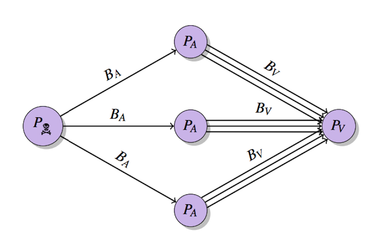
 The technology is vulnerable to exploit in launching a breed of DDoS attack which reflects and amplifies traffic. A flaw in BitTorrent clients can be exploited to allow single attackers to harness extra juice in launching DDoS attacks on a vast scale. At the USENIX conference in Washington, D.C., researchers from City University London unveiled ways that BitTorrent-based programs including uTorrent, Mainline and Vuze are vulnerable to distributed reflective denial-of-service (DRDoS) attacks. Specifically, cyberattackers can exploit protocols used by BitTorrent — a popular way of sharing large files online through peer-to-peer networking — to reflect and amplify traffic from other users in the system. In a paper dubbed “P2P File-Sharing in Hell: Exploiting BitTorrent Vulnerabilities to Launch Distributed Reflective DoS Attacks,” the research team says the protocol family used by BitTorrent — Micro Transport Protocol (uTP), Distributed Hash Table (DHT), Message Stream Encryption (MSE))and BitTorrent Sync (BTSync) — are all vulnerable to exploit. During testing, over 2.1 million IP addresses were crawled and 10,000 BitTorrent handshakes were analyzed within a P2P lab test environment. The City University London researchers were able to assault a third-party target through traffic amplified up to a factor of 50 times, and in case of BTSync, up 120 times the size of the original request. This means that a lone attacker could exploit the system to conduct attacks on websites and companies far more debilitating than their actual computational power. City University London DRDoS cyberattacks hook in slave machines to participate in distributed denial of service (DDoS) attacks without user consent or knowledge. Traffic requests sent from victim systems are redirected which sends additional traffic to the target. In turn, this can result in websites and online services unable to cope with a flood of requests, denying access to legitimate users and taking sites offline until the flow of traffic dissipates — all caused with fewer slave machines and without the cost of hiring out a botnet. The BitTorrent protocols do not include processes to prevent IP address spoofing, which means an attacker can use peer-discovery methods including trackers, DHT or Peer Exchange (PEX) to collect millions of possible amplifiers for their DRDoS attacks. The researchers said: “An attacker which initiates a DRDoS does not send the traffic directly to the victim; instead he/she sends it to amplifiers which reflect the traffic to the victim. The attacker does this by exploiting network protocols which are vulnerable to IP spoofing. A DRDoS attack results in a distributed attack which can be initiated by one or multiple attacker nodes.” In addition, “the most popular BitTorrent clients are the most vulnerable ones,” according to the team. In March, code repository GitHub suffered a debilitating DDoS attack, the largest in the website’s history which lasted for days. Believed to originate from China, the DDoS attack involved a wide combination of attack vectors, sophisticated techniques and the use of unsuspecting victim PCs to flood GitHub with traffic in order to push GitHub to remove content from anti-censorship organization Greatfire.org and publication the New York Times. Source: http://www.zdnet.com/article/bittorrent-exploits-allow-lone-attackers-to-launch-large-ddos-attacks/