
It used to be that news about DDoS attacks was largely limited to tech websites and other specialized information sources, where the focus was on attack vectors, attack sizes, how exactly the perpetrators pulled it off and how websites could protect themselves going forward. These still have their place, especially with the ever-increasing size, complexity and frequency of attacks, but over the last few years DDoS has gone mainstream and gotten political. With DDoS attacks appearing in headlines regarding the U.S. election, Brexit and the push for democracy in Hong Kong, the question has to be asked: should these attacks be considered a legitimate form of protest? Denying services DDoS stands for distributed denial of service, a form of cyberattack that takes aim at websites or online services with the intent of taking them offline or slowing them downso much that they can’t be used. This is accomplished through the use of a botnet – a network of devices that have been infected with malware, allowing attackers to control them remotely and direct the botnet’s considerable traffic at the target, overwhelming the server or network infrastructure. DDoS attacks have been in the mainstream news for the last couple of years. This is because of how pervasive they’ve become, with nearly every website on the Internet now a potential target thanks to DDoS for hire services and DDoS ransom notes, and also because of the high-profile sites that have fallen victim to attacks, including Netflix, PayPal, Twitter and Reddit. Now DDoS attacks stand accused of involvement in some of the biggest political events in recent history. Recent political incidents Distributed denial of service attacks hit the political headlines in 2014 when the people of Hong Kong were in the midst of a major push for democracy, asking for genuine universal suffrage instead of the newly-reformed system that allows citizens to vote for candidates selected by an exclusive nominating committee – a system that seemed overly restrictive as well as too similar to the previous system in which the Chinese Communist Party selected the candidates. When the democratic movement’s official website launched, it logged 680,000 votes in an unofficial poll on candidates in the site’s first weekend despite the fact that it was being battered by DDoS attacks weighing in at over 300 Gbps. Though a perpetrator was not definitively named, it was widely speculated the Chinese government was behind the attacks. In a recent report, the Chinese government has come up alongside the Russian government in rumors surrounding the Brexit vote. In the hours before the deadline to register to vote in the Brexit referendum, the registration site crashed, reportedly due to a DDoS attack. The outage left tens of thousands of voters unable to register to vote, and the referendum ended with 51.9 percent voting to leave the European Union. Though the Russian government has been suspected of meddling via hacking in both the U.S. and French elections, reportedly in favor of Donald Trump and Marine Le Pen, it’s unknown if the Kremlin was involved in DDoS attack attempts on either Hillary Clinton or Donald Trump’s website; it seems more likely these Mirai botnet-powered attempts were instead the work of hackers from underground forums. The argument for recognizing DDoS as legitimate (and legal) protest The history of distributed denial of service attacks go all the way back to 1995 when an Italian collective brought down the French government’s website in protest of France’s nuclear policy. Soon after, a group by the name of the Electronic Disturbance Theater built a tool that enabled anyone to join their virtual sit-ins that targeted the White House website as well as the websites of politicians. Current hacktivist group Anonymous has taken the idea of the virtual sit-in and turned it into a voluntary botnet that allows anyone to donate the use of their device for attacks against targets like the Brazilian government in protest of the FIFA World Cup. These actions would seem to fit the criteria of legal protest, allowing citizens to peacefully albeit virtually demonstrate and rendering a website unavailable in much the same way a sit-in would render an office or institution unavailable. However, in the United States this kind of online activism can be considered a felony. The argument against Not only are DDoS attacks illegal, regardless of whether or not the attack is intended as a form of protest, but legitimizing or legalizing these attacks may cause more problems than it solves. For instance, while an opt-in botnet does seem to be a form of voluntary political activism, almost all botnets are populated by devices that have decidedly not opted in, which means politically-motivated DDoS attacks would be largely perpetrated using the property of people who have not consented. Like signing someone else’s name to a petition, this cannot be permitted. Furthermore, any legislation attempting to legalize DDoS protests would have to find a way to differentiate between attacks coming from voluntary botnets and attacks coming from nation states. A murky area, at best. With so many other forms of protest available to motivated citizens, it’s hard to imagine legalizing or legitimizing any form of DDoS attack. It’s just too easy for these attacks to be used for altogether nefarious and malicious purposes by groups that decidedly do not represent the will or wishes of the people. Source: http://www.techzone360.com/topics/techzone/articles/2017/07/19/433542-attacking-democracy-should-ddos-be-considered-legitimate-form.htm
More here:
Attacking Democracy: Should DDoS Be Considered a Legitimate Form of Protest?
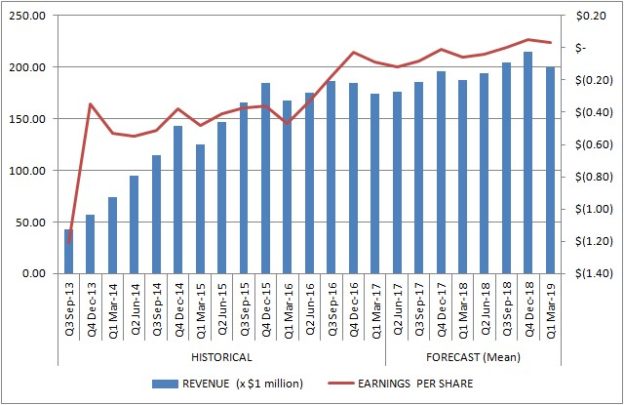
 Business is under attack to the point of all out cyber war, and there is nowhere more lucrative right now than cyberspace, where a $200-billion-plus market is ripe for investors looking to turn profits that make the pre-bubble dot.com era look like chump change. There are plenty of catalysts, thanks to hackers who most recently managed to hijack the systems of one of the biggest shipping companies in the world, one of the biggest pharmaceutical companies in the world and thousands of others—forcing them to pay ransom in bitcoins to get their data back. There will be no slowdown in cyber-attacks. On the contrary, by 2019, IDC research estimates that 70 percent of major multinational corporations will “face significant cybersecurity attacks aimed at disrupting the distribution of commodities.” Cybersecurity stocks were soaring already—especially since hackers in May managed to take control of tens of thousands of computers. But the late June perfection of cyber kidnapping for ransom has caused stocks to spike by 4 percent or more. According to giant Cisco, there was a 172 percent jump in DDoS (distributed denial-of-service) attacks in 2016, and we’ll be looking at a near tripling of that by 2021. Just in the first quarter of this year there was a reported 380 percent increase in DDoS attacks, according to Nexusguard. Data breaches cost businesses $5.85 million EACH in 2014. This year, that bill will be in the neighborhood of $7.35 million. In total, last year, cybercrime cost the global economy over $450 billion. The cyber-attack on global business in May this year alone could end up costing $4 billion. So, giant multinational corporations are willing to pay a lot for better cybersecurity—and cyber insurance. Global spending on cybersecurity will hit $1 trillion over the next five years, and cybercrime damages will exceed $24 trillion over the same period, according to the Steven Morgan Cybersecurity Industry Outlook: 2017 to 2021. And this is where the big profits are available for the taking. For the foreseeable future, nothing is more lucrative than data security. Here are our top 5 picks as cybersecurity becomes THE most critical industry of our time: #1 FireEye, Inc. (NASDAQ:FEYE) This is one of the most impressive cybersecurity barnstormers out there. It only went public in September 2013, and by December that same year it was spending $1 billion on a major acquisition, Mandiant, which was one of the top data breach and response companies in the space. This is now a massive and fast-growing company of highly sought-after cyber experts and products, all rolled into a cloud-based platform that is a favorite among key Fortune 500 companies, not to mention Global 2000 companies. There was a very aggressive acquisition spree here—and last year the company moved into the black. FireEye peaked in mid-2015 at $55 a share, and then slid to under $11 in mid-March this year. But since then, it’s gained 42 percent and the trajectory looks fantastic, especially in the current cyber warfare climate. #2 Identillect Technologies Corp. ( TSXV:ID ; IDTLF:US ) This is a little-known company sitting in pole position in a $64-billion market that is up for grabs. It’s come up with a two-minute email security solution that could revolutionize encryption, and could corner the lion’s share of the profits in this segment. Half of all email is unencrypted—and it’s at the mercy of pretty much anyone with decent hacking skills. Existing encryption programs are expensive and can take a month to install, but this company is breaking onto the scene with a simple, 2-minute email install solution. It works with Outlook, Office 365, Hotmail, Gmail…PLUS a phone “app” that works on iPhone, Android, Windows and more. There are only 250 professional cryptographers in the U.S… and two of them work at Identillect – a major selling point for this company coming right out of the gates. Customers are lining up because it’s the first solution to a long-time problem that’s now reaching a climax, with companies being fined for NOT encrypting email. They’re already paying an average of $7 million for every data breach. This company is on its way to Silicon Valley, and its patent on the first easy solution to a massive problem is likely to get it a lot of attention in the form of M&A rumblings that dot this cybersecurity landscape. Even more so right now. Since it went commercial in the first quarter of 2015, subscribers have grown over 663 percent, and 19 out of 20 of them stay. They’re compounding monthly, and the breakeven point is almost there. That’s why we’re looking at a 70 percent profit margin in this one. With 5 million Yahoo accounts breached in just one of many huge-scale incidents, encryption is the Holy Grail of our day, and this company has figured out how to make it cheap and easy. #3 Palo Alto Networks (NYSE:PANW) For expansion, this $12.7-billion market-cap company is a top pick with its sales of next-generation firewall solutions. It covers 150 countries and it protects data infrastructure of at least 85 Fortune 100 companies and—even better—more than half of the Global 2000. That’s some major market share at a time when there is nothing short of corporate panic over data infrastructure protection. It even beat its own outlook. We’re looking at mind-blowing record earnings ($431.8 million in fiscal Q3). This is the clear advantage in the cybersecurity space right now—and it’s all about continual, relentless expansion. #4 Intel Corporation (NASDAQ:INTC) Nothing dominates the semiconductor industry like INTC. We’re looking at over seven divisions here, but the Client Computing Group (CCG) and the Data Center Group (DCG) are the big ones in terms of financial performance, accounting for 87 percent of the company’s total sales last year. INTC dominates the PC market and the server microprocessor market, and its PC chip market share can be as high as an unbelievable 99 percent. Still, some might say this pick is the counter-intuitive one, but…not really. INTC stock has taken a major beating, but with this sector on fire like no other, this is your way in with the giants in this field. INTC had an official correction this year and April earnings caused Wall Street to beat it down. But INTC is still 10 percent higher than last year, regardless. It’s cheaper than its competitors right now, so this may be a buying opportunity. What investors are afraid of, though, is one competitor in particular…our next pick… #5 Advanced Micro Devices, Inc. (NASDAQ: AMD ) This stock has seen some unbelievable performance over the past year, and that’s why INTC investors are shying away. But while AMD has been impressing beyond belief, we list it as #5 because it’s largely thanks to enthusiasm and future expectations—so there may be a pullback soon. This is the time to keep a close eye on AMD, but also to be very careful about watching whether the company is now going to actually achieve its goals—because the expectations are quite high and now much more is at stake. It’s the right industry to be doing this in, certainly… While AMD had a truly dynamic growth spurt that began in March last year, since February this year, it hasn’t reached any new highs, and the launch of its Ryzen line of products wasn’t embraced by the market with as much excitement as expected. Now things are getting a bit more volatile, which is why INTC might be a better pick right now. Honorable Mentions in the Cybersecurity Space BlackBerry Ltd. (TSE:BB): Forget about the BlackBerry as something you hold—an electronic gadget. This company is back better than ever with software for industrial customers, including security software and services to stop hackers. Quarterly earnings at the end of March were impressive, and April news of a $1-billion cash win from arbitration with Qualcomm can fund more growth. This is the NEW BlackBerry. Absolute Software Corporation (ABT.TO): Absolute Software Corp provides endpoint security and data risk management solutions for commercial, healthcare, education and government customers, tablets and smartphones. Absolute has seen a strong 21% stock growth year to date and is expected to see strong growth as the cyber security market grows at a rampant pace. Avigilon (TSX.AVO): Avigilon develops, manufactures, markets and sells HD and megapixel network-based video surveillance systems, video analytics and access to control equipment. We expect strong continuous growth in the video analytics business and a company such as Avigilon is well positioned to capture market share in the Canadian markets. Sandvine Corporation (TSE:SVC): Ontario is seeing some a vibrant cybersecurity as well, Sandvine corp. is engaged in the development and marketing of network policy control situations for high-speed fixed and mobile Internet service providers. Products include Business Intelligence, Revenue Generation, Traffic Optimization and Network Security. The company has grown 52% year-to-date and we expect strong growth throughout 2017. Pivot Technology Solutions Inc. (TSX:PTG): Pivot focuses on the strategy to acquire and integrate technology solution providers, primarily in North America. It sells and supports integrated computer hardware, software and networking products for business database, network and network security systems. Pivot has seen explosive growth so far this year and we expect the current cyber threats to add to the already strong sentiment in cyber security stocks. Source: http://www.baystreet.ca/articles/stockstowatch.aspx?articleid=31275