
There is a real concern that many companies are being affected by the DDoS attacks commissioned by competitors, according to Kaspersky Lab Distributed denial of service (DDoS) attacks are associated with criminal activity, but not all those behind DDoS attacks are cyber criminals, research has revealed. Nearly half of more than 5,500 companies polled in 26 countries claimed to know the identity and motivation behind recent DDoS attacks, and 12% named competitors as the most likely culprits. This suspicion increases in the business services industry, with 38% of respondents in this sector believing their competitors were behind a DDoS attack, according to a survey by Kaspersky Lab and B2B International. However, 18% attributed recent DDoS attacks to criminals seeking to disrupt or distract while another attack took place; 17% to criminals seeking to disrupt their services for a ransom; 11% to political activists; and 5% to state-sponsored activities. The most popular motivation for the attacks is believed to be a ransom, cited by 27% of respondents in the manufacturing and telecoms sectors. “DDoS attacks are no longer just about cyber criminals seeking to halt a company’s operations,” said Evgeny Vigovsky, head of DDoS protection at Kaspersky Lab. “Businesses are becoming suspicious of each other, and there is a real concern that many companies – including small and medium ones – are being affected by the underhanded tactics of their competitors, which are commissioning DDoS attacks directly against them, damaging their operations and reputation,” he said. In the light of this trend, Vigovsky said all businesses should remain vigilant and fully understand the repercussions of a DDoS attack in terms of the potential financial and reputational damage. “It is wise not to pay a ransom, or to fall victim to cyber criminals or competitors. Ensure that you have the appropriate security measures in place to help manage the increased risk posed to your business from DDoS attacks,” he said. Looking ahead to 2016, security firms expect to see an increase in the tactic of using DDoS attacks to distract companies from other, more damaging malicious activity on their networks, such as data theft. The use of DDoS, or the threat of DDoS attacks, as a way of extorting money is also expected to continue and increase in the coming year. According to the study, 20% of companies with 50 employees or more reported that they have been the victim of at least one DDoS attack, with companies in the telecoms, financial services and IT sectors the most likely to be targeted. The study also revealed that 50% of DDoS attacks led to a noticeable disruption of services; 26% led to the loss of sensitive data; 24% led to services being completely unavailable; and 74% led to a noticeable disruption of service, which coincided with a different type of security incident, such as a malware attack, network intrusion or other type of attack. According to Kaspersky Lab, the average cost for recovering from a DDoS attack for companies of more than 1,500 employees is $417,000, and $53,000 for small and medium businesses (SMBs). Yet 56% of those polled thought that spending money to prevent or mitigate DDoS attacks in future would be worth the investment, 53% said their organisation knew how to mitigate or prevent DDoS attacks, and only 52% felt well-informed about DDoS attacks. Despite the cost and complexity of dealing with DDoS attacks, the Kaspersky Lab research said the average financial damage of a DDoS attack is significant, especially for SMBs, and is definitely higher than the cost of a service designed to reduce the effect of such attacks. “DDoS prevention is almost always a third-party service, and outsourcing this trouble to experts not only reduces the damage but also frees up IT personnel to deal with a probable complementary attack on a company infrastructure, which will have much worse consequences,” the report said. Source: http://www.computerweekly.com/news/4500260544/Cyber-criminals-not-to-blame-for-all-DDoS-attacks-study-shows
Taken from:
Cyber criminals not to blame for all DDoS attacks, study shows
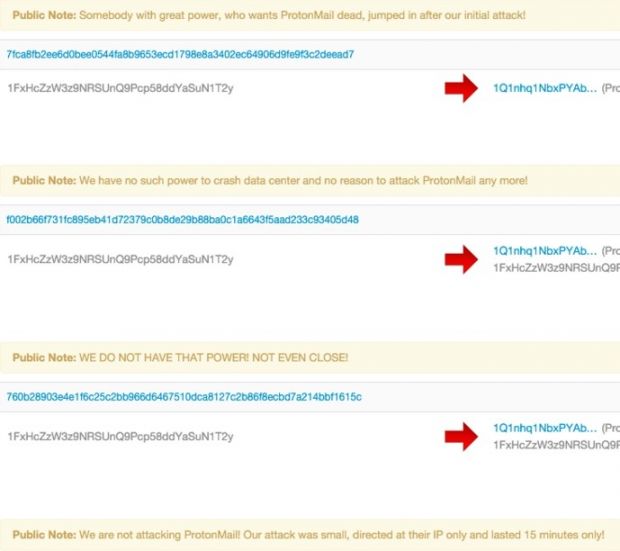
 Cyber-crime syndicates are moving in, pushing script kiddies out of the picture, expect more large-scale attacks After the success of DDoSing outfits like DD4BC and Armada Collective, an unknown copycat that’s using the Armada Collective name but asking for astronomical payments has appeared. A report from Recorded Future, a real-time threat intelligence protection company, shows that DDoS-for-Bitcoin extortion schemes are here to stay, with more and more attacks being launched solely for this reason. DD4BC have launched a new type of extortion scheme This trend can be tracked down to an Akamai report released over the summer that documented the actions of a hacking group known as DD4BC (DDoS 4 Bitcoin). This group launched DDoS attacks on companies around the world, requesting small payments in Bitcoin for each target. The group’s scheme was a simple one. They would send threatening emails to business owners, saying they would launch powerful DDoS attacks if a ransom was not paid in due time to a specific Bitcoin wallet. To prove their point, a small 15-minute DDoS was launched to showcase their capabilities. DD4BC’s scheme proved to be extremely lucrative and allowed them to rack up Bitcoin over the past year in over 140 DDoS attacks. The group was active since late 2014 and suddenly stopped its activity after the Akamai report was released, probably to avoid getting caught by law enforcement authorities alerted to their scheme. Enter Armada Collective Soon after, the first DD4BC copycat arose, in the form of the Armada Collective hackers, carrying out DDoS attacks on small businesses in Switzerland. They then expanded to email providers, and their name became known around the world in the famous ProtonMail incident. The incident is very well documented in one of our previous stories , but we’ll give you a small summary. Basically, Armada Collective followed the DD4BC regular tactics, sending an email and launching a small 10-15 Gbps DDoS attack on ProtonMail. Armada Collective returning ransom to ProtonMail As soon as the attack ended, ProtonMail revealed what happened, and more serious attacks took place, with ProtonMail paying the ransom in the end. Armada Collective denied any involvement and even went as far as to return the ProtonMail ransom, putting the blame on a state-sponsored actor with capabilities that far exceeded its own. Enter the unknown copycat But something else happened recently that made the Recorded Future team stop and ponder about the bigger picture, and that’s the DDoS-for-Bitcoin attacks on three major Greek banks . With DD4BC and Armada Collective always launching small-scale attacks and requesting modest ransoms (the equivalent of a few thousand dollars), this new group attacking Greek banks does not fit the bill. While the attacks of DD4BC and Armada Collective seem to be the work of script kiddies, the ones that brought down ProtonMail and the three major Greek banks were massive in scale. Coupled with the fact that this new group also requests ransoms in the order of millions of dollars, there are clear signs that they are a copycat that’s trying to remain hidden by passing as Armada Collective (as stated in the email sent to the Greek banks). With the number of DDoS-for-Bitcoin attacks on the rise, this type of cyber-threat is about to evolve from the work of script kiddies to the normal MO of larger cyber-criminal syndicates.