Category Archives: DDoS News

DDoS attacks: Will Black Friday see upturn in web site attacks?

With Black Friday, Cyber Monday and the busiest online shopping season heading into full swing, it’s a favourite time for cybercriminals hoping to cash in on the holiday hoopla. “The amount of breaches and stolen identities went up drastically in October, November and December of last year,” said Alexander Rau, national information security strategist with Symantec Canada. “There’s more online shopping going on. People are crazy about Black Friday (Nov. 28, the day after the American Thanksgiving) and Cyber Monday, people want to get the best deal in the fastest time. “If there’s a lot of traffic, that’s where the attackers and the hackers go to try to steal information if they can.” It’s not only about stealing credit card credentials — that aspect of online chicanery, while still prevalent, is only a small part of cybercrime. On the consumer side, more important to criminals now is the ability to compile entire dossiers on their victims, so when the stolen credit card data is no longer usable they still have enough personal data to carry out sophisticated identity theft scams, which can include buying cars, taking out mortgages in their victims’ names and other fraud. Companies are under increasing attacks for all manner of gain. In the hectic shopping season, keeping transactions secure is only one part of the challenge. Distributed denial of service, or DDoS, attacks can take down websites by overloading them with bogus traffic. While DDoS attacks are common in games such as Minecraft, in which competitors use them to gain an edge, or in business or for political protest, unscrupulous website operators can also use them to take a retail competitor offline during the busiest online shopping days of the year. “A distributed denial of service attack basically means that someone, in that case the attacker, is flooding a service like a web server with just garbage traffic,” said Candid Wueest, a security researcher with Symantec Security Response and author of a recent report on the evolution of DDoS attacks. “You can compare it in real life to heavy rain, and your flood drains can’t cope with all the water coming in. Now someone opens the floodgates and sends a lot of water toward you. So you’re going to be underwater and not responding to any requests, even the one from the shopper that you actually want to.” Wueest said 2014 has seen an increase of 183 per cent of just one type of attack. “They are getting stronger but sometimes also shorter,” he said. “We know sometimes to take down an online service, often it’s enough to take it down for a few minutes or a few hours, and then the word will spread and people will start shopping at a different location. It’s not uncommon that we see it during seasons like the Black Friday shopping weekend.” In the lead up to Black Friday and Cyber Monday, Wueest said already some sites are being targeted by extortionists. In the digital world, protection money is demanded as the price of leaving a website online. “What they’ll do is inform the companies, the online shops, previous to the weekend, they’ll tell them, ‘Look, you’re either going to pay us $800 … and if you don’t do it we’re going to take down your business for a few hours.’ “In the end, it’s a classical extortion, which you obviously shouldn’t respond to but it’s hard because in the online world, it can damage your brand and obviously your sales if you’re not available during the peak hours.” Where is the computing power coming from to launch these attacks? If your computer is infected with a virus, it could be what is referred to as a bot, assembled into a botnet army under the command and control of the attacker. You don’t have to be a computer genius to launch an attack. Now for the price of a Starbucks eggnog latte you can get a website taken down for an hour. “There are services which offer it for as little as $5 for one hour, meaning you pay $5 through any online currency like bitcoin or something else and they will make sure that your competitor, your enemy for online gaming, or maybe a newspaper that you didn’t like is taken off for one hour, one day or even one week,” Wueest said. For consumers, there are other things to worry about besides whether or not their favourite online shopping site is available. Identity theft is becoming more and more sophisticated and data breaches — in which companies such as Target and many others have lost personal and financial information on their customers — can leave a ticking time bomb. Long after your credit card is cancelled and you’ve let the credit-monitoring service expire, the personal data about you could be assembled in new ways to make money. “There’s a number of things that people can do to protect themselves from a lot of these different kinds of scams that are going to take place during the holidays. They do every year. This year nobody expects it to be any different” said Bob Hansmann, director of product security for Websense, a computer security company. “Essentially you want to keep your eye out for deals that look too good to be true — they typically are. Any links inside an email or even some web pages — you’re going to want to be a little wary of it. “Make sure your anti-virus software is up to date. If you’re using a Windows machine, make sure it’s patched. Make sure you’re following the normal be-careful kinds of maintenance things, and that can eliminate a lot of these kinds of risks.” Source: http://blogs.vancouversun.com/2014/11/24/ddos-as-a-service-will-black-friday-see-upturn-in-web-site-attacks/

Original post:
DDoS attacks: Will Black Friday see upturn in web site attacks?
‘DerpTrolling’ hacker group responsible for DDoS attack on Warcraft servers

According to a CNET report, a hacker group which calls itself ‘DerpTrolling’ has recently claimed responsibility for a series of distributed denial of service (DDoS) attacks on game servers for Blizzard Entertainment’s World of Warcraft online RPG. The DDoS attack which the DerpTrolling hacker group launched on the Warcraft servers crippled the servers during the launch weekend of the Warlords of Draenor game. Claiming responsibility for the attack, DerpTrolling hackers have disclosed that they had managed to seize a massive amount of user data. According to the hacking group, the user data which has been seized as a result of the attack on Warcraft servers includes login details, password, email, and credit card information from PlayStation Network accounts as well as 2K accounts. In an elaboration of user data to which it has gained access, the DerpTrolling hacker group said in a statement to CNET: “We have 800,000 from 2K and 500,000 credit card data.” The group further declared that it has approximately “2 million Comcast accounts, 620,000 Twitter accounts, 1.2 million credentials belonging to the CIA domain, 200,000 Windows Live accounts, 3 million Facebook, 1.7 million EA origins accounts, etc.” Asserting that it has altogether seized nearly 7 million usernames and passwords from its raids, the hacker group has somewhat substantiated its claim by releasing a partial list of the hacked accounts as evidence. Source: http://uncovermichigan.com/content/22039-derptrolling-hacker-group-responsible-ddos-attack-warcraft-servers

More:
‘DerpTrolling’ hacker group responsible for DDoS attack on Warcraft servers

Bahrain newspaper’s website brought down by DDoS attack

The website of Bahrain’s leading Arabic newspaper was brought down in a massive malicious attack yesterday (Saturday), the day the country went to the polls. And though the Akhbar Al Khaleej website was put back on line and accessible throughout the region and the rest of the world, it was still inaccessible in parts of Bahrain as of this evening. The website www.akhbar-alkhaleej.com was the target of a DDoS (distributed denial of service) attack, under which a malicious software or system generated thousands of requests every few seconds to the site, causing it to collapse under the weight of the traffic and become unavailable to users. “The US-based Peer1, which is one of the world’s leading hosting providers, informed us that the website was under attack, after which our engineers managed to restore services by changing the site’s IP address,” said a spokesman for Bahrain’s North Star Technologies, which manages the newspaper’s site. He continued: “However, it was still inaccessible from some parts of Bahrain as Batelco’s DNS server grappled to route traffic to the site’s new IP address.” Batelco has acknowledged it has issues with its sever and was working hard to resolve the matter, he said, adding that the telecommunications operator was endeavouring to restore full access to the site “before the end of the day”. The oldest and most respected Arabic daily newspaper in Bahrain, Akhbar Al Khaleej has been forthright in condemning the political unrest that has gripped Bahrain since 2011 and was previously targeted by hackers. Yesterday’s elections for 40 seats at the Council of Representatives, parliament’s lower house, attracted a voter turnout of 51.5 per cent. Bahrianis also voted to elect Municipal Councillors and the turn out was 53.7 per cent. Elections are held every four years. Source: http://www.tradearabia.com/news/MISC_270100.html

Read this article:
Bahrain newspaper’s website brought down by DDoS attack

Sophisticated Android-based botnet a danger to enterprise networks

A new, more sophisticated and more stealthy version of the NotCompatible Android Trojan continues to strengthen one of the most long-lived and advanced mobile botnets ever to exist (since mid-2012). …

View article:
Sophisticated Android-based botnet a danger to enterprise networks

2015 DDoS attacks to come from Vietnam, India and Indonesia

Vietnam, India and Indonesia might not have the most advanced Internet infrastructure, but they do have a large number of insecure smartphones coming online, making them the big botnet sources for next year’s distributed denial of service attacks, according to a report released today by Black Lotus Communications, a DDOS mitigation vendor. “They have a lot of young people just getting their smartphones, specifically Android smartphones,” said Frank Ip, the company’s vice president of business development. These new users are more susceptible to phishing, and are less aware of how to secure their devices, he added. “We’ve been seeing that trend in the last two quarters,” he said. A single smartphone is already a powerful computing device, he said, and when combined with wireless networks in extremely large numbers, they can add up to a significant threat. In 2014, however, China was the single biggest source of DDOS attacks, the report said, followed by the United States and Russia. Again, the reason China was in the lead because of the available number of potentially vulnerable devices. “It’s nothing about a particular nation state,” Ip said. “And it doesn’t mean that the attack initiator is in China. It could be carried out by somebody anywhere in the world.” China has bandwidth, he said, and, as a developing nation, many people are going to Internet Cafes to surf the web. “Because of a lack of controls, a lot of those are using illegal copies of Microsoft, and there are a lot of infections from malware,” he said. “It’s a very popular place to do a botnet.” The motives for the attacks are straightforward — money. “We don’t see a lot of vandalism, or political attacks,” said Ip. “The majority of attacks are financially motivated, like extortion.” Criminals start out with a small attack against a company, and send a ransom note to the IT department. Most people know better than to pay, but a few do, especially because the amounts are usually low. At first. “If you start paying them once, they’ll come back to you against because they know you’re an easy target,” Ip said. However, if the hackers know that a company is prepared to deal with the attacks, they’ll move on to other targets. Black Lotus dealt with more than a million separate DDOS attacks so far this year, Ip said. However, the bulk of them took place early this year — nearly half a million in the first quarter, more than quarter million in the second quarter, and just above 200,000 in the third quarter. Some of that is due to hackers learning that the particular companies that RedSeal works with are defended, and moving to more vulnerable targets. In addition, the security community publishes botnet information and networks get more effective at shutting down or blocking the botnets. There is also a seasonal factor to DDOS attacks, Ip said, so the downward trajectory might not continue for the fourth quarter. “It’s the high season for shopping,” he said. “That triggers more of the attacks.” The report also showed a change in the style of attack, with the average attack bit volume increasing, while the average attack package volume decreasing. This shows that attackers are moving away from simple attacks based on large numbers of messages to more complex attacks using multiple vectors. This includes “both application layer attacks and SYN flood attacks blended together,” the report said. During the first quarter of the year, there were NTP DrDoS attacks of record-breaking bit volumes, but, over time, attackers could no longer find as many vulnerable NTP daemons with which to amplify their attacks. A DrDos attack, or distributed denial-of-service, is one where requests are sent to computers that will reply to those requests — except that the return address is spoofed, and instead of replying to the attacker, the replies are sent to the target. Source: http://www.csoonline.com/article/2849230/business-continuity/next-years-ddos-attacks-to-come-from-vietnam-india-and-indonesia.html

Read More:
2015 DDoS attacks to come from Vietnam, India and Indonesia

DDoS attacks continue to fall in size and frequency

The newest up-and-coming countries of origin for DDoS attacks will be Vietnam, India and Indonesia in 2015, according to Black Lotus. While these countries don’t have the necessary bandwidth to lau…

View article:
DDoS attacks continue to fall in size and frequency

Asian mobiles the DDOS threat of 2015, security mob says

Beware traffic from hacked Vietnam, India and Indonesia fondleslabs Vietnam, India and Indonesia will be the distributed denial of service volcanoes of next year due to the profieration of pwned mobiles, according to DDoS security bod Shawn Marck.…

More here:
Asian mobiles the DDOS threat of 2015, security mob says

The Bitcoin Forum At Bitcointalk.org Went Offline Due to DoS attack

Bitcointalk.org, the Bitcoin Forum, is currently offline with the official explanation being a DOS attack. In the past, Bitcointalk.org has faced hacks, man-in-the-middle attacks, and DDOS. According to isitdownrightnow, a service that tells you the status of websites worldwide, bitcointalk.org has been down since at least 17:00 PT. This is corroborated by the first reports on twitter of the bitcointalk.org outage:   In the meantime, users can use Bitcointa.lk, which stores all of the Bitcointalk.org messages and has an additional list of features, as well. Bitcointalk confirms the DoS attack: Source: https://www.cryptocoinsnews.com/bitcoin-forum-bitcointalk-org-currently-offline-due-to-dos/  

Read More:
The Bitcoin Forum At Bitcointalk.org Went Offline Due to DoS attack

WordPress Security: Prevent Brute Force and DDoS Attacks

Earlier this year, a WordPress XML-RPC exploit was used to launch distributed denial-of-service (DDoS) and brute force attacks against WordPress websites. As WordPress continues to grow in popularity and gain an increasing share of the market for website content management systems (CMS), such attacks have proliferated and pose an ongoing security risk that WordPress developers and website owners must address.   Distributed Denial-of-Service Attacks In the case of DDoS attacks, the intent of attackers is to disrupt a website or service by flooding it with information and traffic. According to the U.S. Computer Emergency Readiness Team (US-CERT): “In a denial-of-service (DoS) attack, an attacker attempts to prevent legitimate users from accessing information or services. By targeting your computer and its network connection, or the computers and network of the sites you are trying to use, an attacker may be able to prevent you from accessing email, websites, online accounts (banking, etc.), or other services that rely on the affected computer.” Typically, larger scale DDoS attacks involve the use of multiple computer systems, websites, and servers that have been compromised and can be controlled remotely by the attackers. These networks are known as botnets and can include hundreds or even thousands of compromised systems. However, a simpler denial-of-service attack (DoS) can be launched from a single computer and potentially disrupt a website or service with only a small-scale effort. In either case, WordPress sites can be compromised and used for this purpose, and, in one of the largest cases earlier this year, more than 162,000 WordPress sites were used in just a single DDoS attack.   Brute Force Attacks In brute force attacks, the intent is to gain access to a website or service rather than disrupt it. Typically, attackers use various methods to automate the submission of login and authentication requests in an attempt to defeat a site or service’s security and gain access to user accounts, the administrative account, and ultimately the underlying server and architecture. According to the Open Web Application Security Project (OWASP): “A brute force attack can manifest itself in many different ways, but primarily consists in an attacker configuring predetermined values, making requests to a server using those values, and then analyzing the response. For the sake of efficiency, an attacker may use a dictionary attack (with or without mutations) or a traditional brute-force attack (with given classes of characters e.g.: alphanumeric, special, case (in)sensitive). Considering a given method, number of tries, efficiency of the system which conducts the attack, and estimated efficiency of the system which is attacked the attacker is able to calculate approximately how long it will take to submit all chosen predetermined values.” In WordPress brute force attacks, attackers can potentially identify a user’s password and use it to access the user’s account on the WordPress site and on other sites where the user may have the same ID and password. If the WordPress site contains any personal information, payment details for e-commerce, or other sensitive data tied to the user’s account, then attackers may be able to steal it. Worst of all, if attackers can gain access to the administrative account for a WordPress site, then they may be able to compromise, shut down, or delete the entire website, deploy malicious code, or steal or delete entire databases of sensitive information, including user logins and passwords.   WordPress Vulnerability: Pingback and XML-RPC DDoS and brute force attacks against WordPress sites have involved a WordPress pingback exploit and the general vulnerability of WordPress XML-RPC. WordPress uses the XML-RPC interface to allow users to post to their site using many popular Weblog Clients. This functionality can be extended by WordPress plugins, and WordPress offers its own API and supports the Blogger API, metaWeblog API, Movable Type API, and Pingback API. Unfortunately, this same functionality provides exploits that attackers can use to launch attacks, starting with the pingback exploit. Pingback is a linkback method that WordPress site owners and authors can use to request notification when someone links to their posts or pages. When pingback is enabled and an author or administrator of a WordPress site posts content that links to another site, an XML-RPC request is sent to the other site, which automatically sends a pingback to the original site to verify that there is a live, incoming link. Once this is confirmed, the pingback is recorded. According to Daniel Cid, founder and CTO of Securi Inc., a website anti-virus and anti-malware firm, “Any WordPress site with Pingback enabled (which is on by default) can be used in DDOS attacks against other sites.” Using a simple command and an XML-RPC request, an attacker can exploit pingback and potentially use thousands of otherwise legitimate and seemingly harmless WordPress sites to launch a DDoS attack. As reported in a blog post by Cid earlier this year, attackers have now begun using further XML-RPC vulnerabilities and the XML-RPC wp.getUsersBlogs function to conduct large-scale brute force attacks against WordPress sites. Due to the many calls in WordPress XML-RPC that require a username and password, attackers can use a method like wp.getUsersBlogs to test or guess as many passwords as possible and gain access to WordPress administrator accounts or other user accounts. XML-RPC provides a faster method to conduct brute force attacks than using the /wp-login.php to make login attempts, and using XML-RPC is harder to detect.   How to Secure Your WordPress Site Against DDoS Attacks WordPress 3.9.2 included a fix that reduces the impact of some DDoS attacks, but, if pingback and XML-RPC are still enabled, they can be exploited. To protect your WordPress website against DDoS attacks, disable pingback and consider disabling XML-RPC entirely, especially if you do not need it or you want to ensure the strongest possible security for your site. WordPress offers instructions for how to globally disable pingback on your site, and two convenient plugins are also available to disable pingback and XML-RPC generally: https://wordpress.org/plugins/disable-xml-rpc-pingback/ https://wordpress.org/plugins/prevent-xmlrpc/   How to Secure Your WordPress Site Against Brute Force Attacks Disabling XML-RPC will remove the possibility of attackers using it to launch brute force attacks, but it does not address the vulnerabilities and risks of brute force attacks against /wp-login.php, and it does not solve the more serious problem of using passwords for user authentication in WordPress. Passwords create arguably the single greatest vulnerability in website and data security. They can be stolen or compromised through a variety of methods, such as brute force hacking, phishing, and malware, and they provide one of the primary incentives for attacks. As long as attackers are able to guess passwords through brute force or steal them in transit or from servers, they can potentially gain access to administrator or user accounts, compromise WordPress sites, and steal data or use them to launch further attacks. Moreover, the storage of passwords or other credentials, even in encrypted form, provides a huge incentive for attackers to target specific WordPress sites and the servers that host them. As Bill Gates declared at a security conference in 2004, passwords “just don’t meet the challenge for anything you really want to secure.” This realization has become more widespread in recent years, especially in the wake of high-profile cyberattacks against retailers like Target and Home Depot or financial institutions and online banking systems. As Google’s manager of information security, Heather Adkins, has put it: “Passwords are dead,” and “the game is over” for relying on passwords as the chief method to secure users and their data. According to WordPress founder Matthew Mullenweg, WordPress site administrators need to implement two-factor authentication in order to protect their sites from brute force attacks and other password vulnerabilities. However, as we explored in our previous blog article, “Choosing the Best and Safest Two-factor Authentication Method”, most solutions for two-factor authentication continue to use passwords as part of the login process, and this perpetuates the underlying problem of passwords. The best way to secure your WordPress site from brute force attacks is to remove passwords and other sensitive credentials from the login process and replace them with simple, mobile authentication that uses public key cryptography. With this approach, there are no passwords or credentials to guess, so brute force attacks are rendered obsolete, and there are no passwords or credentials entered or transmitted during the login process or stored on a server, so phishing and malware are also rendered obsolete. This eliminates the incentive and opportunity for attacks because there is physically nothing that attackers can potentially guess or steal in order to gain access to sites or accounts. As a minimum step toward the strongest possible security, WordPress administrators should enable this next-generation authentication method to protect access to their admin accounts. But the same level of security can be extended to all user accounts for a WordPress site, including self-enrollment that eliminates any need for the admin to set up two-factor authentication for other WordPress users. Source: https://www.secsign.com/wordpress-security-prevent-brute-force-ddos-attacks/

More here:
WordPress Security: Prevent Brute Force and DDoS Attacks

Don’t blame Obama, but DDoS attacks are now using his press releases

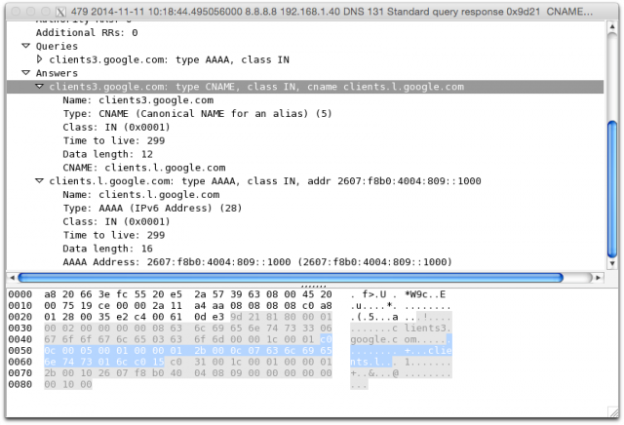
A new form of Domain Name Service-based distributed denial of service (DDoS) attacks that emerged in October, attacks that can significantly boost the volume of data flung at a targeted server. The method builds upon the well-worn DNS reflection attack method used frequently in past DDoS attacks, exploiting part of the DNS record returned by domain queries to increase the amount of data sent to the target—by stuffing it full of information from President Barack Obama’s press office. DNS reflection attacks (also known as DNS amplification attacks) use forged requests to a DNS server for the Internet Protocol address and other information about a specific host and domain name. For example, a response from Google’s DNS server typically returns something like this—a simple response with the canonical name (CNAME) of the DNS address sent in the request and an IPv4 or IPv6 address for that name: DNS requests are usually sent using the User Datagram Protocol (UDP), which is “connectionless.” It doesn’t require that a connection be negotiated between the requester and the server before data is sent to make sure it’s going to the right place. By forging the return address on the DNS request sent to make it look like it came from the target, an attacker can get a significant boost in the size of a DDoS attack because the amount of data sent in response to the DNS request is significantly larger. But this new attack pumps up the size of the attack further by exploiting the TXT record for a domain—a free-form text entry for a domain name. TXT records are used to provide “time to live” (TTL) information for caching of webpages, configuring anti-spam policies for e-mail service, and verifying ownership of domains being configured for Google Apps and other enterprise services. It can also be used to provide information about other services associated with a domain name. A TXT record for a domain can be up to 255 characters—a significant boost over the relatively small size of the request sent for it. In October, Akamai’s security team noticed a trend in DNS reflection attacks using TXT record requests to the domain “guessinfosys.com” and other malicious domains. The contents for those were not exactly what you’d expect in such a record—they contained text pulled from news releases on WhiteHouse.gov: These attacks lasted for over five hours during each episode, resulting in malicious traffic of up to four gigabits per second hitting their targets. The contents of the TXT records were apparently being updated automatically, possibly scraping data from the WhiteHouse.gov site. DDoS attacks, like many “reflection” attacks, are preventable by DNS server operators by blocking external DNS requests. The attacks can sometimes be stopped at the edge of the network, but that usually requires having more bandwidth available than the size of the attack—something smaller sites without DDoS protection from a content delivery network such as Akamai or CloudFlare may have some difficulty doing. Source: http://arstechnica.com/security/2014/11/dont-blame-obama-but-ddos-attacks-are-now-using-his-press-releases/

Read the article:
Don’t blame Obama, but DDoS attacks are now using his press releases