Two months ago, BTC-China was growing fast. It was on a blazing trajectory that would soon see it become the world’s largest Bitcoin exchange. With Bitcoin, the world’s most popular digital currency, in the midst of an tremendous upswing of its own, BTC was on the verge of hitting it very, very big. But before that, there would be the double-barreled rite of passage. First came the extortion attempt, and then the non-stop computer attacks, known as distributed denial of service (DDoS) attacks. The extortionists contacted BTC-China in mid-September. Over instant-message chats, they first said they wanted just a few hundred dollars — paid out in bitcoins, naturally — but the demands soon escalated. BTC-China CEO Bobby Lee doesn’t want to get into specifics, but he says that they claimed to have been hired by one of his competitors. He doesn’t believe this, but he thinks that other Bitcoin companies should be concerned. “The DDoS attackers are hitting more and more of us, and it’s going to be a widespread problem,” he says. Since, September, there have been dozens of these attacks on BTC-China. According to Lee, one of them used up a remarkable 100 G/bits per second in bandwidth. “They’re throwing big-time resources into these attacks,” says Marc Gaffan, co-founder of Incapsula, the company that Lee hired to protect his exchange from the criminals. “The attack on BTC-China was one of the largest ever.” Incapsula has about two-dozen clients that are involved in Bitcoin businesses, Gaffin says. A year ago, it had none. CloudFlare, another provider of DDoS protection services has seen a big jump in attacks over the past three months, says Matthew Prince, the company’s CEO. “We’re seeing daily attacks targeting Bitcoin related sites on our network, most of which are relatively small but some get to very high volumes.” Some attacks have even exceeded the 100 G/bits per second volume that hit BTC-China, he says. Yesterday, European payment processor BIPS said it had been hit with a DDoS attack, and then hacked to the tune of nearly 1,300 bitcoins, or $1 million. Last week, Bitstamp, another major Bitcoin Exchange, went offline temporarily. The company has not responded to requests for comment, but it blamed the outage on software and networking issues, not a DDoS. On most websites, hackers can steal credit card numbers or personal information, but these have to be sold somehow. When you break into a Bitcoin business and get access to digital wallets, as was the case with BIPS and an Australian company, Inputs.io, which was hit last month, you’re stealing money itself. “If a Bitcoin wallet can get compromised, then the hackers can actually steal real money and there’s no way to refund the money,” Lee says. In April, Mt. Gox got clobbered via DDoS. The point, the company speculated, was to destabilize Bitcoin, and fuel panic-selling. “?Attackers wait until the price of bitcoins reaches a certain value, sell, destabilize the exchange, wait for everybody to panic-sell their bitcoins, wait for the price to drop to a certain amount, then stop the attack and start buying as much as they can,” Mt. Gox wrote on its website. Gaffan and Lee agree that, in addition to extortion, market manipulation is likely a motive with the recent DDoS attacks too. “It’s about trying to influence the market,” Gaffan says. “We see more Bitcoin exchanges going under attack.” Source: http://www.wired.com/wiredenterprise/2013/11/ddos_bitcoin/
Read the original:
Want Cheaper Bitcoins? Hit Someone With a DDoS Attack

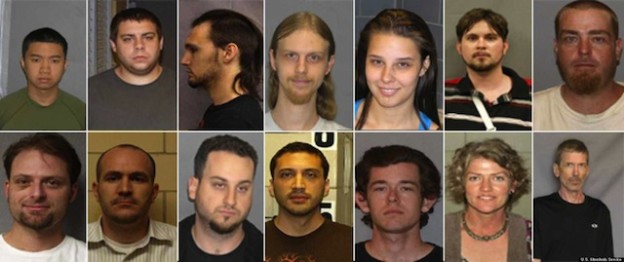
 Eleven of the fourteen defendants in the PayPal 14 case have reached a plea deal with federal prosecutors. Under the agreement, the defendants will plead guilty to felonies and misdemeanors under the Computer Fraud and Abuse Act (CFAA). If they observe good behavior, federal prosecutors will ask that the felonies be dropped. This comes as good news to those who advance the notion that DDoS (Distributed Denial of Service) attacks are acts of civil disobedience. Two other defendants will serve 90 days in prison after pleading guilty to a misdemeanor charge pled guilty to a misdemeanor, while the last of the fourteen defendants was not eligible for a plea deal in the case. The PayPal 14 are only a small fraction of the over 1,000 participants identified in a DDoS attack aimed at PayPal, which Anonymous hit as part of “Operation Payback” after the company cut service to WikiLeaks’s donations page. Pierre Omidyar, founder of eBay, which is the parent company of PayPal, called for leniency. Ironic given that PayPal provided the Department of Justice with a list of the participants’ IP addresses, which helped the FBI locate the protesters. “I can understand that the protesters were upset by PayPal’s actions and felt that they were simply participating in an online demonstration of their frustration. That is their right, and I support freedom of expression, even when it’s my own company that is the target,” Omidyar wrote two days ago in a Huffington Post op-ed. “The problem in this case however is that the tools being distributed by Anonymous are extremely powerful. They turn over control of a protester’s computer to a central controller which can order it to make many hundreds of web page requests per second to a target website.” DDoS works by connecting thousands of computers together to bombard websites with traffic until it collapses. As Omidyar noted, it multiplies the power of a single protester, which is something that cannot be done in the physical realm without significant grassroots effort. Nevertheless, the plea deal is significant because it sets a legal precedent that DDoS isn’t just some effort to cause significant financial harm. While the plea deal doesn’t define DDoS as digital protest, it might be the first step in acknowledging the attack as something akin to protesters blocking a road or a business. These physical protests are typically prosecuted as misdemeanors, not felonies that can bring hefty prison terms, high restitution costs, and a lifetime designation as a felon. The PayPal 14 plea deal might also help begin the very necessary process of amending the CFAA, which allows stiff penalties for these non-violent crimes in the first place. Shortly before the news was announced, activist lawyer Stanley Cohen tweeted: “Stay tuned for details. Pay Pal 14 will be resolved today, big win for civil disobedience. Up the Rebels.” And a good win for the internet, which is coming of age as the supreme venue for protest against political and financial power. Source: http://www.deathandtaxesmag.com/210854/paypal-14-plea-deal-a-win-for-ddos-as-civil-disobedience/