Tag Archives: ddos news

Norway banks hit in largest-ever DDoS attack, Anonymous ‘takes credit’

Norway’s top financial institutions have been hit in what appears to be a coordinated cyber-attack, the biggest-ever the country has experienced. Anonymous Norway may be responsible for the operation. The Tuesday attack targeted at least eight top Norway companies, including central Norges Bank, Sparebank 1, Danske Bank and insurance companies Storebrand and Gjensidige. Three Norwegian airlines and a big telecommunication company may also have been affected by the same attack. The malicious bombardment with requests caused traffic problems for their website and disrupted access throughout the day. This affected the banks’ online payment services as well. “The scale is not the largest we have seen, but it is the first time it has hit so many central players in the finance sector in Norway,” said the head of Evry’s security team, Sverre Olesen in an interview with Dagens Næringsliv business newspaper. Evry provides services to many of the affected companies and was busy dealing with the emergency. The company said the attackers used a vulnerability in the blogging platform WordPress and other venues to hit the websites. They didn’t appear to try to hack into the targets’ networks and try to steal any personal information, it added. The source of the attack was abroad, Evry said. Norway’s National Security Authority (Nasjonal sikkerhetsmyndighet, NSM) said it was investigating the attack, but could not identify the perpetrators yet. The newspaper said it received an email signed by Anonymous Norway claiming responsibility for the DDoS attack on the banks. The email came before the news about it broke. But a tweet on the Anonymous Norway Twitter account denied the hacktivist group’s involvement, saying they were “laughing at those who think we are behind the attacks.” Source: http://rt.com/news/171724-norway-banks-anonymous-ddos/

Read the original post:
Norway banks hit in largest-ever DDoS attack, Anonymous ‘takes credit’

eToro’s Website down Due to Malicious DDOS Attacks, Functionality Restored

Thursday has turned out to be somewhat of a more busy day for social trading platform eToro than usual. According to a company statement, the company’s service has been under attack by a malicious group of attackers since 07:12 GMT. After numerous complaints by customers of the firm, a thorough statement has been provided by eToro’s CEO, Yoni Assia. “I am sure that by now, most of you are already aware of the fact that our platform was under attack by a malicious group of hackers. I realize that many of you may be frustrated, angry, or simply worried following the unusual service interruptions that happened on Thursday, July 3rd and I wanted to contact you personally to apologize and explain what happened. Since 07:12 GMT, July 3rd, eToro has been the target of a criminal DDoS attack – a technique used by hackers to take an internet service offline by overloading its servers. (To read more about DDoS attacks:http://en.wikipedia.org/wiki/Denial-of-service_attack). I believe the choice to attack today was not a random one, as both you and eToro have been gearing up for today for the better part of the week. We had everything in place for you to experience a great day of trading, with the NFP announcement. I speak for everyone at eToro when I say that we deeply regret that this experience was denied you. We have robust systems in place to deal with such instances; however the scale of this particular attack caused our platform to experience significant downtime. All your personal data, including billing information, financial information and personal details is secure. More than that, throughout today we offered several alternatives for those of you who wanted to close a position, in order to give you as much control as was possible with regard to your portfolio. The status right now is that we were successful in restoring all of our services. Regrettably, as with attacks such as this, we might see more interruptions in the next few days. It is my personal goal to make sure you receive the best experience possible and I guarantee that all of us here at eToro are working around the clock to make sure this is exactly what you get. Our technical and service teams are at your disposal and are working non-stop to help each and every one of you resolve any issue affecting your personal account.” Update: On Friday morning in Europe, users have been reporting troubles with website and app functionality, and issues with logging in. Around 9BST, the status of the website was updated by the company, with eToro stating that currently it’s up and running, despite still being under attack. According to a company spokesperson, the malicious attempts are now blocked before they can affect eToro’s community. Source: http://forexmagnates.com/etoros-website-down-due-to-malicious-ddos-attacks-restored-only-to-go-dark-again/#sthash.PWXi3f61.dpuf

Continued here:
eToro’s Website down Due to Malicious DDOS Attacks, Functionality Restored

Could Cookies Be Used to Launch DoS Attacks?

Giant cookies could be used to create a denial of service (DoS) on blog networks, says infosec researcher Bogdan Calin. Such an attack would work by feeding users cookies with header values so large that they trigger web server errors. Calin created a proof of concept attack against the Google Blog Spot network after a customer reported problems with internal security testing. In his subsequent tests, he found that if one sends many cookies to a browser, sets them to never expire and includes pointers to a blog network’s root domain, the user won’t ever be able to see any blogs on the service. Victims can tell if supersized cookies have been stuffed down their browser’s throats when 400 errors such as “Your browser sent a request that this server could not understand. Size of a request header field exceeds server limit” appear. Sydney security bod Wade Alcorn (@WadeAlcorn) said the attack would work if custom cookies could be set. “This attack, denial-of-service by cookies, sets many long cookies, forcing the browser to create a very long request [that] is too long for the server to handle, and simply returns an error page,” Alcorn said. “The vulnerable browser won’t be able to visit that origin until the cookies are cleared. “When a browser visits one of these [user-controlled] subdomains it will allow a cookie to be set on the parent domain [which] means that when a denial-of-service by cookies attack is launched, the victim browser will not be able to visit the parent domain or any of the subdomains.” For an application to be vulnerable it must provide an opportunity for the attacker to set custom cookies in the victim’s browser, Alcorn pointed out. Chrome users were not affected when perusing Blog Spot but were on other unnamed domains. Alcorn said a Google security rep told him the risk was a problem for web browser developers to fix, rather than a lone web app providers, and welcomed ideas that could squash the vector. Source: http://www.theregister.co.uk/2014/07/02/monster_cookies_can_nom_nom_nom_all_the_blogs/

Read this article:
Could Cookies Be Used to Launch DoS Attacks?

Cybercrooks breed SELF-CLONING MUTANT that STEALS your BANK DETAILS

Fresh Cridex variant plays merry hell via email Cybercrooks have put together a botnet client which bundles in worm-like functionality that gives it the potential to spread quickly.…

Continued here:
Cybercrooks breed SELF-CLONING MUTANT that STEALS your BANK DETAILS

The World Cup of DDoS Attacks

Hacktivist for Operation Hacking Cup #OpHackingCup took down the Brazil World Cup site and have targeted hundreds of other sites.  This was not the first time a major event has been targeted nor will it be the last. Hacktivist have been actively leveraging Distribute Denial of Service (DDoS) attacks as a way to successfully highlight and protest against political, economic or ideological conflicts for quite some time. It has become so mainstream there was even a petition to the Obama administration to make DDoS legal. The FFIEC recently issued guidance to financial institutions with a quick guide on mitigation techniques.   Techniques used by cybercriminals to conduct attacks have become increasingly sophisticated – from single point denial of service attacks on networks to distributed denial of service beyond focusing just on Layer 7. In fact, DDoS has become so commercial that we’ve seen DDoS for hire  underground offerings for as low as $7 per hour with free one hour try before you buy option.  Couple this with a recent Ponemon report which highlighted that one hour of downtime for a merchant would equate to an average loss of $500,000 – what an amazing ROI for cybercriminals considering for the same amount of money I spend on coffee a day they can impact an organization’s bottom line by over $500,000! Traditional DDoS attacks focused on things like UDP Flood, Syn Flood and ICMP Flood targeting network resource exhaustion .     Modern day DDoS attacks such as Op Ababil, target the HTTP layer and above.   In recent DDoS attacks, reflection and amplification have been the weakness of choice such as the Network Time Protocol (NTP) attacks this past February or the DNS lookup attacks late last year. Cybercriminals continue to develop even more sophisticated botnets which can remain active longer before being discovered and they are hosting a botnet’s command-and-control center in a Tor-based network (where each node adds a layer of encryption as traffic passes) obfuscates the server’s location and makes it much harder to take it down.  Additionally, cybercriminals are building more resilient peer-to-peer botnets, populated by bots that talk to each other, with no central control point. If one bot (or peer) in a peer-to-peer botnet goes down, another will take over, extending the life of the botnet using business continuity techniques. This is exactly what we saw with the recent GameOver Zeus and CryptoLocker botnet disruption. These types of attacks make requests that are perceived to be legitimate; like attempting logins, performing search or downloading large files repeatedly which can easily bypass standard DDoS defenses such as firewalls, Intrusion Prevention Systems (IPS) and Web Application Firewalls (WAF). Additionally, modern day DDoS attacks are starting to abuse a business logic flaws rather than network resources on a more frequent basis as few organizations are focused on that aspect of their site for security detection. This is why it is becoming more critical to determine whether a request is legitimate or not and without understanding business logic used for processing the request this is incredibly challenging. In addition to what you are already doing today, you should consider focusing on the detection of business logic abuse by analyzing the behavior of users. You can achieve this by tracking every user/IP including pages accessed, the order of accesses, how quickly they moved between pages and other web paths taken by the same IP address. Further, if you analyze all web traffic it makes it possible to identify users or IP addresses displaying similar behavior. Users can then be clustered based on behavior enabling your administrators to find all endpoints involved in the attack. If this analysis happens in real-time you can identify more attackers as attacks happen. Take a look at what we saw with one of our Web Threat Detection customers. In a world where we will always have political, economic or ideological conflicts – and major sporting event, we should assume there will always be some type of cyber attack in parallel.  What is your game plan to defeat your competition? Source: https://blogs.rsa.com/world-cup-ddos-attacks/?utm_source=rss&utm_medium=rss&utm_campaign=world-cup-ddos-attacks

Read this article:
The World Cup of DDoS Attacks

DDoS attacks are becoming more effective

Disruptive cyber-attacks are becoming more effective at breaching security defenses, causing major disruption and sometimes bringing down organizations for whole working days, according to a new globa…

Read More:
DDoS attacks are becoming more effective

London teen charged over Spamhaus mega-DDoS attacks

Accused will tap the boards before the beak today An unnamed London teenager has been charged with a series of criminal offences following a series of denial-of-service attacks against internet exchanges and the Spamhaus anti-spam service last year.…

See the original article here:
London teen charged over Spamhaus mega-DDoS attacks

Brobot botnet used to launch DDoS attack

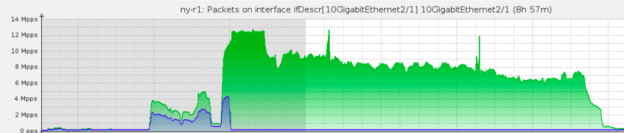
DOSarrest Internet Security had a run in with the notorious Brobot Botnet, if the name sounds familiar it’s because this bot was responsible for sporadic outages on a number of large US based financial institutions in 2013. Said to be operated by al-Qassam Cyber Fighters (AKA QCF). Botnets are born, die, grow, shrink, and morph on a daily basis, if not hourly. It’s hard to keep track of them all. Then there are particularly nasty ones that are large, powerful and sophisticated. These particular botnets have some of their zombies or bots corralled off for research purposes by a number of organizations including private Botnet hunters, government cyber surveillance departments and other large law enforcement agencies. On to the attack Why ? One of our customers is a large media outlet specializing in Middle Eastern news. With all the conflict over there these days, they must have written a few stories that the attackers were not in agreement with. How ? Using Brobot, the attackers threw millions of TCP port 80 requests at the website. Unlike a SYN attack that tries to exhaust your TCP open sessions table buffers, this attack would open and close each session/request: 1)     Request a TCP connection 2)     Once established they would send one character 3)     Then request the TCP session to close. The problem arises when you are receiving approximately 50 million of these per second. Where ? This botnet is comprised of infected webservers using PHP, hosted on various webhosting companies around the globe. Some hosting companies seem to be represented a little more than others. One notable observation of the Brobot is that it’s very US centric, not all of the bots are based in the US but approximately 40%  are, which makes filtering based on countries very difficult. When under a large TCP port 80 attack, usually it is not evenly divided across our scrubbing nodes in the US and Europe. This was different, virtually all of our upstream links in every city had pretty much the same amount of Packets Per Second and Bandwidth. I can’t ever remember seeing that in the last 7 years All links had a graph like the one above Who cares ? Within a couple of hours of the attack starting we were contacted by a private Botnet hunter that knew we were dealing with Brobot. Soon followed by visits to our website from two US federal Law enforcement agencies. Hence the title, not all botnets are equal.

Visit link:
Brobot botnet used to launch DDoS attack

Drastic decline in vulnerable NTP servers due to Heartbleed?

In light of the escalation of DDoS attacks used as a means of extorting money from online businesses, the news that there has been a significant decrease in vulnerable Network Time Protocol (NTP) serv…

Continued here:
Drastic decline in vulnerable NTP servers due to Heartbleed?