Tag Archives: ddos

DDoS Attack Update: Idaho Teen Faces Felony Charges After Unleashing a DDoS Attack on School District
In May 15, KTVB reported that a student recently launched a cyber-attack on one of Idaho’s largest school districts. The attack, which was identified as a Distributed Denial of Service (DDoS), practically rendered the entire district’s internet unable to function. The attack was so powerful that it caused internet problems for the affected school district for weeks without ceasing. A lot of Idaho students working on achievement tests lost all their data, and some even had to retake the exam multiple times because of the gravity of the attack. Even the administrative network itself, which, unfortunately, included the teachers’ payroll data was compromised. A DDoS attack occurs when multiple systems compromised by a Trojan are used by a host, or in this case, a channel, to target a single host simultaneously causing a denial of service. In simple terms, the attack floods a single network with immeasurable internet traffic until it simply stops dead on its tracks. Most of these attacks exploit problems within the victim computer’s TCP/IP system. Because a DDoS attack comes from hundreds, possibly even thousands of sources at once, it is practically impossible for any program on earth to track down the actual source of the problem. To make matters worse, a DDoS attack makes it impossible to identify actual, legitimate traffic, because everything gets lost in a haze of incoming data. Despite the overwhelming odds, the authorities managed to trace the attacker’s IP address back to the high school student. Today, he faces the possibility of expulsion, as well as 180 days in a juvenile detention center. Authorities say that he might even be facing serious federal charges. Moreover, the culprit’s parents will also be expected to pay any losses that the school district has incurred due to the attacks. A representative for the West Ada School District said that there might be other students within the area who know how to carry out this cyber-attack. Nevertheless, the spokesperson reassured everyone that further attacks will be dealt with more readily. The district also sent a message to parents of students enrolled in their schools, urging them to help keep their children from committing cyber attacks. Source: http://www.chinatopix.com/articles/51791/20150527/idaho-teen-felony-charges-ddos-attack.htm

Original post:
DDoS Attack Update: Idaho Teen Faces Felony Charges After Unleashing a DDoS Attack on School District

South Africa a target for DDoS

South Africa is the most targeted country in Africa when it comes to distributed denial-of-service (DDOS) attacks. This was revealed by Vernon Fryer, chief technology security officer at Vodacom, in a keynote address during ITWeb Security Summit 2015, in Midrand, this morning. In computing, a DDOS attack is an attempt to make a machine or network resource unavailable to its intended users. Such an attack generally consists of efforts to temporarily or indefinitely interrupt or suspend services of a host connected to the Internet. Fryer was speaking with reference to statistics from the Vodacom Cyber Intelligence Centre, which the company established eight years ago to analyse the threat landscape on the African continent. He revealed over the past 18 months, there has been a marked increase in DDOS attacks on the continent, with a typical attack averaging 9Gbps. “There has been about a 150% increase in the number of DDOS [attacks] in the last 18 months in Africa,” he said. In terms of the number of attacks, Kenya, Uganda, Algeria, Nigeria and Tanzania respectively come after SA, said Fryer, pointing to the analysis done by the Vodacom Cyber Intelligence Centre last Thursday. According to Fryer, the majority of in-bound traffic to SA emanated mainly from China, Germany, Brazil, Vietnam, Russia, Cyprus, Turkey, Switzerland, Canada and the US. However, he noted, it was surprising Switzerland and Canada were featuring on the list this year, something never witnessed previously. Another unexpected trend showed traffic coming from Swaziland, he added, pointing out the growing number of Chinese communities in the country could be a reason for this spike. Describing some of the attack vectors cyber criminals were making use of in the region, Fryer pointed to scareware, ransomware, fake anti-virus, as well as TDSS Rootkit, among others. The trending malware included KINS Trojan, Skypot, VirRansom, SpyEye Trojan and the Chameleon Botnet. With regard to ransomware attacks in Africa, Tanzania is the most attacked on the African continent, Fryer said. He also noted the trending hacker groups in Africa include Anonymous, also known as the Lizard Squad, the Syrian Electronic Army, as well as the Yemen Cyber Army. Faced with the rise in the level and sophistication of attacks, Fryer said organisations need to constantly monitor the behaviour of their firewalls. Typically, he said, organisations take about five years without monitoring their firewall. “We need to understand if our firewalls are capable of handling today’s threats. Thus, the performance of firewalls needs to be constantly monitored,” he concluded. Source: http://www.itweb.co.za/index.php?option=com_content&view=article&id=143446:SA-a-target-for-DDOS&catid=234

Taken from:
South Africa a target for DDoS

Teen hires attacker to DDoS his school district

A high school boy might have to face state and federal charges for allegedly hiring a third party and launching a DDoS attack against the West Ada school district, Idaho, US. A 17-year old high school student (the name cannot be disclosed because of him being a minor) might be accused of launching a distributed denial of service (DDoS) attack after hiring a third party. The attack crippled operations at more than 50 schools of the district for a week previously this month. DDoS is a type of attack in which the servers of a particular online service are slowed to such an extent that their processing ability gets clogged up. According to KTVB report , the West Ada students suffered assorted misery due to the attack such as they lost their data on the Idaho Standard Achievement tests. Some of the students also had taken the tests multiple times. The attack lasted around a week and during this phase the online classes and textbooks could not be accessed. Moreover, the faculty and staff also experienced problems in accessing business and administrative systems such as payroll. The IP address from where the attack was launched was finally traced by the school district’s IT staff, which led them to the high schooler. The boy has been suspended from Eagle High but school administration suggested that he should be expelled. According to the Sheriff’s Office, the seventeen year old will most likely be charged with computer crime felony, which can send him to a juvenile detention facility for up to 180 days as the teenager paid someone to overwhelm the system with traffic from multiple sources. Additionally, the boy’s family will also be held responsible for a financial restitution for covering the losses since operations at around 50 schools got disrupted due to the attack. This is not the first time when a teenager attacked an educational institution. In April 12, 2015, Domanik Green, a 14-year-old student studying at Florida’s Paul R. Smith Middle School managed to bypass the school’s computer security network using just his computer skills and gained access to the server that contained FCAT (Florida Comprehensive Assessment Test) data. Source: https://www.hackread.com/teen-ddos-attack-school-district/

View the original here:
Teen hires attacker to DDoS his school district

High schooler allegedly hired third party to DDoS his school district

A 17-year-old high school boy may face state and federal charges for allegedly having paid a third party to launch a distributed denial of service (DDoS) attack that crippled the West Ada school district in Idaho, US, for a week and a half earlier this month. Because he’s a minor, he can’t be named. A DDoS is an attack wherein the servers of a targeted online service are slowed to a crawl with loads of pointless data like email or file uploads that clog up their processing ability. KTVB reports that West Ada students suffered assorted misery because of the attack, including losing their work on the Idaho Standard Achievement tests. Some students had to take the tests multiple times. Meanwhile, online classes and textbooks weren’t available for much of the week, and faculty and staff had problems accessing administrative and business systems, including payroll. The school district’s IT staff eventually traced an IP address back to the 17-year-old, who was suspended from Eagle High. School officials are recommending that he be expelled. The sheriff’s office told the TV station that the boy will likely be charged with a felony charge of computer crime, which is punishable by up to 180 days in a juvenile detention facility. In addition, his family will be responsible for financial restitution to cover costs incurred by the school district. Operations at more than 50 schools were disrupted because of the attack. As of Wednesday, investigators were also looking into whether a younger student – one attending Eagle Middle School – attempted a similar attack this week. School officials sent parents a letter on Friday that urged them to talk with their children about the consequences of committing cyber attacks such as this one. We can assure students and parents that the consequences associated with a DDoS attack are far from trivial. Examples include two online gaming programmers from Poland who were given 5-year jail sentences in December 2013 for DDoS and cyber-extortion of a UK online marketing company and a US internet software company. In that same month, a US man was fined $183,000 (£116,772) after joining, for merely 1 minute, an Anonymous DDoS of the enormous, multinational corporation Koch Industries. When it comes to DDoS, the law doesn’t spare you if you’re a kid. In fact, a 16-year-old London schoolboy was arrested under suspicion of involvement in the 2013 DDoS attack against Spamhaus: an attack of unprecedented ferocity. He pleaded guilty in 2014. Then too, a UK teenager was arrested in January for possibly having a hand in the PlayStation/Xbox Live DDoS that Grinched up gamers’ Christmas day playing. We often hear DDoS’ers trying to justify DDoSes under the premise that really, companies should be thanking the attackers for “raising awareness” of their vulnerability. That’s an old, tired spiel that we got from Lizard Squad members after they ruined Christmas with their XBox Live/PlayStation attack. Or, in the words of a man who claimed to speak for the attackers, they did it … …to raise awareness, to amuse ourselves… But as Naked Security’s Mark Stockley said at the time, a DDoS attack isn’t a skilful hack. You don’t need elite lock-picking skills to pull it off, because you’re not picking a lock. Rather, you’re blocking the door from the outside with as much garbage as you can pile up. Is DDoSing a company, or your school, or any online service, worth the lulz? For an answer, we can ask the LulzSec guys—If they’re out of prison, maybe they can let us know. Source: https://nakedsecurity.sophos.com/2015/05/22/high-schooler-allegedly-hired-third-party-to-ddos-his-school-district/?utm_source=Naked%2520Security%2520-%2520Feed&utm_medium=feed&utm_content=rss2&utm_campaign=Feed

Read the article:
High schooler allegedly hired third party to DDoS his school district

DDoS attack downs University of London learning platform

A harsh lesson, now stand in corridor for four hours The University of London Computer Centre fell victim to a cyber-attack on Thursday.…

Read this article:
DDoS attack downs University of London learning platform

DDoS reflection attacks are back

At the start of 2014, attackers’ favorite distributed denial of service attack strategy was to send messages to misconfigured servers with a spoofed return address – the servers would keep trying to reply to those messages, allowing the attackers to magnify the impact of their traffic. As those servers got patched, this strategy became less and less effective. But now it’s back, according to a new report from Akamai. Except this time, instead of hitting data center servers or DNS servers, the attackers are going after personal computers on misconfigured home networks. According to Eric Kobrin, Akamai’s director of information security responsible for adversarial resilience, the attackers are taking advantage of plug-and-play protocols, commonly used by printers and other peripheral devices. These attacks, known as Simple Service Discovery Protocol (SSDP) attacks, are now the single largest attack vector for DDoS attacks, accounting for 21 percent of all attacks, up from 15 percent last quarter, and less than 1 percent at this time last year. “There are infectable SSDP services all over the Internet,” he said. “As they are discovered, we help work with people to shut them down.” Although each particular device has just a fraction of the bandwidth available to data center-based servers, there are more of them. “There’s a fertile ground of home systems,” he said. “A property configured home firewall can block this, but there are many improperly configured home systems connected to the Internet – and there are also industrial systems that can be used to reflect attacks as well.” This attack source is also harder to shut down, he said. “It’s easier to go into the data center and have the service providers do the clean-up,” he said. Last quarter, SYN flood attacks – where “synchronize” messages are sent to servers – was the leading attack vector, accounting for 17 percent of all attacks, down slightly from 18 percent of all attacks at the start of 2014. There has also been a change in the size of the median attack, and the typical size range of attacks, Kobrin said, as defensive measures have improved. “The smallest effective attack size has increased, year over year,” he said. “It’s because the smallest attacks are no longer effective.” Another type of DoS attack has gained a foothold for the first time this year. SQL injections, normally used to gain access to systems for the purpose of stealing data, are now being used to shut down Web sites as well. Akamai saw more than 52 million SQL injection attacks during the first quarter of 2015, which accounted for 29 percent of all Web application attacks. The most common targets for SQL injection attacks were retail, travel and media websites. Finally, another attack vector that’s just now starting to make an impact is domain hijacking. “People are actually attacking the registries and getting their own information put in, so the big sites are losing control of their DNS infrastructure,” Korbin said. There have been a few high-profile cases so far, he said, mostly politically motivated, but not yet enough data to measure a trend. “We didn’t see it much in 2012, started seeing a little bit of it in 2013 and 2014, and seeing it more of it now,” he said. He recommended that companies switch on two-factor authentication for their email systems when available, ensure that employees don’t reuse credentials, ask their domain registrars to put a lock on their domains, and, finally, keep a close eye on traffic numbers to spot a drop-off as soon as it happens. With these domain redirects, the attackers are not only able to shut down the legitimate website, but also put up their own content under that website’s brand. Source: http://www.csoonline.com/article/2923832/business-continuity/ddos-reflection-attacks-are-back-and-this-time-its-personal.html

More:
DDoS reflection attacks are back

Hong Kong Banks Targeted By DDoS Attacks, Bitcoin Payout Demanded

On May 9, an general organisation of hackers launched distributed rejection of use (DDoS) attacks on dual of a largest financial institutions in Hong Kong. Hong Kong military reliable that they have perceived reports from a Bank of China and a Bank of East Asia claiming that a hackers demanded payments in bitcoin. “The dual institutions after perceived emails perfectionist payments in bitcoins, or there would be another turn of attacks,” a orator said. According to The Standard Hong Kong, a hackers impressed a websites of a dual banks with trade from mixed sources, causing strange spikes in Internet trade and forcing some of a websites’ resources to be unavailable. However, both banks stressed that nothing of a information and patron accounts were compromised. Finance Magnets reported that a Cyber Security and Technology Crime Bureau has personal a box as “blackmail” and has begun an investigation. The conflict imposed on a dual banks is identical to a DDoS attacks launched on a central corporate websites of banks in China and Hong Kong, many particularly a People’s Bank of China in late 2013. The investigators during a time believed that a attacks were a outcome of a distribution of new manners that taboo financial institutions from traffic with bitcoin. attack, as a response to prohibiting a use of digital currencies in China. The internal media began to assume that a new conflict instituted on a Bank of China and a Bank of East Asia competence have been launched by a organisation of hackers famous as DD4BC. The organisation is now listed on Bitcoin Bounty Hunter and has pounded several websites, including Finnish Bitcoin wallet and sell Bitalo and Bitcoin sports betting height Nitrogensports. “DD4BC threatens a Bitcoin Community with DDoS extortion, blackmailing and slander,” Bitcoin Bountry Hunter explained. “Famous Bitcoin services like Bitalo.com and Nitrogensports.com were pounded and blackmailed.” The banks declined to recover information of a emails perceived by a hackers and a volume of BTC demanded. If a DDoS attacks are continuing, a dual banks might remove adult to $100,000 an hour, American Banker reports. AMR (American Banker Reports) settled that “the normal bandwidth consumed by a DDoS conflict increasing to 7.39 gigabits per second, according to Verisign’s research of DDoS attacks in a fourth entertain of 2014.” A few days have upheld given a Cyber Security and Technology Crime Bureau began questioning a case, though a box hasn’t showed any progress. Source: http://blog.downforjust.me/hong-kong-banks-targeted-by-ddos-attacks-bitcoin-payout-demanded/

View post:
Hong Kong Banks Targeted By DDoS Attacks, Bitcoin Payout Demanded

How organisations can eliminate the DDoS attack ‘blind spot’

Most DDoS defence solutions are missing critical parts of the threat landscape thanks to a lack of proper visibility. Online organisations need to take a closer look at the problem of business disruption resulting from the external DDoS attacks that every organisation is unavoidably exposed to when they connect to an unsecured or ‘raw’ Internet feed. Key components of any realistic DDoS defense strategy are proper visualisation and analytics into these security events. DDoS event data allows security teams to see all threat vectors associated with an attack – even complex hybrid attacks that are well disguised in order to achieve the goal of data exfiltration. Unfortunately, many legacy DDoS defense solutions are not focused on providing visibility into all layers of an attack and are strictly tasked with looking for flow peaks on the network. If all you are looking for is anomalous bandwidth spikes, you may be missing critical attack vectors that are seriously compromising your business. In the face of this new cyber-risk, traditional approaches to network security are proving ineffective. The increase in available Internet bandwidth, widespread access to cyber-attack software tools and ‘dark web’ services for hire, has led to a rapid evolution of increasingly sophisticated DDoS techniques used by cyber criminals to disrupt and exploit businesses around the world. DDoS as a diversionary tactic Today, DDoS attack techniques are more commonly employed by attackers to do far more than deny service. Attack attempts experienced by Corero’s protected customers in Q4 2014 indicate that short bursts of sub-saturating DDoS attacks are becoming more of the norm. The recent DDoS Trends and Analysis report indicates that 66% of attack attempts targeting Corero customers were less than 1Gbps in peak bandwidth utilisation, and were under five minutes in duration. Clearly this level of attack is not a threat to disrupt service for the majority of online entities. And yet the majority of attacks utilising well known DDoS attack vectors fit this profile. So why would a DDoS attack be designed to maintain service availability if ‘Denial of Service’ is the true intent? What’s the point if you aren’t aiming to take an entire IT infrastructure down, or wipe out hosted customers with bogus traffic, or flood service provider environments with massive amounts of malicious traffic? Unfortunately, the answer is quite alarming. For organisations that don’t take advantage of in-line DDoS protection positioned at the network edge, these partial link saturation attacks that occur in bursts of short duration, enter the network unimpeded and begin overwhelming traditional security infrastructure. In turn, this activity stimulates un-necessary logging of DDoS event data, which may prevent the logging of more important security events and sends the layers of the security infrastructure into a reboot or fall back mode. These attacks are sophisticated enough to leave just enough bandwidth available for other multi-vector attacks to make their way into the network and past weakened network security layers undetected. There would be little to no trace of these additional attack vectors infiltrating the compromised network, as the initial DDoS had done its job—distract all security resources from performing their intended functions. Multi-vector and adaptive DDoS attack techniques are becoming more common Many equate DDoS with one type of attack vector – volumetric. It is not surprising, as these high bandwidth-consuming attacks are easier to identify, and defend against with on-premises or cloud based anti-DDoS solutions, or a combination of both. The attack attempts against Corero’s customers in Q4 2014 not only employed brute force multi-vector DDoS attacks, but there was an emerging trend where attackers have implemented more adaptive multi-vector methods to profile the nature of the target network’s security defenses, and subsequently selected a second or third attack designed to circumvent an organisation’s layered protection strategy. While volumetric attacks remain the most common DDoS attack type targeting Corero customers, combination or adaptive attacks are emerging as a new threat vector. Empowering security teams with DDoS visibility As the DDoS threat landscape evolves, so does the role of the security team tasked with protecting against these sophisticated and adaptive attacks. Obtaining clear visibility into the attacks lurking on the network is rapidly becoming a priority for network security professionals. The Internet connected business is now realising the importance of security tools that offer comprehensive visibility from a single analysis console or ‘single pane of glass’ to gain a complete understanding of the DDoS attacks and cyber threats targeting their Internet-facing services. Dashboards of actionable security intelligence can expose volumetric DDoS attack activity, such as reflection, amplification, and flooding attacks. Additionally, insight into targeted resource exhaustion attacks, low and slow attacks, victim servers, ports, and services as well as malicious IP addresses and botnets is mandatory. Unfortunately, most attacks of these types typically slide under the radar in DDoS scrubbing lane solutions, or go completely undetected by cloud based DDoS protection services, which rely on coarse sampling of the network perimeter. Extracting meaningful information from volumes of raw security events has been a virtual impossibility for all but the largest enterprises with dedicated security analysts. Next generation DDoS defense solutions can provide this capability in a turn-key fashion to organisations of all sizes. By combining high-performance in-line DDoS event detection and mitigation capabilities with sophisticated event data analysis in a state-of-the-art big data platform, these solutions can quickly find the needles in the haystack of security events. With the ability to uncover hidden patterns of data, identify emerging vulnerabilities within the massive streams of DDoS attack and security event data, and respond decisively with countermeasures, next-generation DDoS first line of defense solutions provide security teams with the tools required to better protect their organization against the dynamic DDoS threat landscape. Source: http://www.information-age.com/technology/security/123459482/how-organisations-can-eliminate-ddos-attack-blind-spot  

Read this article:
How organisations can eliminate the DDoS attack ‘blind spot’

TRD Admin On The Ransom DDoS That Is Hitting The Dark Net Markets

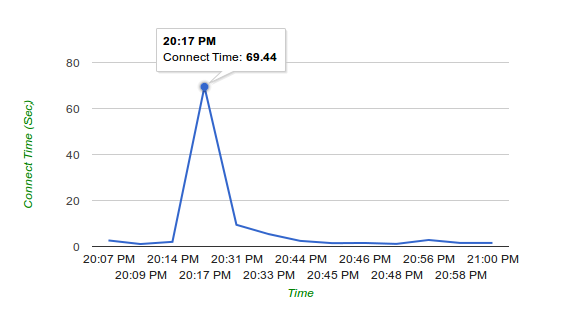
The admin of Therealdeal market ( http://trdealmgn4uvm42g.onion/ ) provided us with some insights about the recent  DDo’s attacks that are hitting all the major DNM’s in the past week: In the past few days, it seems like almost every DN market is being hit by DDoS attacks. Our logs show huge amounts of basic http requests aiming for dynamic pages, probably in attempt to (ab)use as many resources as possible on the server side, for example by requesting for pages that execute many sql queries or generate captcha codes. As we are security oriented we manged to halt the attack on our servers the moment it showed up in the logs. Although this required fast thinking, due to the fact that dealing with this kind of attack over tor is not the same as dealing with such attack over clearnet. New addresses? Shifting Pages? Waiting? All these did not work for other markets… Here you can see the beginning and failure, as caught by Dnstats: As you can see, our market’s response time spiked to almost 70 seconds while our market’s usual response time is insanely fast, almost like most clearnet sites. But also, you can see that the response time was back to 2-3 seconds a little after. Here is an example of a darknet market that didn’t know how to combat this problem: The flat line at 0 seconds meaning there was no response from the server. The Problem As opposed to cleanet attacks, where mitigation steps could be taken by simply blocking the offending IP addresses,when it comes to tor, the requests are coming from the localhost (127.0.0.1) IP address as everything is tunneled through tor. Another problem is the fact that the attackers are using the same user-agent of tor browser – hence we cannot drop packets based on UA strings. The attackers are also aiming for critical pages of our site – for example the captcha generation page. Removing this page will not allow our users to login, or will open the site to bruteforce attempts. Renaming this page just made them aim for the new url (almost instantly, seems very much automated). One of the temporary solutions was to run a script that constantly renamed and re-wrote the login page after 1 successful request for a captcha… Attacks then turned into POST requests aiming for the login page. Solutions If you are a DNM owner or just the security admin, check your webserver logs. There is something unique in the HTTP requests, maybe a string asking you to pay to a specific address. (assuming these are the same offenders). Otherwise there might be something else … Hint: you might need to load tcpdump during an attack. Hopefully, you are not using some kind of VPS and have your own dedicated servers and proxy servers. Or if you are using some shit VPS, then hopefully you are using KVM or XEN. (first reason being the memory is leakable and accessible by any other user of the same service). The other reason is – control on the kernel level. You can drop packets containing specific strings by using iptables, or use regex too. This is one example of a commad that we executed (amongst others) to get rid of the offenders, we cannot specify all of them, so be creative! iptables -A INPUT -p tcp –dport 80 -m string –algo bm –string “(RANSOM_BITCOIN_ADDRESS)” -j DROP Where (RANSOM_BITCOIN_ADDRESS) is the unique part of the request… To Other Market Admins: There are additional things to be done, but if we expose them, this will only start a cat and mouse game with these attackers. If you are a DNM admin feel free to sign up as a buyer at TheRealDeal Market and send us a message (including your commonly used PGP), since at the end of the day even though you might see us a competitor in a way, there are some things (like people stuck without their pain medication from mexico) that are priceless… Source: http://www.deepdotweb.com/2015/05/11/this-is-the-ransom-ddos-that-is-hitting-the-dark-net-markets/

Read More:
TRD Admin On The Ransom DDoS That Is Hitting The Dark Net Markets

Anonymous Knocks Pro-Nazi Websites Offline with DDoS Attacks

Anonymous hackers decided to commemorate the 70th anniversary of the defeat of Nazi forces in 1945, by Anonymous Sweden deciding to knock pro-Nazi websites offline in motion of the 70 year old victory. Hacktivists in Sweden took it upon themselves to celebrate the 70th anniversary of the victory over Nazi forces in Germany by knocking offline pro-Nazi affiliated domains hosted exclusively by Swedish companies. Targets were limited but extremely well known with well-over hundreds of thousands of monthly visitors. Specific targets included nordfront[dot]se and svenskarnasparti[dot]se, which were both taken offline by a large Distributed Denial of Service (DDoS) Attack and have been inaccessible for several days. The domains remain offline during the time of writing this article and were initially taken offline mid afternoon Friday. Depending on the size of the attack, the domains could remain offline and inaccessible for several days as they have been already. Anonymous Sweden announced their news on Pastebin, with a letter to pro-Nazi websites that were apart of their targeted attack, stating: Today it’s 70 years since nazi-Germany fell. But nazis is still marching in Europe.. Attacking peaceful protesters and spreading fear across the world. It is our duty to remember what happend and never let the horrors be forgotten.. It is our duty to fight nazism. Today we Will wipe the nazis of the webs! Main targets Www.nordfront.se Server info : Apache/2.2.22 (Debian) mod_fcgid/2.3.6 mod_ssl/2.2.22 OpenSSL/1.0.1e IP: 176.10.250.104 is their dotted decimal Www.svenskarnasparti.se Server info: its a worldpress site with cloudfare “Protection” We are Anonymous We do not forgive We do not forget Hitler-fan boys, its time to expect us! /Anonymous Sweden with friends! Special thanks to PH1K3 United as one divided by zero Anonymous started their attacks May 8th, and the domains are still offline nearly 48 hours later. The Swedish collective did not note any specific groups for taking part other than releasing the news via pastebin. We will keep you updated. Source: http://freedomhacker.net/anonymous-knocks-pro-nazi-websites-offline-ddos-attack-4106/

Link:
Anonymous Knocks Pro-Nazi Websites Offline with DDoS Attacks