
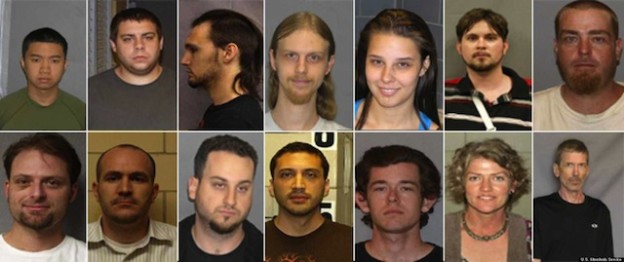
 Eleven of the fourteen defendants in the PayPal 14 case have reached a plea deal with federal prosecutors. Under the agreement, the defendants will plead guilty to felonies and misdemeanors under the Computer Fraud and Abuse Act (CFAA). If they observe good behavior, federal prosecutors will ask that the felonies be dropped. This comes as good news to those who advance the notion that DDoS (Distributed Denial of Service) attacks are acts of civil disobedience. Two other defendants will serve 90 days in prison after pleading guilty to a misdemeanor charge pled guilty to a misdemeanor, while the last of the fourteen defendants was not eligible for a plea deal in the case. The PayPal 14 are only a small fraction of the over 1,000 participants identified in a DDoS attack aimed at PayPal, which Anonymous hit as part of “Operation Payback” after the company cut service to WikiLeaks’s donations page. Pierre Omidyar, founder of eBay, which is the parent company of PayPal, called for leniency. Ironic given that PayPal provided the Department of Justice with a list of the participants’ IP addresses, which helped the FBI locate the protesters. “I can understand that the protesters were upset by PayPal’s actions and felt that they were simply participating in an online demonstration of their frustration. That is their right, and I support freedom of expression, even when it’s my own company that is the target,” Omidyar wrote two days ago in a Huffington Post op-ed. “The problem in this case however is that the tools being distributed by Anonymous are extremely powerful. They turn over control of a protester’s computer to a central controller which can order it to make many hundreds of web page requests per second to a target website.” DDoS works by connecting thousands of computers together to bombard websites with traffic until it collapses. As Omidyar noted, it multiplies the power of a single protester, which is something that cannot be done in the physical realm without significant grassroots effort. Nevertheless, the plea deal is significant because it sets a legal precedent that DDoS isn’t just some effort to cause significant financial harm. While the plea deal doesn’t define DDoS as digital protest, it might be the first step in acknowledging the attack as something akin to protesters blocking a road or a business. These physical protests are typically prosecuted as misdemeanors, not felonies that can bring hefty prison terms, high restitution costs, and a lifetime designation as a felon. The PayPal 14 plea deal might also help begin the very necessary process of amending the CFAA, which allows stiff penalties for these non-violent crimes in the first place. Shortly before the news was announced, activist lawyer Stanley Cohen tweeted: “Stay tuned for details. Pay Pal 14 will be resolved today, big win for civil disobedience. Up the Rebels.” And a good win for the internet, which is coming of age as the supreme venue for protest against political and financial power. Source: http://www.deathandtaxesmag.com/210854/paypal-14-plea-deal-a-win-for-ddos-as-civil-disobedience/
Read More:
PayPal 14 plea deal a win for DDoS as civil disobedience

 Afrikaans language activist group Praag intends to lay criminal charges against people responsible for attacking its website, the group said on Thursday. Pro Afrikaans Action Group (Praag) founder Dan Roodt said the website and servers had been under a “distributed denial of service” (DDOS) attack, causing disruptions since Tuesday. He believed the attack was aimed at bankrupting Praag and its service provider through the consumption of bandwidth and damage to network infrastructure. “We are going to lay charges with the SA Police Service under the Electronic Communications and Transactions (ECT) Act 25 of 2002 for the DDOS attack against us, but also against those anonymous individuals slandering us on Facebook, social media, and in relation to potential advertisers on our site,” said Roodt. On Sunday, Rapport reported that Google had decided to stop channelling advertising to Praag, and this threatened the future of the website. Roodt told the paper that Praag made thousands of rands from advertising on its website, and would not be able to function without advertisers. He said Google told him that Afrikaans was not a recognised advertising language and it could channel advertisements only to the English version of the Praag website. Roodt, however, alleged that a woman who opposed Praag was behind the problem. He claimed the woman had started a “malicious and fanatical” Facebook group called “Speak Out Against the Website Praag”. In a letter she reportedly posted on the social media network, she accused Praag of being racist and of spreading hate speech, and shared the letter with companies she claimed were helping it spread this message by advertising on the website. On Thursday, Roodt said he had the backing of supporters to take on the attackers. “We will not be using the distasteful and underhanded techniques of our opponents but will be defending ourselves in an open, transparent and legal manner,” he said. Source: http://www.iol.co.za/news/crime-courts/charges-pending-after-praag-web-attack-1.1607313#.UoTwduLrKb4