
UK BANKING GROUP Royal Bank of Scotland (RBS) has been hit by a distributed denial of service (DDoS) attack that took down its online services for the second time this week. Earlier this week, RBS irked customers when an IT systems failure shut down its websites and caused its customers’ bank cards to fail. On Friday it admitted that it has been struck by a DDoS attack affecting its online services once again. RBS took to Twitter to reveal news of the DDoS attack. It said, “Due to a surge in internet traffic directed at the Natwest website, customers experienced difficulties accessing some of our sites today. “This deliberate surge of traffic is known as a distributed denial of service (DDoS) attack. We have taken action to restore affected sites. “At no time was there any risk to customers. We apologise for the inconvenience caused.” RBS has yet to comment further, so it’s still unclear which websites were downed in the attack, although the tweet suggested that the RBS, Natwest and Ulster Bank websites were all affected. It is also still unclear who was responsible for the DDoS attack. However, it seems that the problems have not reached as far as those experienced by RBS customers earlier this week, when an IT systems failure struck the entire banking group. Speaking about the system failure on Monday evening, RBS CEO Ross McEwan said on Tuesday, “Last night’s systems failure was unacceptable. Yesterday was a busy shopping day and far too many of our customers were let down, unable to make purchases and withdraw cash. “For decades, RBS failed to invest properly in its systems. We need to put our customers’ needs at the centre of all we do. It will take time, but we are investing heavily in building IT systems our customers can rely on. “I’m sorry for the inconvenience we caused our customers. We know we have to do better. I will be outlining plans in the New Year for making RBS the bank that our customers and the UK need it to be. This will include an outline of where we intend to invest for the future.” Source: http://www.theinquirer.net/inquirer/news/2317692/rbs-hit-by-ddos-attack-that-takes-down-online-services-again
View article:
RBS hit by DDoS attack that takes down online services again
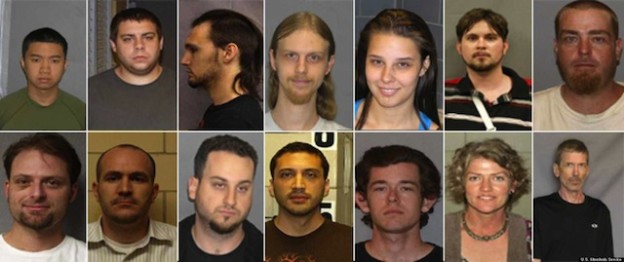
 Eleven of the fourteen defendants in the PayPal 14 case have reached a plea deal with federal prosecutors. Under the agreement, the defendants will plead guilty to felonies and misdemeanors under the Computer Fraud and Abuse Act (CFAA). If they observe good behavior, federal prosecutors will ask that the felonies be dropped. This comes as good news to those who advance the notion that DDoS (Distributed Denial of Service) attacks are acts of civil disobedience. Two other defendants will serve 90 days in prison after pleading guilty to a misdemeanor charge pled guilty to a misdemeanor, while the last of the fourteen defendants was not eligible for a plea deal in the case. The PayPal 14 are only a small fraction of the over 1,000 participants identified in a DDoS attack aimed at PayPal, which Anonymous hit as part of “Operation Payback” after the company cut service to WikiLeaks’s donations page. Pierre Omidyar, founder of eBay, which is the parent company of PayPal, called for leniency. Ironic given that PayPal provided the Department of Justice with a list of the participants’ IP addresses, which helped the FBI locate the protesters. “I can understand that the protesters were upset by PayPal’s actions and felt that they were simply participating in an online demonstration of their frustration. That is their right, and I support freedom of expression, even when it’s my own company that is the target,” Omidyar wrote two days ago in a Huffington Post op-ed. “The problem in this case however is that the tools being distributed by Anonymous are extremely powerful. They turn over control of a protester’s computer to a central controller which can order it to make many hundreds of web page requests per second to a target website.” DDoS works by connecting thousands of computers together to bombard websites with traffic until it collapses. As Omidyar noted, it multiplies the power of a single protester, which is something that cannot be done in the physical realm without significant grassroots effort. Nevertheless, the plea deal is significant because it sets a legal precedent that DDoS isn’t just some effort to cause significant financial harm. While the plea deal doesn’t define DDoS as digital protest, it might be the first step in acknowledging the attack as something akin to protesters blocking a road or a business. These physical protests are typically prosecuted as misdemeanors, not felonies that can bring hefty prison terms, high restitution costs, and a lifetime designation as a felon. The PayPal 14 plea deal might also help begin the very necessary process of amending the CFAA, which allows stiff penalties for these non-violent crimes in the first place. Shortly before the news was announced, activist lawyer Stanley Cohen tweeted: “Stay tuned for details. Pay Pal 14 will be resolved today, big win for civil disobedience. Up the Rebels.” And a good win for the internet, which is coming of age as the supreme venue for protest against political and financial power. Source: http://www.deathandtaxesmag.com/210854/paypal-14-plea-deal-a-win-for-ddos-as-civil-disobedience/