
UltraDNS said it has mitigated a distributed denial of service (DDoS) attack for most of its customers after the service was held down for most of the day. “Currently, only customers utilizing a segment of UltraDNS Name Server addresses are experiencing resolution latency due to intermittent network saturation in the Western US,” said Neustar director of product management, security solutions, Jim Fink in an email to Threatpost. “We continue to aggressively refine mitigations for these customers and hope to have the issue resolved shortly. We have been and will continue to provide regular updates to our UltraDNS customers via our usual customer notification process.” UltraDNS is a Neustar company. The SANS Institute’s Internet Storm Center said this afternoon that it received multiple reports of outages and DNS resolution issues, reportedly because of a 100 Gbps DDoS attack against one of UltraDNS’ customers that resulted in latency issues for others. “One reporting party did indicate that they learned that the management of UltraDNS had said that one of their customers was being attacked and that they black-holed that customer to get back on trend,” wrote ISC handler Russ McRee. “Resolver nodes around the world are resetting.” DDoS attacks the size of this one are quickly becoming the norm. A report from Arbor Networks this week said it has already tracked more than 70 DDoS attacks of 100 Gbps or more of bad traffic, topping out at 325 Gbps. The largest attacks on public record were recorded by traffic optimization and security provider CloudFlare Most volumetric attacks rely on some kind of amplification such as DNS reflection or Network Time Protocol amplification attacks where the requesting IP address is spoofed as the target’s and massive amounts of traffic is returned at relatively little cost to the attacker. With DNS amplification attacks, attackers take advantage of any number of the 28 million open DNS resolvers on the Internet to launch large-scale DDoS attacks. The motivations are varied. Ideological hackers use them to take down services in protest, while profit-motivated criminals can use DDoS as a cover for intellectual property theft and financial fraud. Beginning with the DDoS attacks against large U.S. banks early last year, the spike in these attacks merited a mention in the recent Verizon Data Breach Investigations Report. “We’re seeing a growing trend of combining DDoS with APT campaigns,” said Arbor Networks’ Gary Sockrider said. “Go back a few years, and DDOs was thought of more as a takedown mechanism, not for data exfiltration. Now we’re seeing it more frequently combined with APT, prolonged campaigns where an attacker is on your network and now need to get the data out, they’ll initiate a DDoS attack. It’s the equivalent of a natural disaster and while you’re dealing with it, that’s when they’ll exfiltrate data.” Source: http://threatpost.com/ultradns-dealing-with-ddos-attack/105806
See the original article here:
UltraDNS Dealing with DDoS Attack
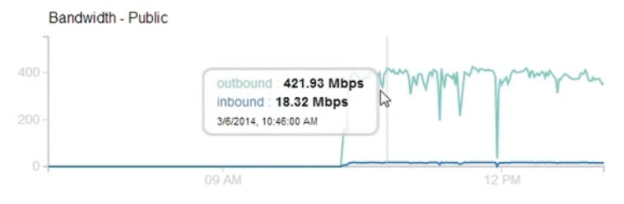
 A researcher discovered a flaw in the section “notes” of the social network Facebook that could be exploited by anyone to conduct a powerful DDoS attack. The Security researcher Chaman Thapa, also known as chr13, discovered a vulnerability in the section ‘Notes’ of the popular social network Facebook that could be exploited by anyone to launch the distributed denial-of-service (DDoS) attack of more than 800 Mbps Bandwidth on any website. Chaman Thapa demonstrated that simply reading a ‘Note’ created by anyone on the Facebook platform an attacker could automatically generate malicious traffic against a target. The researcher published a blog post to describe the vulnerability, he exploited the possibility to include tags inside the post to allow the creation of notes that have images from any source. The attack scenario is very simple, Facebook downloads external images from the original source for the first time only, to improve the performance it stores them in the cache for successive uses. If the image url has dynamic parameters, Facebook is not able to store the image in cache and practically it download all the images included in a note each time whenever anybody view the note. “Facebook Notes allows users to include tags. Whenever a tag is used, Facebook crawls the image from the external server and caches it. Facebook will only cache the image once however using random get parameters the cache can be by-passed and the feature can be abused to cause a huge HTTP GET flood.” Let’s see the DDoS attack scenario described by Chaman Thapa, let’s chose the target website “ target.com” which include a large image on its server (e.g. 1Mb). The researcher creates a Facebook Note which includes the above image multiple times with dynamic parameters, and some text. Facebook servers are forced to download 1 MB of file 1000 times in one page view (It has been estimated that each note is now responsible for 1000+ http requests). If 100 Facebook users are reading the same note at the same time, then Facebook servers will be forced to download 1 x 1000 x 100 = 100,000 Mb or 97.65Gb bandwidth within few seconds from the targeted servers. In the image below is reported the graph for the 400 Mbps traffic generated from 127 Facebook servers in the proof-of-concept made by Thapa by attacking on his own web server. Following the description provided in the post by the Chaman Thapa. Steps to re-create the bug as reported to Facebook Bug Bounty on March 03, 2014. Step 1. Create a list of unique img tags as one tag is crawled only once .. Step 2. Use m.facebook.com to create the notes. It silently truncates the notes to a fixed length. Step 3. Create several notes from the same user or different user. Each note is now responsible for 1000+ http request. Step 4. View all the notes at the same time. The target server is observed to have massive http get flood. Thousands of get request are sent to a single server in a couple of seconds. Total number of facebook servers accessing in parallel is 100+. The researcher explained that the amplification factor of the DDoS attack depends on the dimension of the image downloaded, it could be even higher if the attacker includes in the note a pdf or a video. “A scenario of traffic amplification: when the image is replaced by a pdf or video of larger size, Facebook would crawl a huge file but the user gets nothing.” “Each Note supports 1000+ links and Facebook blocks a user after creating around 100 Notes in a short span. Since there is no captcha for note creation, all of this can be automated and an attacker could easily prepare hundreds of notes using multiple users until the time of attack when all of them is viewed at once.” noted Chaman Thapa. There is the concrete risk that a bad actor creates hundreds of notes with specially crafted script using multiple users at the same time, resulting a powerful DDoS attack. The alarming news is that the flaw is still unpached and Facebook has no plans to fix it. “ In the end, the conclusion is that there’s no real way to us fix this that would stop attacks against small consumer grade sites without also significantly degrading the overall functionality, ” replied Facebook to the researcher. Click here to read the entire article. Source: http://www.arie.co.za/how-to-abuse-facebook-feature-to-conduct-powerful-ddos-attack/