
Four men who took part in a significant number of cyber attacks on the likes of the NHS, Sony and the CIA received stern sentences today, following a lengthy trial into the activities of hacktivist crew LulzSec. News International and the UK Serious Organised Crime Agency (SOCA) were also hit by the hackers, who thought they were “latter-day pirates”, according to prosecutors speaking yesterday. Tough sentences for LulzSec Ryan Cleary, who was affiliated with LulzSec but not believed to be a leader, received the toughest sentence, with 32 months in prison. He let LulzSec members use his botnet to carry out distributed denial of service (DDoS) attacks. Cleary is also due to be sentenced over indecent images of children found on his computer at a later date. Ryan Ackroyd received a 30-month sentence for his part in researching and executing many attacks. Jake Davis, the spokesperson of LulzSec, is to serve 24 months in young offenders’ institution, whilst Mustafa Al-Bassamwas, who researched vulnerabilities for the attacks, was handed a 20-month suspended sentence of two years and 300 hours unpaid work. It is believed US law enforcement are keen to have some of the men extradited to face charges on US soil. However, Cleary’s legal team issued the following statement: “We believe the pleas that were entered today do cover all aspects of Mr Cleary’s criminality and therefore we do not anticipate that he will be in receipt of an application for extradition from the United States of America.” The notice, from Karen Todner Solicitors, also noted Cleary suffered from Aspergers Syndrome, but added he “does not seek to excuse his behaviour”. No laughing matter Charlie McMurdie, head of the Police Central e-Crime Unit, which carried out the investigation into the hackers alongside the FBI, said LulzSec had been “running riot, causing significant harm to businesses and people”. “Theirs was an unusual campaign in that it was more about promoting their own criminal behaviour than any form of personal financial profit,” added McMurdie, who is soon to retire from the force. “In essence, they were the worst sort of vandal – acting without care of cost or harm to those they affected, whether that was to cause a company to fold and so costing people their jobs, or to put at threat the thousands of innocent Internet users whose logins and passwords they made public. “They claimed to be doing it for ‘a laugh’ but real people were affected by their actions. Today’s convictions should serve as a deterrent to others who use the Internet to commit cyber attacks.” This might not be the denouement to the LulzSec saga, however, as hackers are threatening to take revenge. According to Sophos’ Graham Cluley, before the sentences were announced today, a group using the Twitter handle @LulzSecWiki said courts “could be in for ‘fun’” depending on their decision. Source: http://www.techweekeurope.co.uk/news/lulzsec-hackers-jailed-uk-116507
Taken from:
LulzSec Hackers Get Years Of Prison Time

 Two days before the May 13 elections, the Commission on Elections (Comelec) and the Philippine News Agency websites appeared inaccessible to the public. Cursory inspections of the websites of the Philippines’ Departments of Interior and Local Government, National Defense, Foreign Affairs, and Science and Technology, showed they were also apparently inaccessible. The pages for the Philippine National Police, the Army and Navy, and the Philippine Information Agency also could not be accessed. As of 4:10 pm., the Department of Science and Technology (DOST) acknowledged and confirmed distributed denial of service (DDoS) attacks occurring against government sites, but they did not mention where the attacks came from. In a text message to Rappler, Roy Espiritu of the DOST ICT Office said the attacks started on May 10 on gov.ph, then to additional gov.ph-based websites on May 11. He added that the DOST was working on neutralizing the attacks and determining the source. They are also assisting government agencies outside their secured servers who have asked for help. Interaksyon.com earlier reported on the possibility of the downtime being caused by a cyberattack, but noted that the Facebook page of Anonymous Philippines, a hacker-activist group, stated they would undertake no operations during this time. GMA wrote that its technical team “detected an overnight cyberattack that was still ongoing as of posting time on numerous Philippine websites, including GMA News Online, ABS-CBN News, Philippine Airlines, Globe, Smart, and more than two dozen Philippine government websites.” Based on referrer tags and forum activity, GMA also added the attacks seem to have come from Taiwan, linking to a Taiwanese webpage that seems to have reacted positively to the Philippine site downtime. The possibility of a cyberattack related to Philippine-Taiwanese tensions resulting from the shooting of a Taiwanese fisherman was also raised. While no announcement has been made by the Philippine government, Comelec spokesperson James Jimenez mentioned previously to Rappler that the Comelec website may have downtime due to the number of people visiting it, as well as the location of the Comelec website servers. It also repeated this in a recent tweet. As of 2:30 pm., Rappler could access the site, which appears to have had a redesign in time for the elections. With regard to election issues, those seeking information from the Comelec about finding one’s voting precinct but cannot access their homepage can contact the Comelec through the following hotlines: 525335; 5259297; 5259301; 5259302; 5259345; 5271892; 5516552; 5521451; 5523044. – Rappler.com For protection against your eCommerce site click here . Source: http://www.rappler.com/nation/28804-philippine-government-sites-inaccessible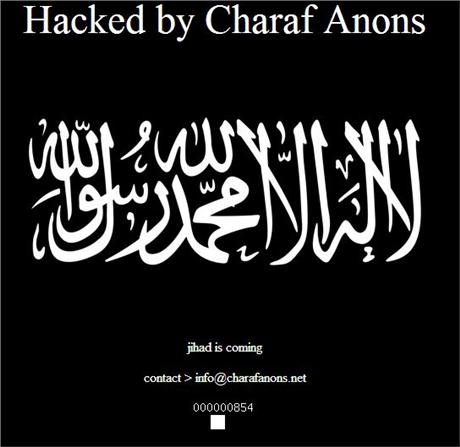
 Islamist element in attacks. A pro-Islamic, anti-American hacking campaign appears to have jumped the gun and started early with hundreds of sites being compromised today. Set to take place on May 7 this month – thought to be US time – and targeting government sites in the US, Israel and India, the campaign is called #OpUSA. It is coordinated mainly through Twitter and postings on sites like Pastebin, with an unknown amount of participants. However, lists of compromised sites are already apppearing, with a group called “X-Blackerz Inc” claiming to have hacked “100 US websites”, posting anti-American messages. iTnews loaded some of the sites listed which have India-related domain names, and found them defaced. Elswhere, a group calling itself Charaf Anons posted a list of 73 defaced sites on Pastebin. The website of the Honolulu, Hawaii Police Department was also claimed to be hacked, but as of writing, it is not defaced and operates normally. However, the hackers say they have captured databases that include the Honolulu Police Department staff logins and passwords. Another one was also posted with names and phone numbers that iTnews was able to verify as belonging to police officers in Honolulu. There is more to come: on May 7, the hackers are threatening to release a trove of “all governments emails of USA” [sic] captured by them. From the Anonghost Twitter account Security researcher Analysis Intelligence believes OpUSA features “self-proclaimed online freedom fighters” such as the Pakistani ZCompany Hacking Crew and Palestinians Izz ad-Din al-Qassam Cyber Fighters. These and other groups have hacked thousands of websites in the past, leaked credit card information for American and Israeli individuals and launched denial of service attacks against US banks, according to Analysis Intelligence. The motive for the OpUSA attacks are political, seeking revenge against drone attacks and military action in Iraq, Afghanistan, Gaza and Pakistan, the analysts believe. For DDoS protection click here . Source: http://www.itnews.com.au/News/342192,opusa-hacking-spree-kicks-off-early.aspx