Tag Archives: ddos

Increase in malicious DNS request traffic

With regard to the OpUSA hacktivist campaign, Solutionary discovered that attackers responsible for previous DDoS attacks on the financial sector leveraged a variety of techniques to execute the campa…

Link:
Increase in malicious DNS request traffic

Network Solutions Recovers After DDoS Attack

Network Solutions said it’s fully mitigated a distributed denial of service (DDoS) attack that compromised some services last week, and that attack volumes against the company had returned to normal. “We experience DDoS attacks almost daily, but our automatic mitigation protocols usually handle the attacks without any impact to our customers,” said John Herbkersman, a spokesman for Network Solutions’ parent company, Web.com, via email. Network Solutions manages more than more than 6.6 million domains, provides hosting services, registers domain names and also sells SSL certificates, among other services. But Monday, some customers reported still experiencing domain name server (DNS) and website updating difficulties that dated to the start of the DDoS attacks. The company, however, disputed those claims. “Some customers may be experiencing issues, but they are not related to last week’s DDoS attack,” said Herbkersman. The DDoS attacks began last week, with Network Solutions at first reporting that “some Network Solutions hosting customers are reporting latency issues,” according to a “notice to customers who are experiencing hosting issues” posted to the company’s website on Tuesday, July 16. “Our technology team is aware of the problem, and they’re working to resolve it as quickly as possible. Thank you for your patience,” it said. As the week continued, the company posted updates via Twitter and to its Facebook page. By Wednesday, it said that the outages were due to a DDoS attack “that is impacting our customers as well as the Network Solutions site.” It said that the company’s technology staff were “working to mitigate the situation.” Later on Wednesday the company declared via Twitter: “The recent DDOS attack affecting customers has now been mitigated. Customer websites should be resolving normally. Thanks for your patience.” The Network Solutions website wasn’t available or updateable for the duration of the attacks. But that wasn’t apparent to all customers, who might not have turned to Facebook and Twitter seeking updates about the company’s service availability. One InformationWeek reader, who emailed Friday, accused Network Solutions of being less than forthcoming about the fact that the outages were being caused by a DDoS attack, “which they acknowledged only when calling them,” after he found only the “notice to customers who are experiencing hosting issues” post on the company’s site. “They have been trying to bury it,” he alleged. “Some sites were down for the entire day.” Herbkersman brushed off the criticism. “In addition to Facebook, we communicated via the Network Solutions’ website and via Twitter,” he said. “We also responded directly to customers who called our customer service team and those who contacted us via social media channels.” Friday, the company did publish a fuller accounting of the outage to its website. “Earlier this week, Network Solutions experienced a distributed denial of service (DDoS) attack on its servers that affected our customers. The Network Solutions technology team quickly identified the issue and implemented measures to mitigate the attack,” read a statement posted to the company’s site and cross-referenced on its Facebook page. “We apologize to our customers who were impacted.” “Are we getting refunded some money because of your 99.99% uptime guarantee?” responded one member via Facebook. “Feel free to call our support team and they will be happy to discuss,” came a reply from Network Solutions. Customers might have had to contend with more than just the DDoS attack. A Tuesday Facebook post — since deleted, which the company said it made to help direct customers to more recent information about the DDoS-driven outages — drew comments from customers reporting DNS issues. “There were multiple reports on the July 16, 2013 Facebook thread that appear to indicate customer DNS records were corrupted before the DDoS induced outage,” Craig Williams, a technical leader in the Cisco Systems threat research group, said in a blog post. The one-two punch of domain name resolution difficulties and a DDoS attack could have left numerous sites inaccessible not just during the attack, but in subsequent days, as the company attempted to identify the extent of the damage and make repairs in subsequent days. Last week’s DDoS attack was the second such attack for Network Solutions customers in less than a month. “In [the] previous outage, domain name servers were redirected away from their proper IP addresses,” said Williams. In that case, however, at least some of the DNS issues appeared to be “a result of a server misconfiguration while Network Solutions was attempting to mitigate a DDoS attack.” Herbkersman, the Web.com spokesman, said last week’s outages were entirely driven by the DDoS attacks, rather than the company’s response to those attacks. Source: http://www.informationweek.com/security/attacks/network-solutions-recovers-after-ddos-at/240158685

Read the original:
Network Solutions Recovers After DDoS Attack

DDoS attacks are getting bigger, stronger and longer

Prolexic Technologies announced that the average packet-per-second (pps) rate reached 47.4 Mpps and the average bandwidth reached 49.24 Gbps based on data collected in Q2 2013 from DDoS attacks launch…

Visit site:
DDoS attacks are getting bigger, stronger and longer

Many online newspapers become DDoS victims

At 4.11 pm of July 7, when accessing Dan Tri newspaper at dantri.com.vn, readers would see the words “Ban hay thuc hien phep tinh de tiep tuc su dung bao Dan Tri” showing that the access was denied. Dan Tri was just one of the many online newspapers hacked in recent days under a large scale DDoS offensive of the hackers. The hacking made a lot of newspapers inaccessible. Some readers still could access websites, but they had to try many times and wait with patience. Internet security experts have commented that the attack might have been well prepared for a long time, because it was conducted in a very methodical way. HVAOnline, a security forum, reported that since July 4, Thanh Nien, Tuoi tre, Dan Tri, VietNamNet, Kenh 14 have been the victims of the DDoS attacks, noting that the number of hacked online newspapers is on the rise. It is estimated that each of the newspapers incur the DDoS attack capacity of 50-70 Mbps, while the capacity was up to 1.3 Gbps for some newspapers. To date, some newspapers have fixed the problems, but the access remains unstable. According to Vo Do Thang, Director of Athena, an Internet security training center in HCM City, the current attack power would be unbearable to the small online newspapers. As such, the hacking would cause serious consequences, especially if it lasts for a long time. The experts said hackers purposely attacked the server of VDC 2 (the Vietnam Data communication Company) where the servers of many online newspapers are located. As a result, not only the VDC 2’s server, but the newspapers’ servers also suffered. HVAOnline said the forum itself and many other forums, information portals in Vietnam also incurred many DDoS attacks, but at weaker intensity. In fact, experts said the attacks began in June 2013 already at low intensity, which could be the preparation for the “general offensive” in July. They believe that the hackers may belong to a big and powerful organization to be able to mobilize such large botnets and zombies for the large scale attack. The hackers reportedly timed their attacks in their way. After finishing one attack aiming to one goal, they began the attack to another goal. After that, they unexpectedly returned and attacked the first aiming point. This way of hacking might make readers and the newspapers’ administrators misunderstand that the newspapers got troubles, while they did not think of a DDoS attack. Buu Dien newspaper on July 11 quoted the Director of an Internet security firm as saying that the firm, after analyzing the attack, found out that the attack was originated from an IP in Vietnam. BKAV’s Nguyen Minh Duc said two days ago that BKAV has not received any request for help from the hacked newspapers. A Symantec’s report in 2011 said that Vietnam has become the favorite space of the world’s hackers, and that it is the biggest botnet in the world. One of the reasons behind this is that Vietnamese don’t install anti-virus software on their computers, and they have the habit of installing cracked software pieces, or downloading some software products from unreliable websites. Source: http://english.vietnamnet.vn/fms/science-it/79186/many-online-newspapers-become-ddos-victims.html

See more here:
Many online newspapers become DDoS victims

Tips To Prepare For A DDoS Attack

IT security experts report that distributed denial of service (DDoS) attacks are a growing concern for 2013: this trend is proved by the countless attacks during 2012 and shown from the findings on the latest CSI Computer Crime & Security Survey, which attracts widespread media attention and is one of many online sources that provides valuable information and guidance to information security professionals. How can a business or individual decrease the likelihood of these type of threats? Fortunately, there are methods that can be used in advance to mitigate risk and infections from the amplification of such attacks. Safety First First of all, it is paramount to identify if the network is safe and protected from unauthorized access, malicious content, real-time threats and cyber intrusions. If not, network system managers should consider using traditional security products like a firewall, Intrusion Prevention and Detection Systems (IPDS) and Web application firewall devices to establish a first line of security defense. It is crucial to be responsive and implement the necessary security hardware and software tools ahead of time to defend the perimeter of the network from intrusion and before being the hacker’s target. Business and individuals alike should plan early on and not wait until they are at mercy of the attack to use proper security controls. Malicious attacks, which can be carried out from several compromised systems and from another location (IP address), can enable a rogue attacker to install a series of zombie Trojans to attack or infect (with malware) hosted computers. Whatever reason and motive the intruder has, s/he is able to take over an entire network and initiate a flood or packet attack, all while denying legitimate connections and paralyzing victims’ systems or servers (e.g., Web servers, DNS servers, application servers). The aim is to use up the network bandwidth and bring its operations or services down. Knowing how dangerous such an attack can be, it comes of utmost importance to be familiar with the different kind of DDoS attacks that could affect the network to understand what type of countermeasures should be put to use. Despite the scale and frequency of these attacks, there are ways to be prepared and avoid being vulnerable to this threat that can be so disruptive. Next is a list of tips to prepare and plan, before an attack strikes, which if made a victim of could have devastating effects on one’s business, such as costly downtime and/or lost revenue. Here are six ways to prevent a DDoS attack • Utilize packet filters on the router(s) • Setup a firewall with advanced security • Properly configure webserver with security modules • Implement logging with ACLs and have them in place to filter traffic • Exploit NetFlow for traffic monitoring and tracking down specific attacks • Rely on a third-party cloud DDoS mitigation provider for proprietary filtering technology. This is a great alternative for those that do not want to handle the security themselves and obtain a quick solution that provides on-demand, real-time protection to monitor 24/7 a business or individuals’ on-premises network infrastructure. If you’re looking for reputable provider, I would suggest getting DDoS protection from DOSarrest . Other than the tips listed, it is suggested to always have more bandwidth available, maintain anti-virus software, and deploy IPDS devices or firewalls in front of the servers just in case of a DDoS attack. It is better to spend some time (and money) preparing in advance for this network threat than dealing with a last minute crisis and trying to figure out what needs to be done. Source: http://www.examiner.com/article/tips-to-prepare-for-a-ddos-attack

See the original post:
Tips To Prepare For A DDoS Attack

Can DDoS attackers turn mitigation devices against you?

SYN reflection attacks are one of the more sophisticated DDoS attack methods and typically require some skill to execute. However, they have recently grown in popularity as they’ve become available on…

Taken from:
Can DDoS attackers turn mitigation devices against you?

Financial Security: Learning From DDoS Attacks

Exactly how big are distributed denial of service (DDoS) attacks in mid-2013? “Just big enough” is what most attackers would say. The Cyber Fighters of Izz ad-din Al Qassam, a group claiming to protest an anti-Moslem video and considered by many experts to be the perpetrators of the attacks, have shown a knack for ratcheting up the volume as banks invest in greater DDoS mitigation bandwidth. The al Qassam template hasn’t gone unnoticed. In the cyber underground, criminal gangs have chatted about the group’s favorite weapon, the “itsoknoproblembro” DDoS toolkit, which hits various parts of a web site at the same time and floods servers with traffic up to 70Gbps. The al Qassam botnet — dubbed the “brobot” — is striking too. Instead of marshaling tens of thousands of infected home computers, it uses hosting providers’ or business’ commercial content servers, which offer fatter pipes and bandwidth galore. The same tactics are available to those whose motive is greed, with the Internet itself serving as their weapons storehouse. Since they never pay for those high-capacity servers and all that power, what’s to stop attackers from using as much as they want? Though an attack of less than 2Gbps can take down many sites, attackers want to be sure your site is down throughout the world. In fact, they use free web monitoring services to make sure that folks in Chicago and Paris can’t reach you. If the attack isn’t working globally, the attackers up the ante. Just figuratively, though–humongous attacks cost no more than surgical strikes. If this is bad news for top-tier banks, it’s potentially disastrous for smaller institutions lacking the budget and expertise to handle attacks themselves. Fortunately, a little planning and preparation can make a big difference. “Does This Hardware Make Me Look Fat?” It Pays To Be Less Attractive To Attackers. Short of making arrests, the good guys can’t stop the bad guys from launching DDoS attacks. So increasingly, larger banks have taken steps to become less-appealing targets — less likely to go offline for long periods of time and more likely to retain customers thanks to helpful communications. Best practice number one: Distribute your Internet infrastructure. Separate your DNS, e-commerce, payment gateways and VPNs. If everything’s on the same infrastructure and you’re socked with a DDoS attack, the damage is more widespread and the attackers win. Say your DNS is hit. Not good, but if your VPN, for instance, is on a different circuit (either real or virtual), your staff has backdoor access to email and other functions. Because you’ve segregated your private- and public-facing systems, business doesn’t grind to a complete halt. To accomplish this, find a trusted third party to manage infrastructure like DNS. Or at least have a Plan B, enabling you to park your DNS, VPN or web service somewhere else until the attack ends. By lining up a willing provider well in advance, you’ll spare yourself some agony when the dirt hits the fan. It’s also smart to assume that someday you’re going to be hit. To paraphrase Trotsky, you may not be interested in DDoS, but DDoS is interested in you. With over 7,000 attacks daily, it’s only a matter of time, so more banks and credit unions are crafting emergency plans. Like natural disaster planning or certain business recovery efforts, these preparations go far beyond technical responses. It starts with being ready to do business, gasp, offline. If your credit union site is down, you may decide to extend your regular business hours, which in turn might require extra tellers and call center operators, or even coffee and cookies for customers in long lines. You’ll also need to let people know about any such contingencies. Be ready to communicate with customers quickly and reassuringly. Email may not be an option, so consider radio announcements or other media outlets, including a company web page separate from the one that’s under attack. Also think about a toll-free number your customers can call. How much detail should you reveal about the impact of an attack? That’s up to you, of course. Some financial institutions have chosen to say as little as possible, for fear of feeding attackers valuable information. Others have been more transparent, betting they’ll reap the reward in customer gratitude and fewer account defections. Whatever procedures you develop, be sure to practice them. You’ll never be ready for everything, but executing the basics well can help enormously. Again, the throes of a crisis aren’t the best time to white-board responses. Run drills of your emergency plan and you’ll likely accomplish two things: more effective DDoS mitigation and better core service, the latter tending to slip when attacks are all-consuming. While al Qassam is a role model for cyber miscreants, the major banks are a more positive one in the DDoS protection arena. Smaller banks and credit unions don’t have the same deep pockets, but they can still make plans, develop responses and make smart technology investments. Inertia is the one thing they truly can’t afford. For protection against your eCommerce site click here . Source: http://www.banktech.com/risk-management/financial-security-learning-from-ddos-at/240157243

View the original here:
Financial Security: Learning From DDoS Attacks
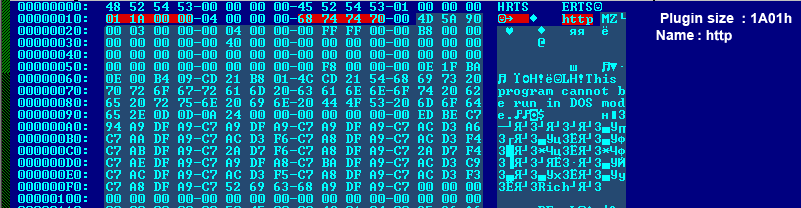
Researchers reveal tricks for Cutwail's endurance

While some botherders have opted for the arguably much safer P2P architecture in order to assure their botnets' resilience, others are still clinging to the standard distributed C&C option. Amon…

Read the original post:
Researchers reveal tricks for Cutwail's endurance