
If you’ve taken the time to read the various security articles over the last few months, you’ll quickly realise that the relatively nascent Bitcoin is well acquainted with DDoS. Initially, this was to undermine and influence Bitcoin currency, but now it is actually being used to steal Bitcoin funds in the millions of dollars. Of course, the very nature of a “”virtual currency”” is going to be attractive to cyber criminals who see it as an easy target; after all, they only have to steal digital information from a computer. At the end of the day, the attackers are winning with what is all too often considered a crude tool. It begs the question: Is DDoS still to be considered a blunt instrument? From what I have seen, the answer is a resounding no. Here’s why: Unconventional DDoS DDoS is getting more sophisticated – DDoS in its simplest form attempts to bombard a server with so many requests that it can’t handle the volume and therefore just shuts down, making a website inaccessible. The conventional understanding of DDoS is that it is typically massive in terms of bandwidth, packets per second and connection, and the latest attacks on BitStamp suggest there was indeed a high volume aspect to the attack. The more important aspect to this attack was how the attackers were able to masquerade the hash of a user transaction and essentially bombard the exchanges with it- in the hope it would be processed before the actual legitimate sessions. In effect, this was not your typical ‘clog the pipe’ DDoS strategy, which is usually touted in articles detailing a huge DDoS attack. The attackers had quite specific knowledge and did their homework when it came to how best to take advantage of DDoS tools and bring down the exchange. Blurring the lines between DDoS and hacking DDoS and hacking have traditionally been seen as two mutually exclusive security initiatives, each requiring its own set of mitigating strategies. While we have seen the two used in tandem – where the DDoS is the ‘feint’ used to cover backend attempts for data theft – the Bitstamp situation stands apart from these experiences in that the DDoS was the actual tool used to carry out the theft. The spoofing of a digital signature/hash to modify the blockchain record was within the payload of the actual DDoS attack. It’s an alarming development considering that more and more ‘conventional’ companies are implementing public facing tools to carry out transactions, which could be hijacked in a similar manner as seen here. There’s no doubt that the stakes are high when it comes to Bitcoin- on the one hand, there could be a lot to gain as adoption and popularity rises; and on the other, there is the regulatory uncertainty and likely insurance issues to consider. When it comes to protecting yourself, realise that by accepting virtual currency, you also become a target for Bitcoin miners and make sure you have appropriate technology in place to protect yourself from DDoS attacks – whether it is a hardware solution that takes days to install and requires a higher up-front cost; or a provider who offers DDoS protection services that can be up and running in as little as a few hours for a monthly cost. Source: http://www.techradar.com/news/software/security-software/are-ddos-attacks-becoming-more-sophisticated–1254382
Read the original post:
Are DDoS attacks becoming more sophisticated?
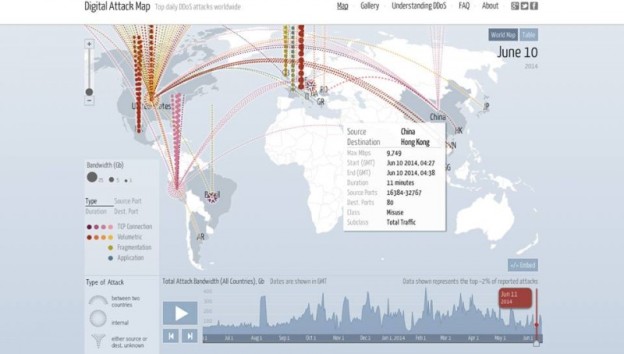
 Just days before a citizen-led online referendum on voting rights, the technical platform that advocates had planned to use for the referendum suffered a massive DDoS attack. From June 20-22, citizens will be invited to vote on a referendum on constitutional reforms that would guarantee all citizens the right to vote in elections that determine who will be the city’s Chief Executive. To build a public consensus around a recent civil proposal on universal suffrage, the civic group “Occupy Central with Love and Peace” appointed the Public Opinion Programme at Hong Kong University and the Center for Social Policy Studies at the Hong Kong Polytechnic University to host the civil referendum on their servers. On June 13, 30 hours after HKU’s Public Opinion Programme (POP) tested their online system by accepting voter pre-registrations, the system endured the largest distributed denial of service attack in its history. Two of their hosting providers have since withdrawn their service for the project. The civil referendum has been criticized by pro-Beijing political groups, sparking controversy concerning channels for nomination. Many Hong Kongers feel that political party nomination and nomination by a nominating committee serve as a filtering mechanism for eliminating candidates who are undesirable for Beijing. According to a press release issued by HKU POP on June 16, the voting system is hosted by Amazon Web Services (AWS), Cloudflare and UDomain. All three web hosting services suffered from large scale DDoS attacks on June 14 and 15. AWS recorded 10 billion system requests with 20 hours, CloudFare recorded a 75Gb DDoS per second and UDomain 10Gb per second. As the scale of attack is tremendous, all three service providers were forced to temporarily suspend their services. An expert estimated that there could be at least 5,000 but possibly more than 10,000 computers involved in the attack. On June 16, Amazon decided to stop providing DNS hosting service to HKU POP and UDomain withdrew its security protection service. Cloudflare is now the only service provider to support the voting system. IT security expert Anthony Lai posted digital attack maps on his Facebook page, comparing the attack scale between June 10 and June 14 (see top), before and after HKU POP tested the voting system: Digital Attack Map on June 10. Destination Hong Kong. HKU POP is working on a solution to the voting system’s vulnerability. They are considering to using 125 telephone lines for voting, but this will not be able to accommodate the expected 70,000 votes in 12 hours. In 2012, the HKU POP was also attacked by DDoS when it hosted a mock universal suffrage poll for the chief executive election. Source: http://advocacy.globalvoicesonline.org/2014/06/17/hong-kong-voting-site-suffers-massive-ddos-attack-before-civil-referendum/